
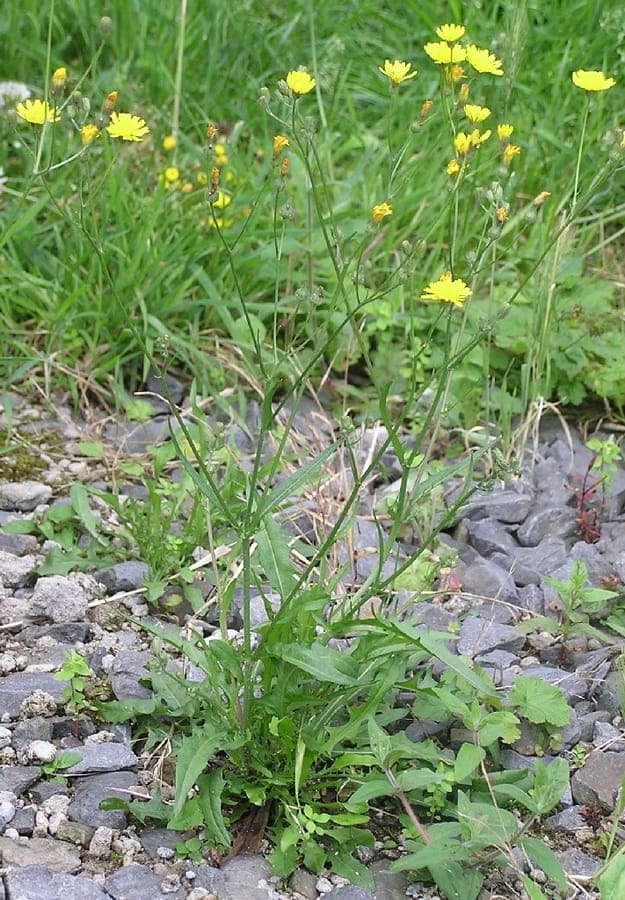
Michael Becker / CC BY-SA 3.0, via Wikimedia Commons
Green crepis: complete guide
Crepis capillaris
Want to see Green crepis: complete guide in your garden?
1 minute, no credit card
Overview
Green crepis, or Crepis capillaris, is a humble but resilient annual or biennial from the Asteraceae family. Native to regions like Albania, Austria, the Azores, and the Baltic States, it thrives in poor, dry soils where flashier plants would struggle. You'll often spot it along roadside verges or on disturbed ground in Europe - a sign of its adaptability. In the garden, it's not about showy impact but about subtle texture and effortless growth. It's a plant that asks for little and gives back with quiet charm.
Don't expect giant blooms or long-lasting cut flowers. Instead, green crepis offers a natural, wildflower feel, perfect for gravel gardens, rock crevices, or between stepping stones. It self-seeds reliably in the right conditions, so once you've got it established, it'll return year after year with minimal help. If you're designing a low-maintenance, drought-tolerant space, this plant deserves a spot. Use gardenworld.app to create a garden layout that highlights its airy structure and soft bloom rhythm.
Appearance & bloom cycle
Green crepis grows 15 to 30 cm tall, forming a small basal rosette of finely divided, grey-green leaves. From late spring to midsummer - typically June through August - slender, branching stems rise with clusters of small, bright yellow flower heads, each about 1 to 1.5 cm wide. The blooms resemble tiny dandelions but with a more refined, delicate look. After flowering, the seed heads open into fluffy parachutes, easily carried by the wind.
This plant blooms best in full sun and well-drained soil. In partial shade, it becomes leggy and produces fewer flowers. The self-seeding habit means you can enjoy its presence across multiple seasons, though you may need to thin seedlings if they pop up too densely.
Ideal location
Full sun is essential. Green crepis needs at least 6 hours of direct sunlight daily to bloom well and stay compact. Choose south- or west-facing spots, dry banks, gravel paths, or rock gardens. It's ideal for xeriscaping or naturalistic planting schemes. Avoid shady, damp corners - this is not a plant for wet clay or woodland edges.
It pairs beautifully with other drought-tolerant species and works well in cottage-style or Mediterranean-inspired gardens. If you're unsure how to position it within your layout, gardenworld.app lets you simulate planting combinations and sunlight exposure to find the perfect fit.
Free design
Want to see Green crepis: complete guide in your garden? Make a free design now.
Soil requirements
This plant thrives in poor, sandy, or gravelly soils with excellent drainage. Avoid rich, compost-heavy beds - too much fertility leads to floppy growth and reduced flowering. A neutral to slightly alkaline pH (6.5–7.5) is ideal, but it tolerates mildly acidic conditions. Chalky or limestone soils are perfect. If planting in containers, mix regular potting soil with 30% horticultural grit or perlite.
The key is low fertility and fast drainage. Think of it as a plant for neglected corners - the kind of spot other plants give up on.
Watering
Once established, green crepis needs no supplemental watering, even during dry spells. Water only during the first few weeks after sowing or transplanting, and only if rainfall is below 25 mm over 14 days. Overwatering causes root rot and weak stems. This is a true drought-tolerant species - the kind you can ignore and it still thrives.
Pruning
No pruning required. You can deadhead spent flowers to limit self-seeding if you want to keep it contained. Otherwise, let the seed heads mature and disperse naturally. For a neater look in late summer, cut back the entire plant after flowering, but this is purely aesthetic.
Maintenance calendar
- Jan: Dormant. No care needed.
- Feb: Still dormant. Prepare seed trays indoors if starting early.
- Mar: Sow seeds in trays under cover. Prepare outdoor beds.
- Apr: Direct sow outdoors when soil hits 10°C. Thin seedlings to 10 cm apart.
- May: Transplant seedlings. Watch for slugs.
- Jun: Bloom begins. Monitor for excessive moisture.
- Jul: Peak flowering. Seeds start forming.
- Aug: Flowers fade. Seed dispersal begins.
- Sep: Cut back or leave for self-seeding.
- Oct: Clear debris if needed. Let some seeds drop.
- Nov: Dormancy begins. Self-sown seedlings may appear.
- Dec: Fully dormant. No action required.
Winter hardiness
Green crepis is not a perennial but relies on self-seeding to persist. It's hardy in USDA zones 7–9 as a self-sower. In colder zones (6 and below), collect and store seeds over winter, then sow in spring. It won't survive harsh winters as a mature plant, but its seeds lie dormant until conditions improve.
Companion plants
Pair with Sedum acre, Thymus serpyllum, Bellis perennis, or Linaria vulgaris. Avoid aggressive spreaders or moisture-hungry plants. It works well in green roof mixes with Sempervivum or Delosperma. The soft yellow blooms contrast beautifully with silver-foliage plants like Artemisia or Stachys byzantina.
Closing
Green crepis isn't flashy, but it's dependable. It fills gaps, supports pollinators, and adds a natural touch without demanding attention. Buy seeds from garden centres like B&Q, Wyevale, or online suppliers, and sow in a sunny, dry spot. Let it drift where it will, and enjoy its quiet presence. Use gardenworld.app to design a garden that embraces its wild, low-effort beauty.
Want to see Green crepis: complete guide in your garden? Make a free design now.
Upload a photo, pick a style, and get a photorealistic design with plant list in under a minute.
No credit card required


Similar plants
Calendula stellata: complete guide
Calendula stellata
Complete guide to Calendula stellata, the star-flowered marigold from Sicily: location, soil, watering and companion planting tips.
Korean chrysanthemum: complete guide
Chrysanthemum x rubellum
Chrysanthemum x rubellum is a hardy autumn perennial with single pink to copper flowers from August to November. Care and combinations.
Helianthus divaricatus: complete guide
Helianthus divaricatus
Helianthus divaricatus is a North American woodland sunflower with yellow summer blooms, ideal for naturalistic borders and shady edges.