
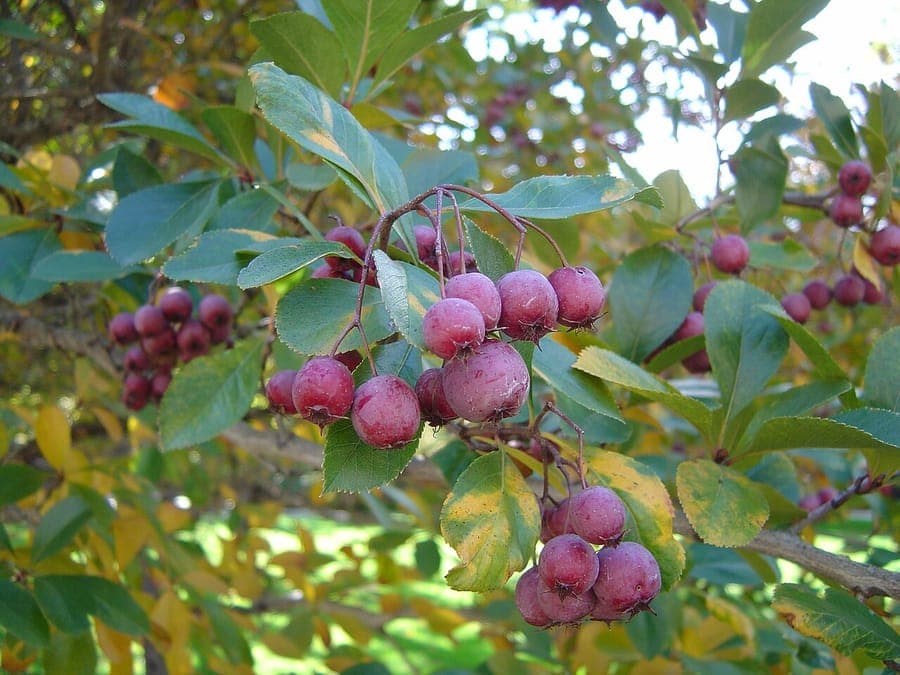
Nadiatalent / Public domain, via Wikimedia Commons
Cockspurthorn: complete guide
Crataegus crus-galli
Want to see Cockspurthorn: complete guide in your garden?
1 minute, no credit card
Overview
Crataegus crus-galli, commonly known as cockspurthorn, is a tough, adaptable tree or large shrub native to the eastern United States, including states like Alabama, Illinois, and Georgia. It's a slow grower but makes up for it with longevity and resilience. Reaching heights of 6 to 8 meters with a spread of 5 to 7 meters, it works well as a specimen tree, windbreak, or impenetrable hedge thanks to its long, straight thorns-some up to 10 cm in length.
On gardenworld.app, you can design a garden layout that accounts for the cockspurthorn's thorny nature and broad canopy, ensuring it's planted where it won't become a hazard.
Appearance & bloom cycle
Cockspurthorn has a distinctive, spreading habit with horizontal branching. The foliage consists of small, ovate leaves 3–6 cm long with a finely toothed margin. In autumn, the leaves turn golden-yellow to warm brown, adding seasonal interest.
In late spring, usually May, clusters of small white flowers appear. They're not overly fragrant but attract bees and other pollinators. By late summer, green berries form, ripening to bright red by September and often persisting into winter. These berries are mildly toxic to humans but a valuable food source for birds like thrushes and waxwings.
The bark is smooth and gray when young, becoming slightly fissured with age. Winter reveals the plant's architectural beauty-bare branches studded with berries and menacing thorns.
Ideal location
Plant your cockspurthorn in full sun for best results-aim for at least 6 hours of direct light daily. It tolerates partial shade but may produce fewer flowers and berries, and its form can become leggy.
Because of its thorns, it's ideal for boundary planting, deterring trespassers or protecting vulnerable garden zones. Keep it at least 1.5 meters away from footpaths and seating areas. It also works well in large mixed borders or as a standalone feature in open lawns.
Avoid planting near play areas or where pets run freely. The thorns are sharp and can cause deep scratches.
Soil requirements
This hawthorn thrives in a wide range of soils: clay, loam, or sandy, as long as drainage is adequate. It tolerates occasional wet feet but hates waterlogged conditions. The ideal pH range is 5.5 to 7.5.
When planting, dig a hole twice as wide as the root ball and mix in compost or well-rotted manure. Avoid high-nitrogen fertilizers, which promote soft growth vulnerable to pests and winter damage.
Once established, cockspurthorn is highly drought-tolerant, thanks to its deep root system. In the first year, though, consistent moisture is crucial.
Free design
Want to see Cockspurthorn: complete guide in your garden? Make a free design now.
Watering
During the first growing season, water deeply once a week-about 20–30 liters per tree-depending on rainfall. After that, supplemental watering is rarely needed unless facing prolonged drought.
If leaves begin to wilt or yellow in summer, it may indicate stress. Water slowly at the base to encourage deep roots. Avoid overhead watering to prevent fungal diseases like rust or leaf spot.
Mature trees can survive weeks without rain, making them a low-maintenance choice for dry gardens.
Pruning
Pruning is minimal but recommended to shape young trees or remove dead wood. The best time is late winter to early spring, before bud break. Wear thick gloves and long sleeves-those thorns are no joke.
Use clean, sharp tools to cut back crossing or inward-growing branches to improve airflow. Avoid heavy pruning, as flowering and fruiting occur on old wood. Over-pruning can reduce berry production.
Never prune in autumn-this can stimulate new growth that won't harden off before winter.
Maintenance calendar
- January: Inspect for broken or dead branches.
- February: Light structural pruning.
- March: Apply a thin layer of compost around the base.
- April: Monitor for early pests like aphids.
- May: Flowering begins-watch for pollinators.
- June: No routine care needed.
- July: Water during extended dry spells.
- August: Check for leaf diseases.
- September: Berries ripen-avoid pruning.
- October: Enjoy autumn color and persistent fruit.
- November: Let fallen leaves decompose-adds organic matter.
- December: Final check for storm damage.
Winter hardiness
Cockspurthorn is hardy in USDA zones 4 to 8, tolerating temperatures down to -29°C. In the UK and northern Europe (zone 7), it withstands winter without protection. The persistent berries and thorny silhouette add winter garden structure.
Young trees benefit from a 5–10 cm mulch layer of wood chips around the base to insulate roots in their first winter.
Companion plants
Choose companions that thrive in similar conditions and don't compete aggressively for light or nutrients. Good options include:
- Echinacea purpurea – for late summer color and pollinators
- Carex vulpinoidea – for moist soil tolerance
- Heuchera – for ground-level foliage contrast
- Symphyotrichum novae-angliae – for fall bloom synergy
Avoid invasive groundcovers like periwinkle, which can choke young saplings.
Use gardenworld.app to visualize how cockspurthorn fits with your existing plants and plan spacing accordingly.
Closing
Cockspurthorn deserves more attention in temperate gardens. It's tough, low-maintenance, and supports wildlife year-round. The thorns may be a drawback, but with smart placement, they become an asset.
Available at most garden centres, especially in spring, look for specimens 80–100 cm tall. Avoid bargain plants with damaged bark or twisted roots.
With proper siting and minimal care, Crataegus crus-galli will become a long-lived fixture in your landscape-offering beauty, structure, and ecological value for decades.
Want to see Cockspurthorn: complete guide in your garden? Make a free design now.
Upload a photo, pick a style, and get a photorealistic design with plant list in under a minute.
No credit card required


Similar plants
Siberian crab apple: complete guide
Malus x robusta
Complete guide to the Siberian crab apple (Malus x robusta): location, soil, pruning, winter hardiness and the best companion plants for your garden.
Chinese flowering crabapple (Malus x spectabilis): complete guide
Malus x spectabilis
Meet the Chinese flowering crabapple (Malus x spectabilis): a classic spring bloomer with carmine buds and pink blossom.
Potentilla crassinervia: complete guide
Potentilla crassinervia
Potentilla crassinervia, the Corsican cinquefoil, grows wild on Corsica and Sardinia's peaks. Discover how to grow this hardy alpine rock garden gem.