
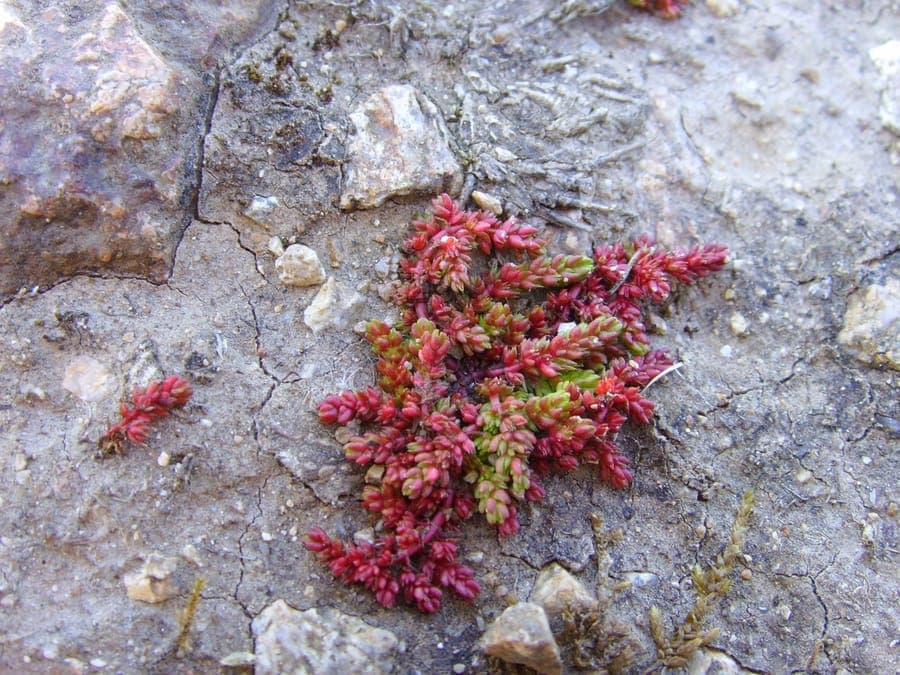
Jymm / Public domain, via Wikimedia Commons
Mossy-stonecrop: complete guide
Crassula tillaea
Want to see Mossy-stonecrop: complete guide in your garden?
1 minute, no credit card
Overview
Crassula tillaea, commonly known as Mossy-stonecrop, is a low-growing, creeping succulent in the Crassulaceae family. Native to parts of southern Europe and the Canary Islands, it thrives in dry, rocky environments and has become a popular choice for rock gardens, crevices between paving stones, and xeriscaped beds. This herbaceous perennial forms dense, moss-like mats rarely exceeding 3–5 cm in height. Its compact size and drought tolerance make it ideal for gardeners seeking low-maintenance, water-wise plants.
The plant spreads slowly via stolons, gradually filling in small gaps with its fleshy, green to bronze-tinged foliage. It's not aggressive, so it won't take over your garden. Instead, it quietly forms soft green cushions that come alive in spring with clusters of tiny white flowers. Crassula tillaea is perfect for beginner gardeners and seasoned horticulturists alike who appreciate subtle beauty and resilience.
On gardenworld.app, you can design a planting scheme that highlights Mossy-stonecrop's strengths-perfect sun exposure, spacing, and companion choices.
Appearance & bloom cycle
The leaves are small, oval to nearly round, and tightly packed along the stems, giving the plant a mossy texture. They range from bright green in spring to a deeper bronze or reddish tone in winter or under intense sun. From April through June, Mossy-stonecrop produces hundreds of minute white flowers on short stalks. Each flower has five petals and a delicate, star-like shape.
Though individually tiny, the collective bloom creates a soft, frothy white layer over the foliage. The flowers are lightly fragrant and attract beneficial insects like hoverflies and small bees. Because the plant stays so low, it works best as a ground cover in areas where height isn't desired-think between stepping stones, along dry retaining walls, or in alpine troughs.
Ideal location
Full sun is essential. Mossy-stonecrop needs at least 6 hours of direct sunlight daily to stay compact and flower well. It tolerates light shade, but growth becomes leggy and flowering diminishes. Choose a spot with excellent air circulation and minimal competition from taller plants. South- or west-facing slopes, rock gardens, or gravel beds are ideal.
Avoid damp, shady corners or areas where water pools after rain. Excess moisture, especially in winter, can lead to rot. This plant loves heat and dryness, making it a top contender for hot, urban gardens or sunny patios.
Soil requirements
Well-drained soil is non-negotiable. A mix of sandy loam, grit, and a bit of compost works well. Avoid heavy clay or moisture-retentive soils. If your garden has poor drainage, consider raised beds or containers filled with a gritty mix-30–40% perlite or pumice blended with standard potting soil.
In containers, use a cactus or succulent-specific mix. Always ensure pots have drainage holes. A layer of gravel at the bottom improves water runoff and prevents waterlogging.
Free design
Want to see Mossy-stonecrop: complete guide in your garden? Make a free design now.
Watering
Water sparingly. As a succulent, Crassula tillaea stores water in its leaves and is highly drought tolerant. During the growing season (March to September), water every 7–10 days during dry spells. In rainy periods, skip watering entirely. In winter, when the plant is dormant, reduce watering to once a month or less-only if the soil is completely dry.
Always water at the base, not over the foliage. Overhead watering increases the risk of rot, especially in cooler months. When in doubt, wait. This plant can survive longer without water than most realise.
Pruning
Pruning is rarely needed. The plant naturally maintains a neat, compact form. You can deadhead spent flower clusters with clean, sharp scissors to keep it tidy and discourage seed spread. If the plant starts to sprawl or invade unwanted areas, trim back lightly or lift and relocate sections.
Stem cuttings root easily in well-drained soil-just place them on the surface and keep lightly moist for a few days. They'll establish quickly.
Maintenance calendar
- Jan: Dormant. No watering or feeding.
- Feb: Check for rot or damage. Keep dry.
- Mar: Growth resumes. Begin light watering if soil is dry.
- Apr: Flowers emerge. Ensure good drainage.
- May: Peak bloom. Remove weeds gently.
- Jun: Bloom fades. Trim spent flowers if desired.
- Jul: Minimal care. Water only in prolonged drought.
- Aug: Hot and dry. Water every 7–10 days if no rain.
- Sep: Growth slows. Reduce watering gradually.
- Oct: Dormancy begins. Stop fertilising.
- Nov: Prepare for winter. Keep dry.
- Dec: Fully dormant. Water only in extended dry spells.
Winter hardiness
Mossy-stonecrop is hardy to around -5°C (USDA zone 8b). In colder zones (8a and below), provide winter protection-mulch lightly with dry straw or pine needles, but avoid smothering the crowns. Potted plants are more vulnerable; move them to a sheltered spot or against a sunny wall. In wet winters, elevate containers to prevent waterlogging.
Companion plants
Pair with other drought-tolerant species like Sedum spurium, Thymus vulgaris, Sempervivum, or Dianthus deltoides. These create a cohesive, low-maintenance planting scheme. Avoid aggressive spreaders like ivy or mint, which will choke out the delicate Crassula tillaea.
On gardenworld.app, you can explore companion planting ideas and create a custom layout that matches your garden's light and soil conditions.
Closing
Mossy-stonecrop is a quiet achiever-unobtrusive but effective. It adds texture, subtle bloom, and year-round structure to dry, sunny spots. With minimal care, it thrives for years. You'll find it at garden centres across the UK and Europe, including local independents and chains. In the US, check specialty succulent nurseries or online retailers. For UK gardeners, look for it at garden centres in 7- or 9-cm pots. Just remember: sun, sharp drainage, and restraint with water-that's the recipe for success.
Want to see Mossy-stonecrop: complete guide in your garden? Make a free design now.
Upload a photo, pick a style, and get a photorealistic design with plant list in under a minute.
No credit card required


Similar plants
Sedum nevadense: complete guide
Sedum nevadense
Discover Sedum nevadense, the stunning alpine stonecrop from the Pyrenees. Expert care tips, growing requirements, and design ideas for rock gardens.
Aizoon stonecrop: complete guide
Phedimus aizoon
Everything about Phedimus aizoon - the frost-tolerant aizoon stonecrop from Siberia with bright yellow flowers. Planting, care and garden use.
Roseroot: complete guide
Rhodiola rosea
Everything about roseroot (Rhodiola rosea): a tough hardy succulent ideal for rock gardens, green roofs, and dry sunny positions.