
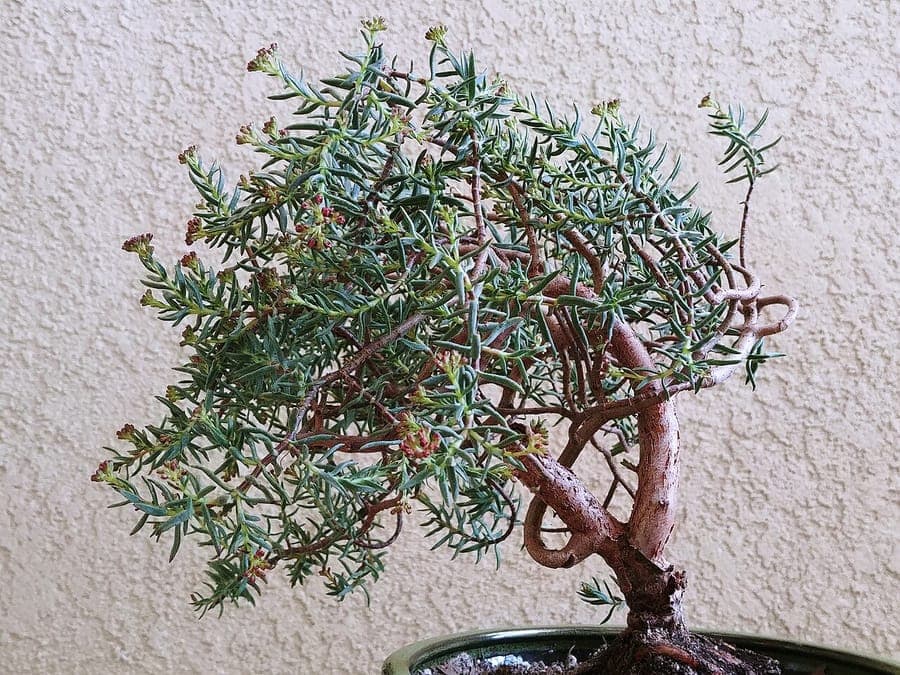
Jonsafari / CC BY-SA 4.0, via Wikimedia Commons
Bonsai Crassula: complete guide
Crassula sarcocaulis
Want to see Bonsai Crassula: complete guide in your garden?
1 minute, no credit card
Overview
The Bonsai Crassula (Crassula sarcocaulis) is a stunning, compact succulent from South Africa. This exceptional species is also known as the "little tree" of succulents and is highly popular among bonsai enthusiasts. The plant grows slowly into a small tree-shaped specimen with a woody stem and fine foliage.
Appearance and bloom
The Bonsai Crassula has thin, linear leaves that grow tightly together. The plant usually reaches only 30-50 cm in height and naturally forms a compact, bonsai-like shape. In summer, numerous small pink to red flowers appear at the tips of the branches. These flowers are very valuable for bees and other insects.
Ideal location
Place the Bonsai Crassula in a very sunny spot. This plant needs plenty of light to thrive properly. A south-facing window is ideal. Make sure the plant gets at least 4-6 hours of direct sunlight per day. During the growing season (spring and summer), you can also place the plant outside.
Soil type
Use well-draining cactus soil or succulent soil. You can also make your own mix of regular potting soil with sand or perlite. Drainage is crucial because this plant is very sensitive to excess water. Always ensure drainage holes in the pot.
Watering
The Bonsai Crassula is very drought-tolerant. Water only when the soil is completely dry. In winter you can water even less. Do not water over the plant but directly into the soil. Use lukewarm water and make sure the water does not remain in the leaves. Excessive moisture can lead to root rot.
Free design
Want to see Bonsai Crassula: complete guide in your garden? Make a free design now.
Pruning
The Bonsai Crassula grows slowly and requires little pruning. However, you can prune carefully to maintain a better shape. Remove dead branches and leaves. During the growing season, you can lightly top the plant to encourage more branching.
Maintenance calendar
In spring (March-May) growth begins. This is the best time to repot the plant and add fertilizer. During summer (June-August) the plant blooms and you can apply cactus fertilizer monthly. In autumn (September-November) the plant grows more slowly. In winter the plant goes into dormancy and you need virtually no water and feeding.
Winter hardiness
The Bonsai Crassula is not winter-hardy and must be kept indoors. The plant can tolerate temperatures down to about 5 degrees Celsius, but grows best at temperatures between 15 and 25 degrees. Make sure the plant is in a cool, dry place during winter.
Companion plants
The Bonsai Crassula combines nicely with other succulents such as jade plants, echeveria and sedum species. You can grow them together in a cactus garden. This combination is ideal because all plants have the same water requirements.
Conclusion
The Bonsai Crassula is a fantastic plant for succulent collectors and bonsai enthusiasts. With proper care, it grows into a beautiful, small "tree" that lasts for years. These specimens are available at specialty garden centers and online retailers. Visit gardenworld.app for more inspiration and plant advice.
Want to see Bonsai Crassula: complete guide in your garden? Make a free design now.
Upload a photo, pick a style, and get a photorealistic design with plant list in under a minute.
No credit card required


Similar plants
Sedum nevadense: complete guide
Sedum nevadense
Discover Sedum nevadense, the stunning alpine stonecrop from the Pyrenees. Expert care tips, growing requirements, and design ideas for rock gardens.
Aizoon stonecrop: complete guide
Phedimus aizoon
Everything about Phedimus aizoon - the frost-tolerant aizoon stonecrop from Siberia with bright yellow flowers. Planting, care and garden use.
Roseroot: complete guide
Rhodiola rosea
Everything about roseroot (Rhodiola rosea): a tough hardy succulent ideal for rock gardens, green roofs, and dry sunny positions.