
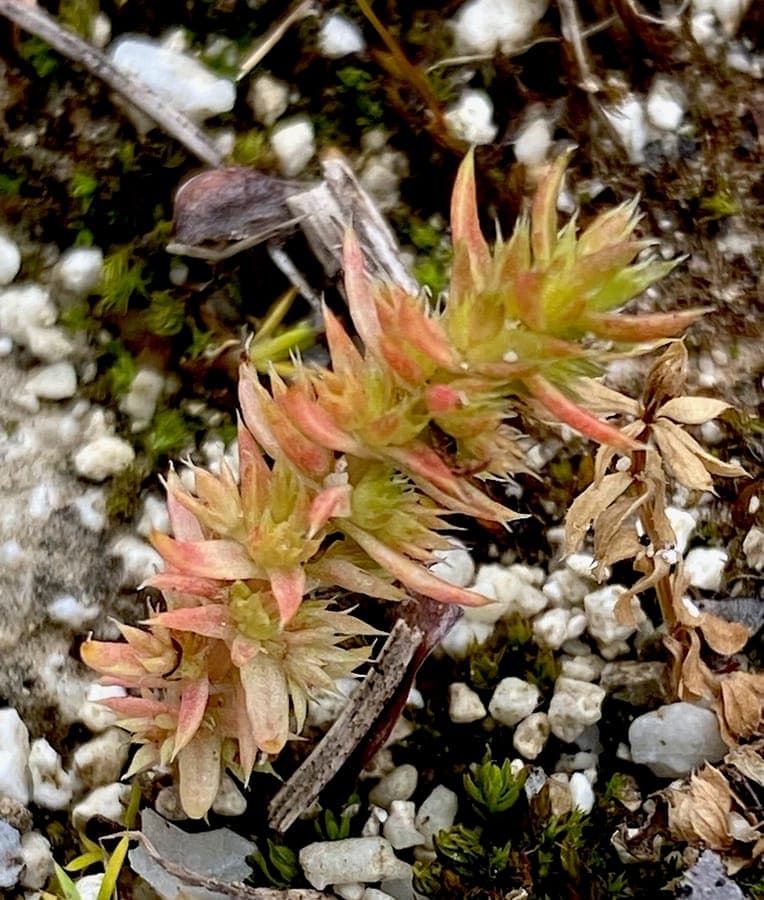
desertnaturalist / CC BY 4.0, via Wikimedia Commons
Crassula alata: complete guide
Crassula alata
Want to see Crassula alata: complete guide in your garden?
1 minute, no credit card
Overview
Crassula alata is a fascinating succulent native to the Mediterranean region and parts of Africa. This hardy plant is known for its thick, fleshy leaves that showcase nature's efficiency in water storage. With its compact growth habit and minimal requirements for water and care, it is an excellent choice for sunny front yards, Mediterranean-style gardens, and container cultivation on balconies.
The plant reaches a modest height and forms a beautiful rosette pattern with its leaf arrangement. Crassula alata is remarkably tolerant of dry conditions and thrives in warm, sunny weather.
Appearance and bloom
The leaves of Crassula alata are thick and succulent with a blue-grey or greenish color, depending on light intensity and moisture availability. The leaves are tightly packed in a rosette formation, giving the plant a compact, orderly appearance.
Flowers appear in small clusters and range from white to creamy yellow hues. Bloom occurs typically in late spring through early summer. The flowers are small but numerous, providing a charming contrast to the heavy, fleshy foliage.
Ideal location
Crassula alata thrives best in full sun to partial shade. In climates like the Netherlands, the plant should receive at least 6 to 8 hours of direct sunlight daily. The more sun, the more compact and healthy the plant remains.
Ensure the location is well-ventilated. This helps prevent moisture condensation and reduces disease risk. The plant is suitable for south-facing windowsills, sunny patios, and xeriscaped gardens.
Soil
Use a well-draining soil mix specially formulated for cacti and succulents. The mix should contain sand, perlite, or potshards to prevent waterlogging. A pH of 6.0 to 7.0 is ideal.
For container culture, add extra sand or perlite to standard potting soil to further improve drainage. For in-ground planting in Mediterranean gardens, prepare a mix with plenty of sand and gravel for optimal drainage.
Free design
Want to see Crassula alata: complete guide in your garden? Make a free design now.
Watering
Crassula alata is very drought-tolerant. Water only when the soil is completely dry to several centimeters depth. During the growing season (spring-summer), you may water slightly more frequently, but still cautiously.
In winter, especially when temperatures drop below 10 degrees Celsius, give almost no water. Overwatering is the leading cause of death in succulents. Always check soil moisture before watering.
Pruning
Crassula alata requires minimal pruning. Remove only dead, damaged, or diseased leaves. If the plant becomes too large, you can gently remove lower leaves to maintain shape.
It is also possible to break off healthy leaves for propagation. These can be placed in dry sand or succulent soil to form new plants.
Maintenance calendar
Spring: Resume watering cautiously after winter. Check for pests. Summer: Water regularly but cautiously. Ensure ventilation on warm days. Autumn: Gradually reduce watering. Winter: Give minimal water. Ensure temperature does not drop below 5 degrees Celsius.
Winter hardiness
Crassula alata cannot tolerate winter frost well. In the Netherlands, the plant must overwinter in a cool, dry room with temperatures of 5 to 10 degrees Celsius. In freezing conditions outdoors, the plant will die.
In southern European regions, the plant can overwinter outdoors if protected from rain. Ensure good drainage to prevent root rot in wet winters.
Companion plants
Crassula alata grows well alongside other Mediterranean succulents such as Agave, Aloe, Sedum, and Sempervivum. Combine in dry gardens with Lavender, Thyme, and Cistus for an authentic Mediterranean look.
In containers, you can group multiple succulents in the same pot with well-draining soil for a modern, sculptural effect.
Closing thoughts
Crassula alata is a reliable, low-maintenance plant that can satisfy even experienced gardeners. With minimal water and feeding requirements, good drainage, and plenty of sunlight, you will enjoy this elegant succulent for years.
At gardenworld.app you can find inspiration for integrating succulents into your front yard or balcony design.
Want to see Crassula alata: complete guide in your garden? Make a free design now.
Upload a photo, pick a style, and get a photorealistic design with plant list in under a minute.
No credit card required


Similar plants
Sedum nevadense: complete guide
Sedum nevadense
Discover Sedum nevadense, the stunning alpine stonecrop from the Pyrenees. Expert care tips, growing requirements, and design ideas for rock gardens.
Aizoon stonecrop: complete guide
Phedimus aizoon
Everything about Phedimus aizoon - the frost-tolerant aizoon stonecrop from Siberia with bright yellow flowers. Planting, care and garden use.
Roseroot: complete guide
Rhodiola rosea
Everything about roseroot (Rhodiola rosea): a tough hardy succulent ideal for rock gardens, green roofs, and dry sunny positions.