
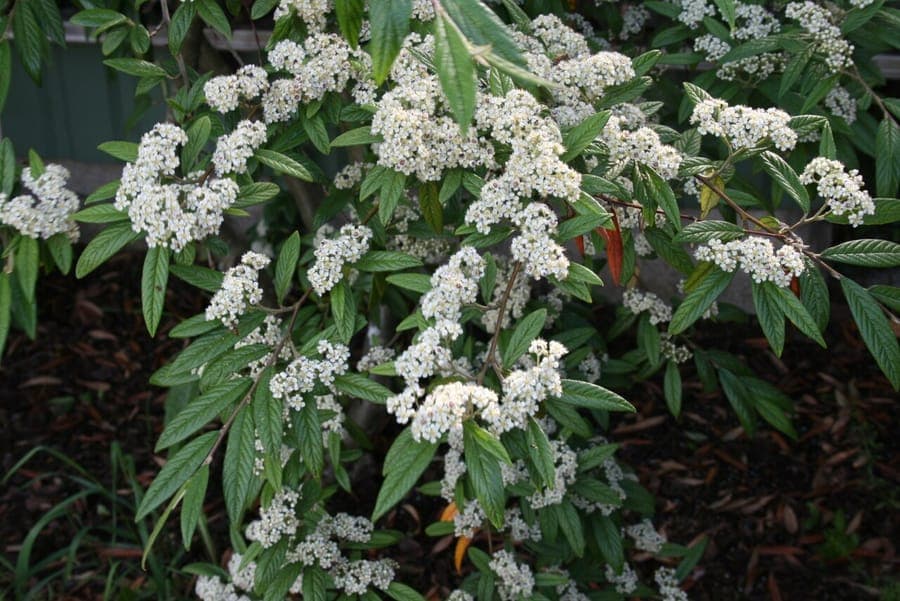
Sten Porse / CC BY-SA 3.0, via Wikimedia Commons
Willow-leaf cotoneaster: complete guide
Cotoneaster salicifolius
Want to see Willow-leaf cotoneaster: complete guide in your garden?
1 minute, no credit card
Overview
Cotoneaster salicifolius, commonly known as willow-leaf cotoneaster, is a dependable evergreen shrub that brings year-round structure and seasonal interest to gardens across temperate zones. Native to south-central and southeastern China, this member of the Rosaceae family has proven its worth in UK, US, and European landscapes. Growing to around 1.5–2 meters tall with a spread of up to 1.8 meters, it's well suited to medium-sized gardens, borders, or as a low hedge. On gardenworld.app you can visualise how this shrub fits into your garden layout before planting.
It's not a fast grower, which makes it ideal for gardeners who want a plant that won't quickly outgrow its space. The foliage is narrow and lance-shaped, resembling willow leaves - hence the name - and provides a fine texture that contrasts beautifully with broader-leaved plants. In autumn, the leaves often flush with shades of bronze or purple, adding extra seasonal drama.
Appearance & bloom cycle
The small, pale pink to white flowers appear in clusters from late May through early June. Though not showy, they're a valuable nectar source for bees and hoverflies. After pollination, they develop into dense clusters of small, round berries that ripen to a vibrant orange-red by late summer.
These berries persist well into winter, often lasting until January or February, especially in milder climates. They're a crucial food source for birds like blackbirds, thrushes, and waxwings. The contrast of the glossy red berries against the dark green foliage makes this shrub a standout in the winter garden.
Ideal location
Willow-leaf cotoneaster thrives in full sun to light shade. Aim for at least 6 hours of direct sunlight daily for best flowering and fruiting. In dense shade, the plant becomes leggy and produces fewer berries. It tolerates urban conditions well, including pollution and salt spray, making it suitable for city gardens or coastal areas with some protection.
It's also wind-tolerant, though young plants may benefit from staking in exposed sites. This shrub works well as a low hedge, informal screen, or as part of a mixed border. On gardenworld.app you can test different placement scenarios to maximise sun exposure and visual impact.
Soil requirements
This cotoneaster is adaptable to a wide range of soil types - sandy, loamy, or clay - as long as drainage is good. The ideal pH range is 5.0 to 7.5, meaning it grows well in slightly acidic to neutral soils. Avoid waterlogged conditions, as prolonged wet roots can lead to root rot, particularly in winter.
Before planting, loosen the soil to at least 40 cm deep and incorporate organic matter like compost or well-rotted manure to improve structure. Avoid high-nitrogen fertilisers, which can promote leafy growth at the expense of berries.
Free design
Want to see Willow-leaf cotoneaster: complete guide in your garden? Make a free design now.
Watering
Water regularly during the first growing season, especially in dry spells. Aim for deep, infrequent watering - about 10 litres per plant once a week during hot weather. After the first year, established plants are drought-tolerant and rarely need supplemental watering, except during prolonged dry periods.
Overhead watering should be avoided to reduce the risk of foliar diseases like powdery mildew. Instead, water at the base of the plant early in the morning to allow foliage to dry quickly.
Pruning
Pruning isn't essential, but it can help maintain shape or encourage denser growth. The best time is late winter to early spring (February to March), before new growth begins. Avoid pruning in autumn, as you'll remove the berries that birds rely on.
Use sharp, clean secateurs or hedge shears. Cut back no more than 15–20 cm into old wood, as regrowth from older stems can be unreliable. For hedges, a second light trim in late summer (August) keeps the shape neat without sacrificing next year's blooms.
Maintenance calendar
- January: Check for winter damage. Remove any dead or broken branches.
- February: Light formative pruning. Thin out crowded areas.
- March: Loosen soil around the base. No fertiliser needed.
- April: New shoots emerge. Watch for aphids or scale insects.
- May: Flowering begins. Avoid pruning.
- June: Flowers fade. Light organic fertiliser can be applied if desired.
- July–August: Monitor for drought stress. Deep water if needed.
- September: Berries begin to colour. Leave on the plant for wildlife.
- October: Birds start feeding. Let berries remain as long as possible.
- November–December: Protect young plants in colder zones. Mulch lightly with bark or compost.
Winter hardiness
Willow-leaf cotoneaster is hardy in USDA zones 6 to 8 (-23°C to -12°C), making it suitable for most of the UK, northern US, and central Europe. In zone 6, young plants may benefit from a light mulch to protect the roots during harsh winters. Once established, it handles cold well and maintains its foliage even in freezing temperatures.
The evergreen nature adds valuable winter interest, especially when paired with deciduous shrubs that lose their leaves.
Companion plants
Pair with other low-maintenance shrubs like boxwood, lavender, or dwarf conifers. For contrast, combine with broad-leaved evergreens like holly or mahonia. Perennials such as sedum, echinacea, and ornamental grasses like Stipa tenuissima work well in front or around the base.
Avoid planting too close to aggressive rooters like wisteria or large trees. Maintain at least 80 cm spacing. Also works as an understory plant beneath tall pines or yews, provided the soil isn't too dry.
Closing
Cotoneaster salicifolius is a low-fuss, high-reward shrub that earns its place in any garden. With glossy foliage, persistent berries, and wildlife value, it's both beautiful and functional. Whether used as a hedge, screen, or accent, it adapts well to different styles. Available at most garden centres across the UK and US. For design inspiration or layout planning, gardenworld.app offers tools to help you integrate this shrub seamlessly into your outdoor space.
Want to see Willow-leaf cotoneaster: complete guide in your garden? Make a free design now.
Upload a photo, pick a style, and get a photorealistic design with plant list in under a minute.
No credit card required


Similar plants
Siberian crab apple: complete guide
Malus x robusta
Complete guide to the Siberian crab apple (Malus x robusta): location, soil, pruning, winter hardiness and the best companion plants for your garden.
Chinese flowering crabapple (Malus x spectabilis): complete guide
Malus x spectabilis
Meet the Chinese flowering crabapple (Malus x spectabilis): a classic spring bloomer with carmine buds and pink blossom.
Potentilla crassinervia: complete guide
Potentilla crassinervia
Potentilla crassinervia, the Corsican cinquefoil, grows wild on Corsica and Sardinia's peaks. Discover how to grow this hardy alpine rock garden gem.