
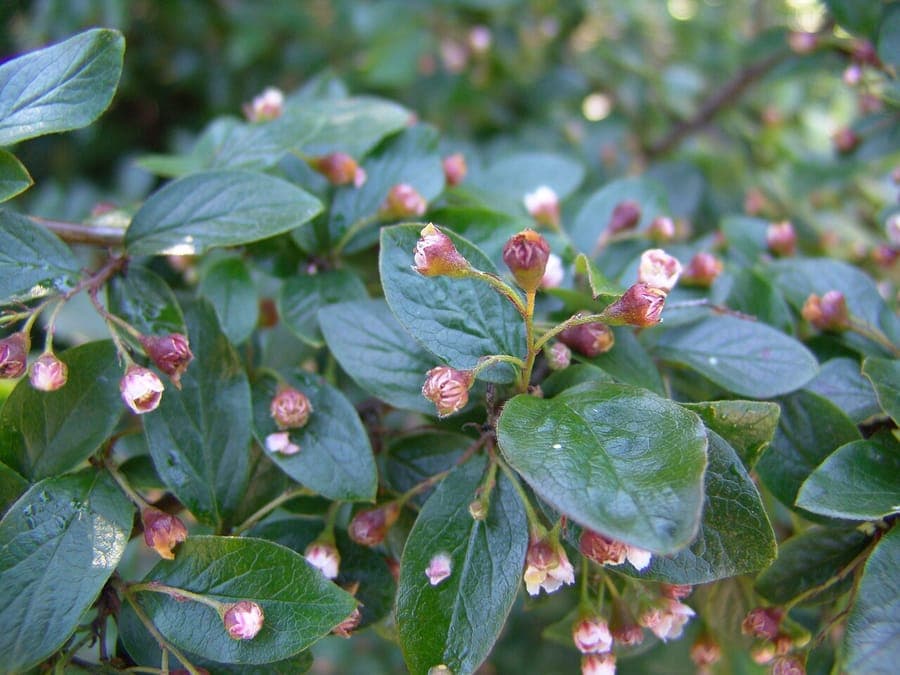
Manfred Morgner (ka-em-zwei-ein) / CC BY-SA 3.0, via Wikimedia Commons
Shiny cotoneaster: complete guide
Cotoneaster lucidus
Want to see Shiny cotoneaster: complete guide in your garden?
1 minute, no credit card
Overview
Cotoneaster lucidus, commonly known as shiny cotoneaster, is a resilient, deciduous shrub from the Rosaceae family that brings year-round structure and seasonal interest to gardens across the UK and northern Europe. Reaching 1.5 to 2 meters in height and spread, it's compact enough for small spaces yet tough enough to handle urban conditions. Its glossy green foliage, delicate white flowers in late spring, and dense clusters of bright red berries in autumn make it a standout in both formal and informal landscapes.
This shrub is prized by gardeners for its low maintenance, adaptability, and ecological value. It doesn't demand perfect soil or constant watering, and once established, it holds its own through dry summers and cold winters. The berries persist well into winter, offering a crucial food source for birds like thrushes and blackbirds when other options are scarce.
On gardenworld.app, you can design a planting scheme that integrates Cotoneaster lucidus into your hedge layout or border plan, ensuring proper spacing and seasonal coordination with companion plants.
Appearance & bloom cycle
The defining traits of Cotoneaster lucidus are its shiny, oval-shaped leaves and abundant berry production. The leaves are 3 to 6 cm long, dark green on top with a paler underside and a finely toothed margin. They turn yellow before dropping in late autumn, though some may cling to branches into early winter in milder areas.
Flowering occurs from late May to early June. Small, five-petaled white to pale pink flowers appear in clusters along the stems. They're subtly fragrant and attract early summer pollinators like bees and hoverflies. After pollination, green berries form and slowly ripen to a vibrant red by September. These 6 mm berries remain on the plant through winter, often lasting until February, providing long-term visual interest and sustenance for wildlife.
Ideal location
Cotoneaster lucidus thrives in full sun to light shade. For the best flowering and fruiting, aim for at least 6 hours of direct sunlight daily. In deep shade, growth becomes leggy, foliage dull, and berry production sparse.
It's well-suited to city gardens, coastal areas, and rural plots alike. Tolerant of pollution and dry soil, it handles roadside planting and exposed sites without issue. Its upright, spreading habit makes it ideal for low hedges (1–1.5 m tall) or as a standalone shrub in mixed borders. When planting as a hedge, space specimens 60–80 cm apart for a dense screen.
Soil requirements
This shrub is adaptable to a wide range of soil types-clay, loam, and sandy soils all work, provided drainage is adequate. It dislikes waterlogged conditions, which can lead to root rot. A pH between 5.5 and 7.5 is optimal, but slight deviations won't harm it.
At planting time, avoid adding fertilizer. Instead, mix in some well-rotted compost or garden soil to help root establishment. In heavy clay, add a layer of gravel or horticultural grit beneath the root ball to improve drainage.
Free design
Want to see Shiny cotoneaster: complete guide in your garden? Make a free design now.
Watering
Young plants need consistent watering during their first growing season-once per week during dry spells. After that, Cotoneaster lucidus is highly drought-tolerant and rarely needs supplemental water, except during prolonged dry periods (over 4 weeks without rain).
Use rainwater when possible. Overhead watering, especially in humid summers, can encourage fungal issues like powdery mildew. Water at soil level to keep foliage dry.
Pruning
Pruning isn't essential, but it helps maintain a tidy shape or keep a hedge neat. The best time is late winter to early spring (February to early March), before new growth starts. Avoid autumn pruning, as it removes the wood that would bear berries and exposes fresh cuts to winter damage.
Use sharp, clean secateurs. Remove dead, damaged, or crossing branches. For hedges, trim lightly to encourage bushiness. Remember: berries form on previous year's wood, so heavy pruning reduces fruiting the following autumn.
Maintenance calendar
- January: Check for broken branches, remove snow buildup if needed.
- February: Light pruning, clear dead wood.
- March: Final pruning window, check soil moisture for young plants.
- April: Monitor new shoots; no extra care needed.
- May: Bloom period-watch for pollinators.
- June: Fruit begins developing; avoid pruning.
- July: Watch young plants in droughts.
- August: Inspect for aphids or powdery mildew.
- September: Berries ripen, birds begin feeding.
- October: Leaf drop, leave fallen leaves as natural mulch.
- November: Final health check.
- December: Monitor container plants for frost.
On gardenworld.app, you can generate a custom maintenance schedule based on your local weather and planting date, helping you stay on top of care without guesswork.
Winter hardiness
Cotoneaster lucidus is hardy in USDA zones 5 to 8 (-29°C to -12°C), making it suitable for most of the UK and northern Europe. In the ground, it withstands winter well. Potted plants are more vulnerable-wrap containers in hessian or bubble wrap during hard frosts, and elevate them off cold surfaces to prevent root freeze.
Companion plants
Pair shiny cotoneaster with other low-maintenance, wildlife-friendly shrubs like Ilex crenata, Buxus sempervirens, or winter heathers (Erica carnea). For texture, combine with ornamental grasses like Deschampsia caespitosa or hardy perennials such as Sedum 'Herbstfreude'.
In a wildlife garden, grow it near nectar-rich plants like Echinacea, Salvia, or Centranthus ruber. These attract pollinators in summer, while the cotoneaster feeds birds in winter-creating a balanced ecosystem.
Closing
Cotoneaster lucidus earns its place in any garden that values resilience, beauty, and function. It's not flashy, but it's dependable-offering structure, color, and ecological support with minimal effort. You'll find it at most garden centres, where it's often sold as part of hedge bundles or bird-friendly planting kits. For gardeners who want a plant that works quietly but effectively, this shrub delivers year after year.
Want to see Shiny cotoneaster: complete guide in your garden? Make a free design now.
Upload a photo, pick a style, and get a photorealistic design with plant list in under a minute.
No credit card required


Similar plants
Siberian crab apple: complete guide
Malus x robusta
Complete guide to the Siberian crab apple (Malus x robusta): location, soil, pruning, winter hardiness and the best companion plants for your garden.
Chinese flowering crabapple (Malus x spectabilis): complete guide
Malus x spectabilis
Meet the Chinese flowering crabapple (Malus x spectabilis): a classic spring bloomer with carmine buds and pink blossom.
Potentilla crassinervia: complete guide
Potentilla crassinervia
Potentilla crassinervia, the Corsican cinquefoil, grows wild on Corsica and Sardinia's peaks. Discover how to grow this hardy alpine rock garden gem.