
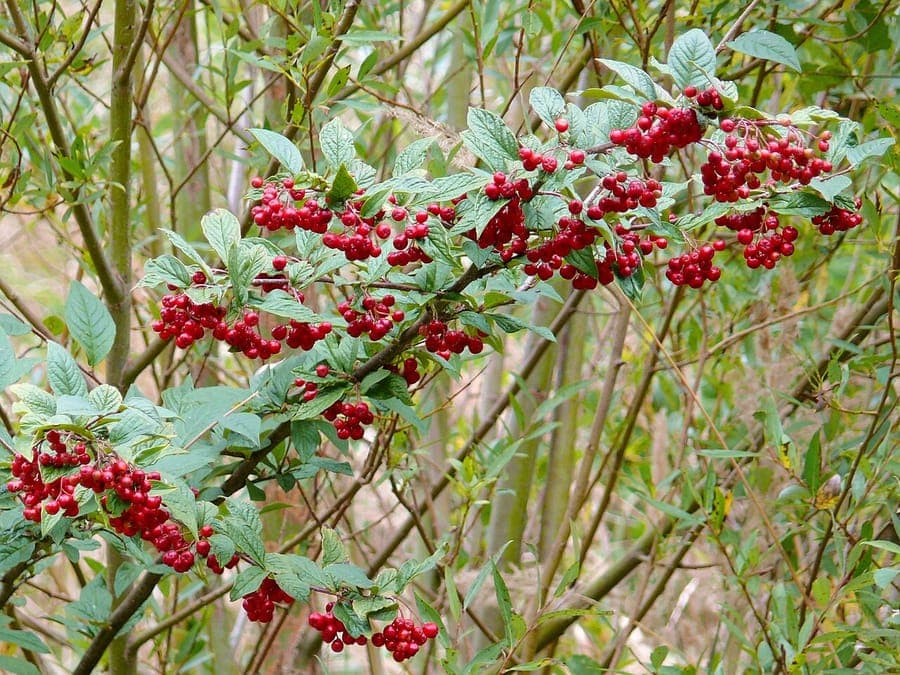
Malte / CC BY 3.0, via Wikimedia Commons
Hollyberry cotoneaster: complete guide
Cotoneaster bullatus
Want to see Hollyberry cotoneaster: complete guide in your garden?
1 minute, no credit card
Overview
Cotoneaster bullatus, commonly known as hollyberry cotoneaster, is a tough, evergreen shrub with a dense, bushy habit. Native to south-central China and Tibet, it adapts well to temperate garden conditions across Europe and North America. Mature specimens reach 1.5 to 2 meters in height and spread up to 1.8 meters wide, forming a reliable structural presence in borders or as informal hedging. Growth is moderate - expect 20 to 30 cm of annual increase under optimal conditions.
On gardenworld.app, you can design a planting scheme that integrates hollyberry cotoneaster for year-round texture, especially in mixed shrub borders or wildlife gardens. Its natural density makes it a top choice for privacy without the rigidity of formal hedges.
Appearance & bloom cycle
The standout feature of this plant is its deeply textured foliage. Leaves are elliptical, 4–8 cm long, glossy dark green above and covered in fine silvery hairs beneath. The upper surface has a distinct puckered or blistered texture - giving rise to the species name 'bullatus'. This adds visual interest even in winter, when other plants have died back.
From late May through July, small clusters of pink-tinged white flowers appear at the tips of branches. Each flower is about 1 cm across and rich in nectar, attracting bees and hoverflies. By late summer, these develop into bright red berries that deepen to a warm orange or copper tone by autumn. The berries persist well into winter, often lasting until February, providing food for birds like thrushes and blackbirds.
Ideal location
Plant in full sun to light shade. Full sun maximises flowering and berry production. In partial shade (up to 30% light reduction), the plant remains healthy but produces fewer fruits. Avoid deep shade - it leads to leggy growth and sparse foliage.
This cotoneaster works well at the front of borders, along low walls, or as part of a layered hedgerow. Allow 1.2 to 1.5 meters of space between plants for good air circulation. On gardenworld.app, you can simulate spacing and growth patterns to avoid overcrowding in future years.
Soil requirements
Hollyberry cotoneaster is adaptable to most soil types, including sandy loam and clay, as long as drainage is adequate. It prefers a pH between 5.5 and 7.5 - slightly acidic to neutral. Heavy, waterlogged soils are its main enemy, as they encourage root rot.
No heavy feeding is needed. In fact, avoid rich compost or manure at planting time, as this promotes leafy growth at the expense of flowers and berries. A thin layer of organic mulch in spring helps retain moisture and suppress weeds without over-feeding.
Watering
Once established (after the first growing season), this shrub is drought-tolerant. Young plants need regular watering during dry spells - about 10 liters every 10–14 days in summer. Water at the base to prevent fungal issues on leaves.
Overhead watering should be avoided, especially in humid conditions. In wet winters, ensure the planting site doesn't become waterlogged. If your garden has heavy clay, consider raised beds or mounding the soil slightly to improve drainage.
Free design
Want to see Hollyberry cotoneaster: complete guide in your garden? Make a free design now.
Pruning
Pruning is minimal. Cotoneaster bullatus has a naturally tidy shape. If shaping is desired, do it in late spring, right after flowering. Cut back up to one-third of the previous season's growth to encourage bushiness. Avoid hard pruning in autumn or winter - it removes next year's flower buds.
Remove any dead, damaged, or crossing branches in early spring to improve airflow. Always use clean, sharp secateurs to reduce the risk of disease transmission.
Maintenance calendar
- January: Check for winter damage. Remove any dead stems.
- February: No action required.
- March: Light tidy-up pruning if needed.
- April: Inspect for aphids or scale insects. Apply mulch.
- May: Prune lightly after flowering if shaping.
- June–July: Main flowering period. No pruning.
- August: Water young plants during dry spells.
- September: Berries begin to colour up.
- October: Leave berries for birds. No feeding.
- November: Keep foliage in place for winter cover.
- December: Monitor for frost damage on exposed plants.
Winter hardiness
Hardy in USDA zones 6–8 (-23°C to -12°C). In zone 5, it may suffer top dieback in harsh winters but often regrows from the base. Young or container-grown plants benefit from a protective layer of mulch or fleece around the root zone in the first winter.
In areas with wet, cold winters, ensure good air movement and avoid piling wet leaves around the stem, which can encourage fungal infections.
Companion plants
Pair hollyberry cotoneaster with other structural evergreens like boxwood, inkberry (Ilex glabra), or dwarf holly. For underplanting, consider hellebores, snowdrops, or winter aconites for early-season interest.
In a wildlife garden, combine with Viburnum, pyracantha, or hawthorn to extend the food supply for birds. For a naturalistic effect, plant alongside sedums, thymes, or native grasses like Deschampsia.
Avoid aggressive groundcovers like ivy or periwinkle, which can overwhelm the base.
Closing
Cotoneaster bullatus is a resilient, low-fuss shrub that delivers big on beauty and function. With its textured leaves, cheerful flowers, and persistent berries, it bridges the seasons with ease. It's ideal for gardens aiming for year-round structure, low upkeep, or bird-friendly planting.
Buy healthy stock from reputable garden centres - look for firm green foliage and moist root balls. Avoid plants with yellowing leaves or signs of pests.
Whether you're planting a single specimen or a small hedge, hollyberry cotoneaster earns its place in any garden. And when you're planning your layout, head to gardenworld.app. You can create a digital garden plan there and even share it with your local nursery for accurate plant quantities.
Want to see Hollyberry cotoneaster: complete guide in your garden? Make a free design now.
Upload a photo, pick a style, and get a photorealistic design with plant list in under a minute.
No credit card required


Similar plants
Siberian crab apple: complete guide
Malus x robusta
Complete guide to the Siberian crab apple (Malus x robusta): location, soil, pruning, winter hardiness and the best companion plants for your garden.
Chinese flowering crabapple (Malus x spectabilis): complete guide
Malus x spectabilis
Meet the Chinese flowering crabapple (Malus x spectabilis): a classic spring bloomer with carmine buds and pink blossom.
Potentilla crassinervia: complete guide
Potentilla crassinervia
Potentilla crassinervia, the Corsican cinquefoil, grows wild on Corsica and Sardinia's peaks. Discover how to grow this hardy alpine rock garden gem.