
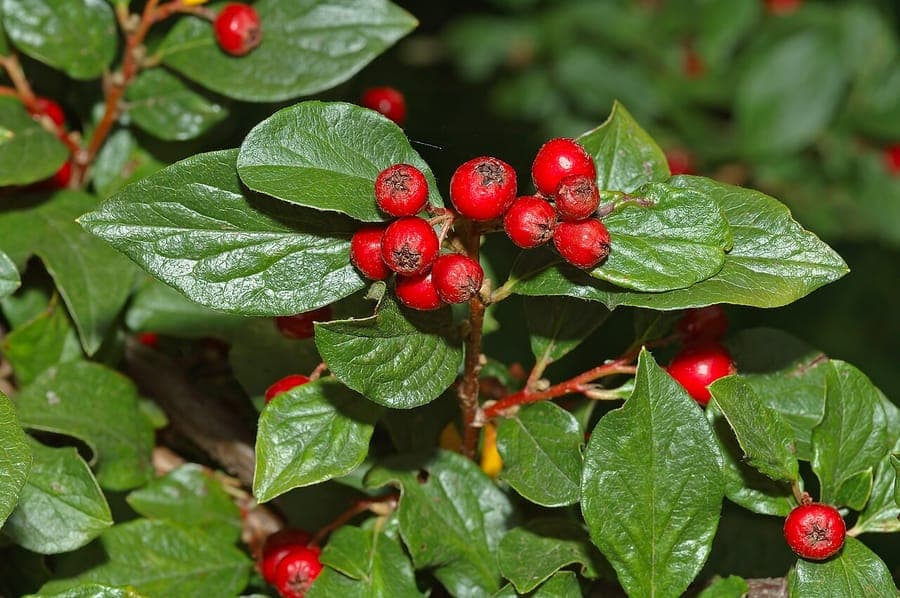
André Karwath aka Aka / CC BY-SA 2.5, via Wikimedia Commons
Cotoneaster acuminatus: complete guide
Cotoneaster acuminatus
Want to see Cotoneaster acuminatus: complete guide in your garden?
1 minute, no credit card
Overview
Cotoneaster acuminatus, commonly known as the Acuminate Cotoneaster, is an elegantly-growing low shrub originating from the Himalayan region and Central China. This refined plant belongs to the Rosaceae family and has become increasingly popular in British landscape gardens due to its architectural growth habit and extended seasonal beauty. The plant forms naturally compact shapes without requiring extensive intervention.
This specimen is particularly suitable for gardeners seeking a refined yet simple-to-maintain plant. With its fine leaf structure, numerous small pink flowers, and glossy red berries in autumn, this Cotoneaster offers years of visual interest. The plant fits perfectly in modern gardens, borders, and as groundcover on slopes.
Appearance and bloom
The Acuminate Cotoneaster develops into an elegantly spreading shrub, usually 60 to 100 centimeters tall. The growth habit is horizontally spreading with rigid upright branches, creating an interesting architectural form. The plant becomes very densely clothed, making it excellent for groundcover applications.
The leaves are particularly striking, small and acuminate (explaining the scientific name). They measure approximately 1 to 1.5 centimeters long, deep green, and glossy. The foliage remains virtually evergreen and maintains its elegant appearance throughout winter.
From May through June, numerous small flowers appear in compact panicles. These delicate blooms are pale pink to white in color and highly attractive to bees, bumbles, and butterflies. Following flowering, small round fruits develop, initially green in colour. By late summer, they ripen to a bright red. These fruits persist on the plant for months, providing bird food well into autumn.
Ideal location
Cotoneaster acuminatus thrives in full sun to partially shaded locations. Full shade results in sparser flowering and reduced fruit production. Ideally, choose a location receiving at least four hours of direct sunlight daily. The plant performs exceptionally well in coastal areas and other windy locations.
The shrub is flexible regarding growing conditions and tolerates dry situations well. This makes it an excellent choice for drought-prone gardens and xeriscaping projects. The plant also grows well in garden corners where other plants struggle.
Use this plant along borders, on slopes, in beds, or in partially shaded corners beneath deciduous trees. The compact growth habit also makes it suitable for small gardens.
Soil
Cotoneaster acuminatus is not fussy regarding soil type. The plant thrives in both acidic and alkaline soils with pH between 5.5 and 8.0. This means the plant can grow in virtually all British gardens.
Essential, however, is good drainage. Heavy, stiff soils should be improved by adding sand and compost. The plant tolerates poor soils well and does not require regular feeding. Excessive nutrition actually leads to reduced flowering and fruiting.
When planting, compost or garden waste can be incorporated. A mulch layer of 5 centimeters around the plant helps maintain balanced soil moisture and suppresses weeds. Ensure the plant does not stand in stagnant water, which can cause root rot.
Free design
Want to see Cotoneaster acuminatus: complete guide in your garden? Make a free design now.
Watering
After planting, the Acuminate Cotoneaster should be watered regularly during its first growing season. This helps establish a good root system. Once established, the plant is highly drought-tolerant.
During normal rainy periods, you need provide practically no supplemental water. Only during extreme drought, especially in warm weather, may watering be necessary. Ensure the plant's root ball does not completely dry out during very dry periods.
In containers, watering should be more frequent. Check if the soil feels dry a couple of centimeters below the surface before watering. Over-watering is more damaging than under-watering for this plant.
Pruning
Cotoneaster acuminatus grows naturally in a beautiful form and requires minimal pruning. Only maintenance pruning in early spring is recommended to remove damaged branches.
Heavy pruning is not necessary and may damage the elegant natural form. Should the plant become too large, light pruning after flowering in June can help. All pruning should be done carefully to maintain the architectural form.
The plant quickly recovers after pruning and tolerates it well. Severe frost may occasionally damage branches, which can be removed. Avoid pruning in autumn, as this may disturb the berry food source for birds.
Maintenance calendar
March-April: Check for winter damage. Add mulch. Remove dead wood. May-June: Plant flowers abundantly. Water regularly if dry. Gentle pruning after flowering. July-August: Fruits form and turn red. Minimal maintenance required. September-October: Fruits are abundantly red. Birds feast on them. Enjoy bird visits. November-December: Plant goes dormant. Foliage remains green. No maintenance needed. January-February: Winter period. Protect young plants in first winter.
Winter hardiness
Cotoneaster acuminatus is very hardy and can withstand temperatures of -20 degrees Celsius without difficulty. The plant is suitable for all British climate zones.
During normal winters, the plant requires no protection. Only very young plants may benefit from extra mulch in their first winter. The plant survives normal British frosts with ease.
During extremely cold winters, a few branches may suffer frost damage, but the plant recovers quickly. Many branches on the plant shoot out readily and compensate for damage.
Companion plants
Combine Cotoneaster acuminatus well with other low to medium-growing shrubs. Excellent companions include Euonymus fortunei, Buxus (box), and evergreen Lonicera species.
In borders, it pairs well with evergreen ferns, Helleborus and Carex grasses. The red berries form a nice contrast with silver-grey foliage of Artemisia and Santolina. For Japanese gardens, it also combines well with dwarf Ilex varieties.
Low-growing groundcovers like Vinca and Hedera create beautiful underplanting. In rock gardens and alpine troughs, this Cotoneaster complements dwarf conifers perfectly.
Conclusion
Cotoneaster acuminatus offers years of ornamental value with minimal maintenance requirements. From delicate pink flowers in May to glossy red berries in autumn, this plant delivers seasonal beauty.
Whether you are establishing a slope groundcover, arranging borders, or simply seeking an elegant low shrub, Cotoneaster acuminatus is an excellent choice. Plant material is available from major garden centers in various sizes.
Want to see Cotoneaster acuminatus: complete guide in your garden? Make a free design now.
Upload a photo, pick a style, and get a photorealistic design with plant list in under a minute.
No credit card required


Similar plants
Siberian crab apple: complete guide
Malus x robusta
Complete guide to the Siberian crab apple (Malus x robusta): location, soil, pruning, winter hardiness and the best companion plants for your garden.
Chinese flowering crabapple (Malus x spectabilis): complete guide
Malus x spectabilis
Meet the Chinese flowering crabapple (Malus x spectabilis): a classic spring bloomer with carmine buds and pink blossom.
Potentilla crassinervia: complete guide
Potentilla crassinervia
Potentilla crassinervia, the Corsican cinquefoil, grows wild on Corsica and Sardinia's peaks. Discover how to grow this hardy alpine rock garden gem.