
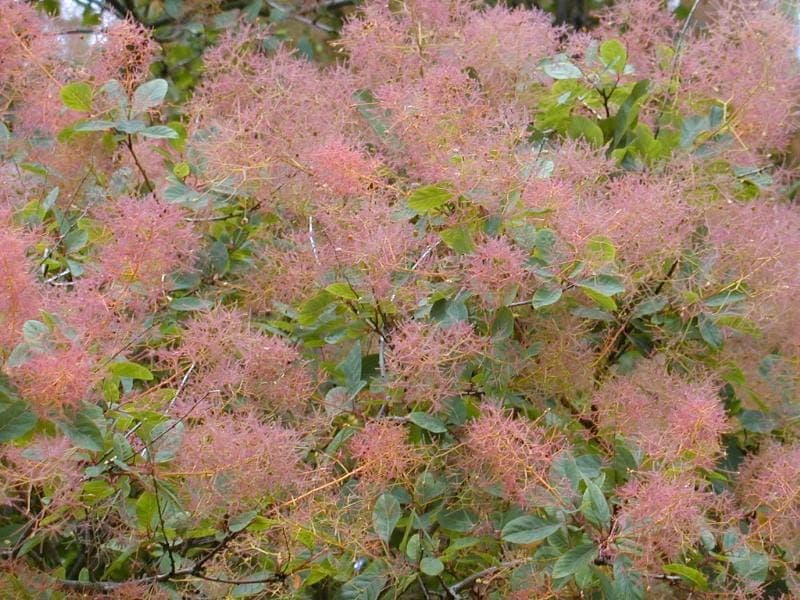
Alexander Dunkel / CC BY-SA 2.5, via Wikimedia Commons
Fustet: complete guide
Cotinus coggygria
Want to see Fustet: complete guide in your garden?
1 minute, no credit card
Overview
Cotinus coggygria, commonly known as fustet or smoke bush, is a striking deciduous shrub or small tree that brings year-round drama to gardens. Native to regions across southern Europe and central China, including Austria, Greece, and Bulgaria, it thrives in USDA hardiness zones 5 to 8. In the garden, it typically reaches 3 to 5 meters in height and spread, forming an open, rounded habit. What sets it apart is its unique flowering display-large, fluffy panicles of yellow flowers that fade into airy, smoke-like tufts, giving it its popular name. These 'smoke' effects linger from late spring into summer. The foliage is equally impressive, with many cultivars offering deep purple, copper, or golden leaves. On gardenworld.app, you can map out where a fustet fits best in your garden layout, especially when considering shade patterns and mature plant spread.
Appearance & bloom cycle
The fustet shows off its ornamental value from spring through fall. In May and June, tiny yellow flowers cluster into 15–20 cm wide panicles. While the actual blooms are short-lived, the showy, hair-like filaments persist for weeks, creating a soft, smoky haze above the foliage. Leaves emerge in spring as bronze-green, maturing to rich purple in popular cultivars like 'Royal Purple', or bright gold in 'Golden Spirit'. Each leaf is 3–8 cm wide, broadly oval, and often slightly wavy at the edges. In autumn, the foliage turns brilliant shades of red, orange, and yellow, adding a final burst of color before leaf drop. Mature bark becomes gray and slightly fissured, adding winter texture.
Ideal location
Fustet thrives in full sun-aim for a light exposure of 7 out of 10. Full sun ensures the most vibrant leaf color, especially in purple and gold cultivars. It can tolerate light shade, but this may reduce flowering and dull the foliage. Plant it where it has room to grow-minimum 1.5 meters from other shrubs or structures. It also performs well in large containers (at least 60 cm wide) for patios or small gardens. Avoid overcrowding to maintain good airflow and prevent fungal issues. On gardenworld.app, you can simulate how a fustet will look in your space season by season, helping you decide on spacing and companion plants.
Soil requirements
This shrub is adaptable but prefers well-drained soil. It grows best in neutral to slightly alkaline conditions, with a pH of 7.0 to 7.5. Avoid heavy, waterlogged clay unless amended with grit or sand. Sandy soils work well, provided they retain some moisture during dry spells. When planting, don't add fertilizer-excess nutrients can promote weak, leafy growth at the expense of flowering. A light mulch of compost or leaf mold in spring helps retain moisture and moderates soil temperature.
Free design
Want to see Fustet: complete guide in your garden? Make a free design now.
Watering
Young fustets need consistent watering during their first growing season-about 10–15 liters per week during dry periods. Once established (after year two), the plant is highly drought-tolerant thanks to its deep root system. Mature shrubs rarely need supplemental watering, except during prolonged droughts (over 4 weeks without rain). Always water at the base to avoid wetting the foliage, which can encourage fungal diseases. Let the soil dry slightly between waterings.
Pruning
Pruning is key to maintaining shape and vigor. The best time is late winter to early spring (February to March). For bold foliage color and larger leaves, cut the plant back hard to 20–30 cm from the ground-this is called coppicing. For more flowering, prune lightly, removing only dead or crossing branches and leaving 3–5 main stems. Use sharp, clean tools to prevent disease spread. Avoid pruning in late summer or fall, as this can stimulate tender new growth vulnerable to frost.
Maintenance calendar
- Jan: Inspect for winter damage, plan pruning
- Feb: Begin pruning, remove dead wood
- Mar: Finish pruning, new shoots emerge
- Apr: Monitor new growth, no feeding needed
- May: Flower panicles begin to form, watch for aphids
- Jun: Peak bloom, smoke effect visible
- Jul: Low maintenance, occasional deep watering in drought
- Aug: No pruning, allow stems to harden
- Sep: Leaves begin autumn coloration
- Oct: Let leaves fall naturally, clean up debris
- Nov: Protect young plants from severe frost with mulch
- Dec: Winter check, no action required
Winter hardiness
Fustet is hardy down to -20°C (USDA zone 5). In most of the UK and US zones 5–8, it overwinters well in the ground. Young plants may benefit from a protective mulch around the base in their first two winters. Mature shrubs need no winter protection but may suffer tip dieback in harsh winters-this can be pruned out in spring.
Companion plants
Pair fustet with plants that contrast its smoky texture and bold foliage. Silver-leaved perennials like Artemisia or Stachys byzantina highlight its purple tones. Try late-summer bloomers such as Echinacea, Rudbeckia, or ornamental grasses like Miscanthus. For structure, combine with boxwood hedges or golden elder (Sambucus nigra 'Aurea'). Avoid planting too close-allow space for air circulation.
Closing
Cotinus coggygria is a low-maintenance, high-impact plant that earns its place in any garden. With proper sun, well-drained soil, and strategic pruning, it delivers season after season of visual interest. Whether grown as a shrub or trained into a small tree, it adds movement and color. Choose 'Royal Purple' for drama or 'Golden Spirit' for sunny warmth. You'll find fustet at most garden centres in the UK and US. And remember-on gardenworld.app, you can design your entire smoke bush border digitally before planting a single shrub.
Want to see Fustet: complete guide in your garden? Make a free design now.
Upload a photo, pick a style, and get a photorealistic design with plant list in under a minute.
No credit card required


Similar plants
Skunkbush sumac: complete guide
Rhus trilobata
Everything about Rhus trilobata: siting, soil, autumn colour, pruning, and how this tough ornamental shrub earns a place in any garden.
Winged sumac: complete guide
Rhus copallinum
Everything about Rhus copallinum, the winged sumac with spectacular autumn colour. Location, pruning and garden value in full detail.
Aromatic sumac: complete guide
Rhus aromatica
Full guide to aromatic sumac (Rhus aromatica): planting, soil, care, pruning and companion plants for dry, sunny gardens and slope stabilisation.