
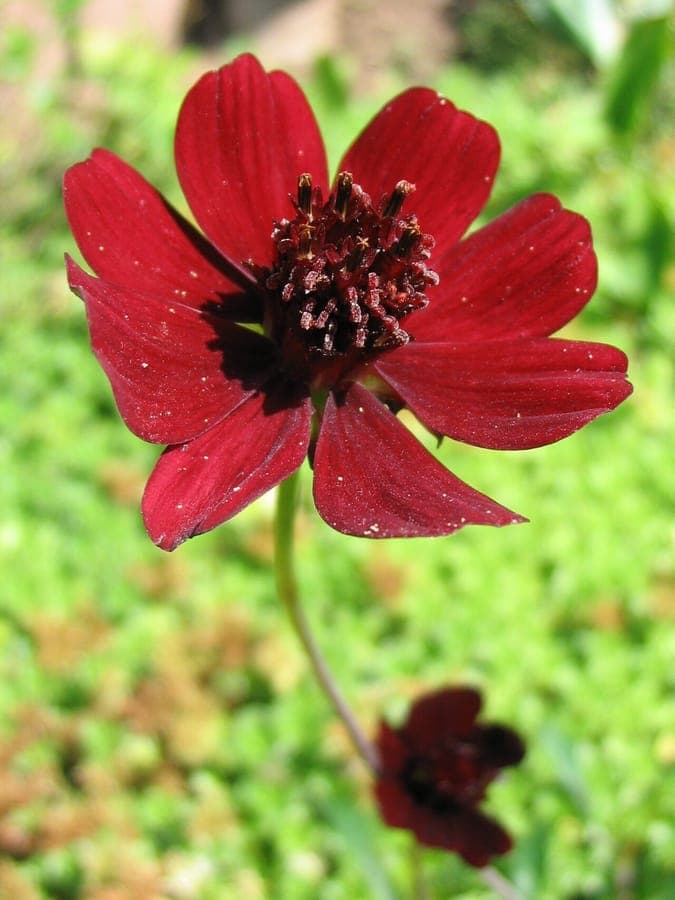
Björn Appel / CC BY-SA 3.0, via Wikimedia Commons
Cosmos atrosanguineus: complete guide
Cosmos atrosanguineus
Want to see Cosmos atrosanguineus: complete guide in your garden?
1 minute, no credit card
Overview
Chocolate cosmos (Cosmos atrosanguineus) is a rare, elegant plant native to the mountain forests of Mexico, celebrated for its virtually black-red flowers and subtle chocolate fragrance - an extraordinary rarity in ornamental flora. This tender herbaceous perennial reaches only 60-90 centimeters, yet delivers unparalleled sophistication and refinement. While uncommon in most European gardens, enthusiasts increasingly recognize its irreplaceable charm.
In its native Mexican mountain habitats, chocolate cosmos grows in moist, shaded woodland sites. For Dutch and Belgian gardens, it requires protected microclimates and precise water management. Its precious flowers make every growing season an adventure in horticultural appreciation.
Appearance and Bloom
Chocolate cosmos develops a graceful, open form with fine, almost feathery foliage. The flowers are the true stars: deep dark-red to purplish tones (appearing nearly black in certain light), single to semi-double form. Each bloom reaches 2-3 centimeters across, held on long, swaying stems that impart movement and elegance.
Blooming commences in July and continues until the first frost - a spectacular display spanning three to four months. The chocolate fragrance is subtle yet distinctive, especially noticeable in warm weather. This unique combination of color and scent creates a sensory experience unmatched in most gardens. Bees and butterflies become ardent visitors.
Ideal Location
Chocolate cosmos demands specific conditions: full sun exposure is non-negotiable, requiring minimum 6-8 hours direct sunlight daily. Half-shade dramatically reduces flower production. Protection from harsh afternoon sun in extremely hot climates proves beneficial. Shielding from strong winds protects delicate stems from damage.
In front garden settings, position this plant where it can command attention - not relegated to side borders but as a focal point, perhaps front-and-center in a mixed planting. Pathways beside plantings work excellently, allowing visitors to appreciate both color and fragrance intimately.
Soil
Chocolate cosmos proves fastidious regarding soil. In its Mexican mountain habitat, it thrives in light, humus-rich, excellently-draining soils. A mixture of garden soil, peat or coir, and coarse sand in ratio 2:1:1 works beautifully. Soil pH ideally ranges 6.0-7.0.
Planting without soil amendment results in stunted growth and root rot. Incorporate generous quantities of perlite or gritty sand for drainage. Avoid mulching, as this raises soil moisture too high. Allow soil to dry slightly between waterings. Never tolerate soggy conditions.
Free design
Want to see Cosmos atrosanguineus: complete guide in your garden? Make a free design now.
Watering
This represents the most critical care aspect. Chocolate cosmos requires consistent yet careful watering. During growth period (June-August), keep soil slightly moist but never waterlogged. Between waterings, allow soil to dry somewhat at surface level.
Fungal diseases and root rot prove lethal. Water early morning at the plant base, never wetting foliage. During extreme heat, daily watering may be necessary, but always ensure drainage. From August onward, gradually reduce moisture gradually. This careful balance separates success from failure.
Pruning
Minimal pruning is needed. Light pinching of shoot tips in June encourages bushier growth and improved flowering. Remove spent flowers regularly (deadheading) to stimulate continued blooming. This plant dislikes aggressive cutting; it prefers graceful, delicate handling.
If plants become leggy by late season, gentle support with bamboo stakes helps. Avoid drastic pruning; the plant tolerates this poorly.
Maintenance Calendar
May: Prepare seedlings indoors or acquire nursery-grown plantlets. June: Transplant outdoors into richly prepared soil, pinch tips for branching. July-August: Regular watering, deadheading, light balanced feeding. September-October: Reduce watering, prepare frost protection measures. November-December: Implement protection; consider overwintering strategies.
Winter Hardiness
Chocolate cosmos is not winter-hardy in the Netherlands or Belgium. Frosts below -5 degrees Celsius kill plants outright. Two strategies exist: treat as annual (resowing each spring) or carefully overwinter in protected locations. For overwintering: dig plants before first frost, pot in sand mixture, keep extremely dry in unheated but frost-free shelter.
Alternatively: sow seeds indoors late February-March, growing on for May transplanting. More challenging but rewarding for devoted enthusiasts.
Companion Plants
Chocolate cosmos pairs beautifully with lower plants of minimal foliage mass. Gray-leaved plants (Senecio, Artemisia) create striking contrast. Low-growing salvias or Diascia beneath flowers work well. Avoid overcrowding; this plant craves light and air circulation.
In container groupings, place chocolate cosmos centrally, surrounded by lower trailers like Helichrysum or Ipomoea, creating an elegant composition with maximum visual impact.
Closing Thoughts
Chocolate cosmos is not a plant for casual gardeners, but for enthusiasts who treat their gardens as living artworks. Its demands prove worthwhile. Readily available from online seed suppliers and specialized nurseries worldwide.
Risk this exotic beauty in your front garden. Once established, you'll never overlook its dark elegance and subtle fragrance - a secret garden treasure perfect for gardenworld.app users with refined sensibilities.
Want to see Cosmos atrosanguineus: complete guide in your garden? Make a free design now.
Upload a photo, pick a style, and get a photorealistic design with plant list in under a minute.
No credit card required


Similar plants
Calendula stellata: complete guide
Calendula stellata
Complete guide to Calendula stellata, the star-flowered marigold from Sicily: location, soil, watering and companion planting tips.
Korean chrysanthemum: complete guide
Chrysanthemum x rubellum
Chrysanthemum x rubellum is a hardy autumn perennial with single pink to copper flowers from August to November. Care and combinations.
Helianthus divaricatus: complete guide
Helianthus divaricatus
Helianthus divaricatus is a North American woodland sunflower with yellow summer blooms, ideal for naturalistic borders and shady edges.