
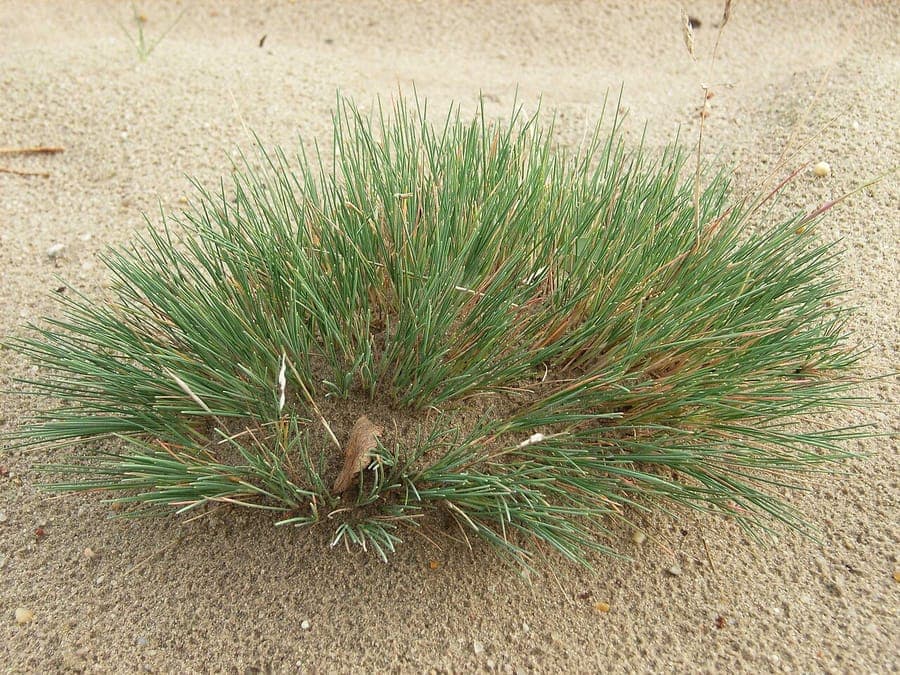
Nordlicht / CC BY-SA 3.0, via Wikimedia Commons
Gray clubawn grass: complete guide
Corynephorus canescens
Want to see Gray clubawn grass: complete guide in your garden?
1 minute, no credit card
Overview
Gray clubawn grass, or Corynephorus canescens, is a delicate, upright grass that brings subtle elegance to dry, sunny gardens. Native to parts of central and western Europe-including Germany, France, Belgium, and the UK-it thrives in sandy, well-drained soils and is increasingly popular among gardeners seeking low-effort, high-character plants. Though not native to the US or Canada, it's perfectly suited to USDA hardiness zones 6–8, where winter lows don't drop below -15°C.
This grass stands about 20 cm tall at the foliage level, with flowering stems reaching up to 40 cm. It has a fine texture and a silvery-gray hue, making it ideal for adding soft contrast in rock gardens, gravel beds, or xeriscapes. On gardenworld.app, you can design a planting scheme that highlights its airy presence alongside bolder-textured perennials.
Appearance & bloom cycle
Gray clubawn grass forms narrow, upright clumps with fine, hairy leaves that feel soft to the touch. The foliage remains low, forming tufts no wider than 25 cm. From May through August, slender flower stalks rise above the leaves, bearing tiny, pale blue to whitish spikelets. These aren't showy in the traditional sense, but in mass plantings, they create a shimmering, cloud-like effect-especially in morning light or on breezy days.
The bloom peaks in June and July, but the dried seed heads persist into winter, providing structure and interest when most perennials have died back. Unlike many grasses, it doesn't flop or become messy, maintaining a tidy appearance year-round.
Ideal location
This grass demands full sun-rate it an 8 out of 10 for light needs. Choose a south- or southwest-facing spot that receives direct sunlight for at least 6–8 hours daily. It performs best in open, exposed areas with good air circulation, such as rockeries, dry slopes, or gravel gardens.
Avoid shaded or damp corners. It won't survive under tree canopies or in heavy clay soils that stay wet. If your garden lacks natural sun exposure, use gardenworld.app to simulate light patterns and identify the best microclimate for this grass.
Soil requirements
Gray clubawn grass prefers poor to moderately fertile, sandy, or gritty soils with a pH between 5.5 and 6.5. It absolutely hates wet feet, so drainage is critical. If your soil is heavy, amend it with coarse sand, perlite, or crushed granite to improve porosity.
Do not add compost, manure, or fertilizer. This grass thrives on neglect-rich soils lead to weak growth and lodging. Avoid limestone-rich substrates; it's not calcicole and may decline on alkaline ground.
Free design
Want to see Gray clubawn grass: complete guide in your garden? Make a free design now.
Watering
Once established, Gray clubawn grass is highly drought tolerant. Water weekly during the first growing season (April–June), giving about 1 liter per plant during dry spells. After that, it rarely needs supplemental irrigation-even during prolonged droughts.
Overwatering is a bigger risk than underwatering. In humid climates, ensure the crown stays dry to prevent fungal rot. No need for drip systems or soaker hoses-this is a true water-wise plant.
Pruning
No pruning is required. Leave the plant intact through winter-the standing foliage protects the crown and adds subtle texture to the dormant garden. In late winter or early March, cut back old growth to about 5 cm above the soil using sharp, clean shears.
If you want to use the dried plumes in arrangements, harvest them in late summer, tie in small bundles, and hang upside down in a dark, airy room for two to three weeks.
Maintenance calendar
- January: Dormant. No action needed.
- February: Monitor for snow damage. Prepare tools for spring cleanup.
- March: Cut back old growth to 5 cm. Remove debris.
- April: Watch for new shoots. Water lightly if dry.
- May: Flowering begins. No feeding.
- June-July: Peak bloom. Full sun required.
- August: Seed heads mature. Optional harvest for dried flowers.
- September–December: Dormancy sets in. No care required.
Winter hardiness
Hardy to USDA zone 6 (-15°C), Gray clubawn grass survives cold winters with ease. In zones 7–8, it remains evergreen in milder conditions. Avoid mulching with organic matter-this can trap moisture and cause crown rot. A light top-dressing of gravel is fine to improve drainage.
In areas with heavy winter rainfall, consider planting on a slope or raised bed to prevent waterlogging.
Companion plants
Pair with drought-tolerant companions like Sedum 'Autumn Joy', Thymus vulgaris, Festuca glauca, or Eryngium planum. These share similar soil and sun needs and create a cohesive, low-water planting scheme.
Avoid aggressive spreaders like mint or moisture-loving plants such as Astilbe. Gray clubawn grass is subtle-don't let it get lost in a crowded border.
Closing
Gray clubawn grass is a quiet standout-perfect for gardeners who value texture, restraint, and resilience. Its silvery foliage and airy blooms bring understated beauty to minimalist or ecological designs. Plant in groups of 5–7 for best visual impact.
You can find Corynephorus canescens at garden centres across the UK and US, especially those specializing in ornamental grasses or native alternatives. Look for reputable suppliers to ensure you're getting the true species. For layout inspiration and plant spacing tools, visit gardenworld.app and build a custom design that puts this graceful grass front and center.
Want to see Gray clubawn grass: complete guide in your garden? Make a free design now.
Upload a photo, pick a style, and get a photorealistic design with plant list in under a minute.
No credit card required


Similar plants
Sporobolus pungens: complete guide
Sporobolus pungens
Sporobolus pungens is a stoloniferous Mediterranean coastal grass with outstanding salt and drought tolerance, perfect for seaside and dry gardens.
Mediterranean aegilops: complete guide
Aegilops biuncialis
Everything about Aegilops biuncialis, a Mediterranean annual grass with ornamental spikes and outstanding drought tolerance for dry gardens.
Silver bluestem: complete guide
Bothriochloa saccharoides
Full guide to Bothriochloa saccharoides (silver bluestem): site, soil, watering, winter hardiness, pruning, and garden companions.