
Fritz Geller-Grimm / CC BY-SA 2.5, via Wikimedia Commons
Giant filbert: complete guide
Corylus maxima
Want to see Giant filbert: complete guide in your garden?
1 minute, no credit card
Overview
Corylus maxima, better known as Giant filbert, is a standout among nut-bearing trees thanks to its impressive size, early ornamental blooms, and flavorful nuts. Native to the Balkans - specifically Yugoslavia - this hardy deciduous tree thrives across temperate zones, including USDA zones 4 to 8. Reaching heights of 6 to 8 meters with a spread of 4 to 5 meters, it's a bold choice for medium to large gardens. Unlike common hazel, the Giant filbert produces longer catkins and larger nuts, making it both a visual and edible asset.
If you're planning where to place this tree, gardenworld.app offers garden design tools that help you visualize spacing and growth patterns so your Giant filbert has room to flourish.
Appearance & bloom cycle
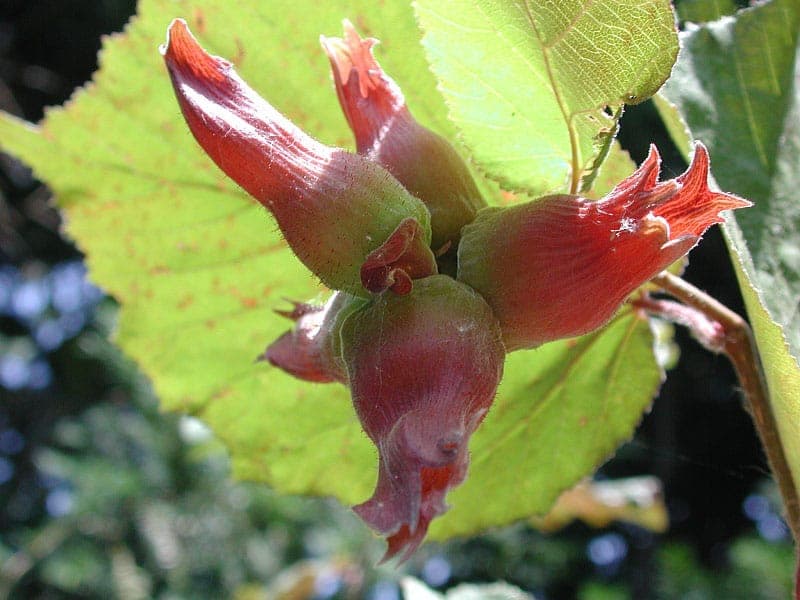
One of the earliest bloomers, Giant filbert flowers from January through March. The male catkins are its showpiece - dangling yellow strands up to 10 cm long that catch the winter light beautifully. Female flowers are tiny, red, and often overlooked, but they develop into clusters of edible nuts by late summer. The nuts mature in August when the husks turn from green to tan and split open slightly.
The foliage is broad, rounded, and textured with a coarsely toothed edge. In autumn, leaves shift from deep green to warm yellow, adding seasonal interest. The tree remains relatively open in structure, allowing dappled light through - ideal for companion planting underneath.
Ideal location
Choose a spot with full sun to light shade. At least 6 hours of direct sunlight daily ensures optimal nut production. While the tree tolerates partial shade, fruit yield drops significantly. Give it plenty of space - a minimum of 3 meters from buildings or other large plants - to avoid root competition and allow for good airflow. Avoid tight corners or crowded borders.
Cross-pollination boosts nut set, so planting near other Corylus species like Corylus avellana increases your harvest. Use gardenworld.app to explore compatible pollination partners and design a productive orchard corner.
Soil requirements
Giant filbert grows well in a range of soils but prefers deep, loamy, well-drained ground with a pH between 6.0 and 7.0. It handles clay if drainage is adequate, and sandy soils if enriched with organic matter. Avoid waterlogged or highly acidic soils. Before planting, mix in compost or well-rotted manure to boost fertility and moisture retention. A 5–8 cm mulch layer of bark or leaf mold helps maintain soil health and suppress weeds.
Free design
Want to see Giant filbert: complete guide in your garden? Make a free design now.
Watering
Young trees need consistent moisture during their first two growing seasons. Water deeply once a week with 10–15 liters, especially during dry spells. Established trees are drought-tolerant but produce better yields when watered during prolonged dry periods in summer. Never let the root zone stay soggy - this invites root rot. Mulching reduces evaporation and keeps roots cool.
Pruning
Prune in late winter or early spring before bud break. Remove dead, damaged, or crossing branches to open the canopy. For a tree form, train a single leader and prune lower limbs up to 1.5 meters. For a shrubby look, allow multiple stems from the base. Avoid heavy pruning during flowering, as catkins form on previous year's wood. Never cut back into old wood unless absolutely necessary - regrowth is slow.
Maintenance calendar
- January: Inspect for pests; light structural pruning
- February: Peak bloom; protect from strong winds
- March: Apply balanced organic fertilizer
- April: Mulch around base; watch for aphids
- May: No pruning; fruit set begins
- June: Water if rainfall is below 25 mm/week
- July: Keep area weed-free; check for nut development
- August: Harvest nuts when husks split open
- September: Rake fallen leaves to reduce disease risk
- October: Evaluate shape; minor corrective pruning
- November: Replenish mulch; protect young trunks from rodents
- December: Check for winter damage
Winter hardiness
Hardy down to -20°C (USDA zone 4), Giant filbert handles cold winters well. Young trees may suffer frost damage on new growth, so consider wrapping the trunk with burlap in exposed sites. Mature trees are resilient and require no special protection in most UK and North American climates.
Companion plants
Because Giant filbert leafs out late, it's perfect for pairing with early spring bulbs like crocus, snowdrops, and daffodils. Underplant with shade-tolerant perennials such as hostas, ferns, or heuchera. Avoid invasive groundcovers or heavy feeders that compete for nutrients. For structure, add ornamental grasses or catmint along the drip line.
Closing
Giant filbert brings beauty, function, and longevity to any thoughtful garden plan. With minimal care, it rewards with years of early blooms and edible harvests. Whether you're after homegrown snacks or a focal point with winter interest, this tree delivers. Just plan ahead - its mature size demands space and foresight.
Available at garden centres across the UK and North America, typically sold bare-root or in containers from November to March. Look for healthy specimens at trusted retailers like garden centres nationwide.
Want to see Giant filbert: complete guide in your garden? Make a free design now.
Upload a photo, pick a style, and get a photorealistic design with plant list in under a minute.
No credit card required


Similar plants
Heart-leaf birch: complete guide
Betula cordifolia
Heart-leaf birch is an attractive North American birch tree for large gardens. Discover growth, white papery bark and winter hardiness.
Tropical hornbeam: complete guide
Carpinus tropicalis
Everything about Carpinus tropicalis, the tropical hornbeam from Central America. Growing tips, location, care, and garden use explained.
Japanese Alder (Alnus firma): complete guide
Alnus firma
Learn everything about Japanese Alder in our complete guide. Discover care, growth, and applications for larger gardens.