
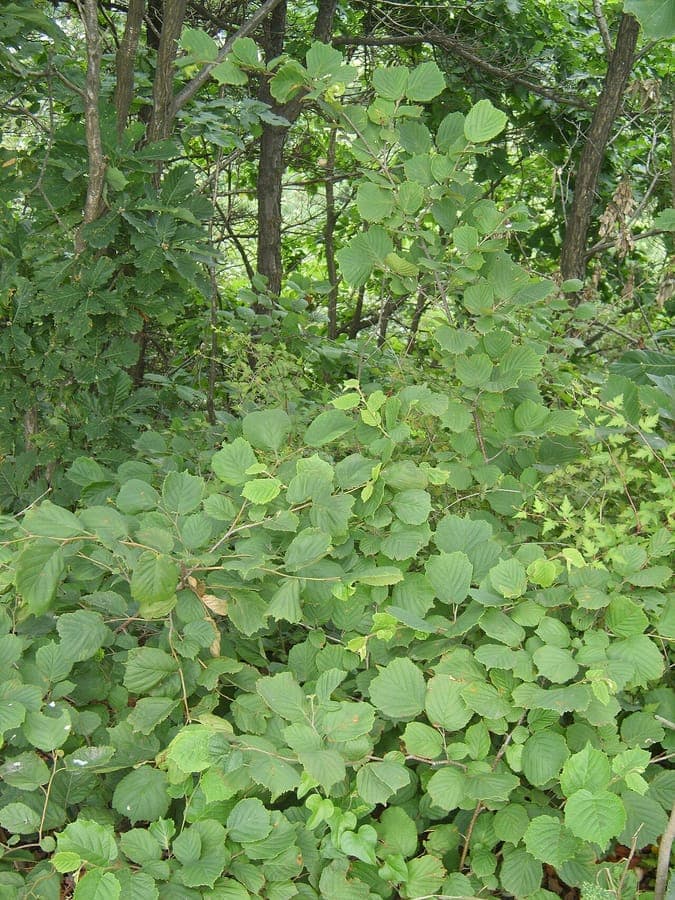
Dalgial / CC BY-SA 3.0, via Wikimedia Commons
Corylus heterophylla: complete guide
Corylus heterophylla
Want to see Corylus heterophylla: complete guide in your garden?
1 minute, no credit card
Overview
The Siberian hazel (Corylus heterophylla) is a robust, deciduous shrub native to eastern Siberia, Mongolia, China, and Japan. This multi-stemmed hazel stands out for its early male catkins in late winter and its bird-friendly hazelnuts in autumn. Reaching 3-4 meters in both height and spread with minimal maintenance, it offers excellent garden value and reliable hardiness.
While not traditionally grown for commercial nut production in Europe, the Siberian hazel impresses with ornamental catkins, attractive foliage, and ecological benefits. Its hardiness exceeds that of most European ornamental shrubs, making it ideal for cooler regions and exposed sites. With straightforward care needs, it suits both formal and naturalistic garden designs.
Appearance and Bloom
Corylus heterophylla develops naturally as a multi-stemmed shrub with open, airy branching. Its variable leaves (hence heterophylla, meaning "different leaves") provide textural interest and movement throughout the season. The prime ornamental feature emerges in January-February: distinctive yellow-brown male catkins that hang elegantly from branches weeks before most plants awaken.
These catkins persist for several weeks, providing crucial early color when garden color is scarce. Female flowers appear less prominently but fulfill their reproductive role. Summer foliage remains reliably green and attractive. Autumn transforms leaves to yellow-brown tones before dropping. Hazelnuts mature August-September, becoming instant favorites with birds and small mammals.
Ideal Location
Siberian hazel is remarkably undemanding regarding location, thriving in full sun through half-shade with minimum 3-4 hours daily sunlight. Its exceptional wind tolerance suits exposed sites. It equally appreciates woodland edges or more formal garden settings. Space plantings to allow full crown development, or prune to maintain compact forms.
Works beautifully as screening, informal hedge, or background foliage plant. In front gardens, position toward perimeter plantings or behind lower-growing neighbors. Its natural multi-stemmed form creates visual interest where formality isn't required.
Soil
The Siberian hazel accepts virtually all soils from acid to alkaline, dry to moderately moist. This adaptability represents one of its greatest assets for troubled garden sites. Only two soil points matter: reasonable drainage without waterlogging, and loose soil structure rather than compacted clay.
Amend planting holes with 20-30% organic matter, especially in poor or dense soils. Apply 5-10 centimeters of mulch around the plant base, stabilizing soil moisture and suppressing weeds. Once established, little nutritional supplementation is required; the plant fends for itself admirably.
Free design
Want to see Corylus heterophylla: complete guide in your garden? Make a free design now.
Watering
Siberian hazel demonstrates impressive drought tolerance once established. First-season shrubs benefit from regular watering during dry spells - two to three times per week without rain. After year two, established plants rarely need supplemental water in temperate climates.
Mature specimens withstand extended dry periods without damage. In extreme drought, provide occasional deep watering. Never allow waterlogging; good drainage remains essential. Water early morning to minimize fungal risk. Most European rainfall patterns naturally sustain this species.
Pruning
Siberian hazel requires minimal pruning for natural form. Annual maintenance consists simply of removing dead, damaged, or diseased wood. For more compact form, light shaping immediately after winter flowering (February-March) encourages denser regrowth.
When used as hedging, prune once or twice yearly - first time after winter blooming, second during summer. Avoid drastic single-season cuts; graduated shaping over multiple years produces healthier, better-branched plants with superior form.
Maintenance Calendar
January-February: Enjoy blooming period, perform light formative pruning. March-April: Monitor growth, watch for drought irrigation needs. May-June: Maintain normal foliage growth, manage weeds. July-August: Summer hedge trimming, inspect mulch. September-October: Follow nut ripening, encourage wildlife. November-December: Late-season pruning, prepare for dormancy.
Winter Hardiness
Siberian hazel ranks among extremely hardy shrubs, adapted to severe Siberian conditions. Throughout Europe it survives to USDA zone 3 (-40 to -35 degrees Celsius) without protection. The Netherlands and Belgium lie well within its hardiness range.
Young plants may sustain minor frost damage on tender shoots during first winters, but recover quickly. Mature plants exhibit absolute frost-hardiness. No winter protection ever required.
Companion Plants
Shade-tolerant understory plants thrive beneath hazel canopies: Helleborus, Liriope, or Deschampsia create interesting textural contrast. For added structure combine with low-growing azaleas or dwarf rhododendrons.
As background screening, hazel contrasts beautifully with dark-leaved species. Grouping 2-3 plants creates more impactful landscape impact. For wildlife-focused gardens, pair with other berry and nut-producing shrubs.
Closing Thoughts
Siberian hazel deserves wider appreciation in European gardens. Its exceptional hardiness, ornamental catkins, ecological benefits, and maintenance-free character make it a smart choice. Available through quality nurseries and garden centers.
Welcome this hardy Asian shrub into your garden design. Enjoy years of early color and birdsong - a reliable, straightforward plant perfectly suited to gardenworld.app users seeking sustainable garden beauty.
Want to see Corylus heterophylla: complete guide in your garden? Make a free design now.
Upload a photo, pick a style, and get a photorealistic design with plant list in under a minute.
No credit card required


Similar plants
Heart-leaf birch: complete guide
Betula cordifolia
Heart-leaf birch is an attractive North American birch tree for large gardens. Discover growth, white papery bark and winter hardiness.
Tropical hornbeam: complete guide
Carpinus tropicalis
Everything about Carpinus tropicalis, the tropical hornbeam from Central America. Growing tips, location, care, and garden use explained.
Japanese Alder (Alnus firma): complete guide
Alnus firma
Learn everything about Japanese Alder in our complete guide. Discover care, growth, and applications for larger gardens.