
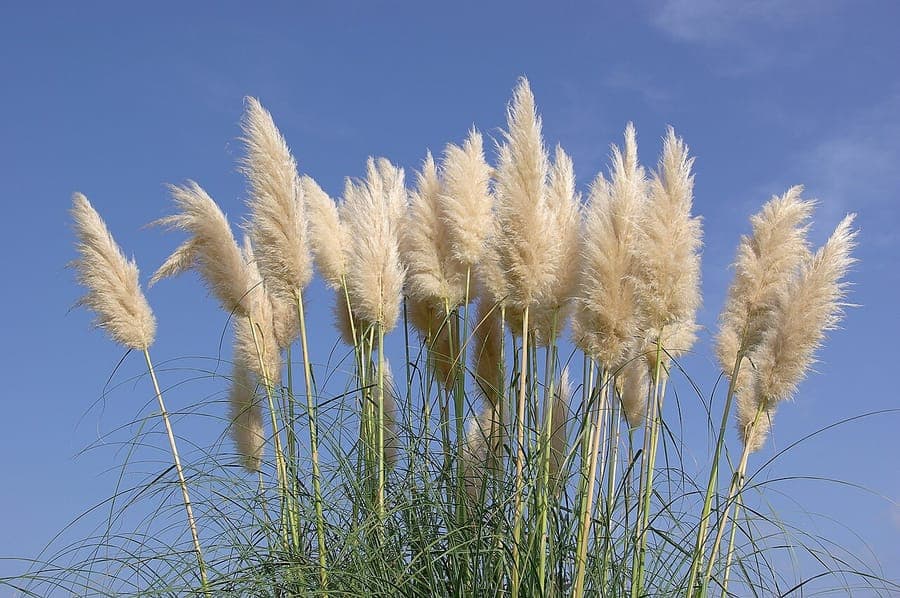
JLPC / CC BY-SA 3.0, via Wikimedia Commons
Pampas-grass: complete guide
Cortaderia selloana
Want to see Pampas-grass: complete guide in your garden?
1 minute, no credit card
Overview
Cortaderia selloana, better known as Pampas-grass, is a bold statement in any garden. Native to South America - particularly Argentina, Uruguay, and southern Brazil - this imposing ornamental grass has earned a loyal following for its dramatic plumes and architectural presence. It grows in dense, fountain-like clumps reaching 150–250 cm tall, with a spread of 120–180 cm. While stunning, it's not a plant for the faint-hearted. It demands space, sun, and a bit of elbow grease in spring pruning.
On gardenworld.app, you can design a planting scheme that integrates Pampas-grass seamlessly into your garden's structure, balancing its scale with complementary plants.
Appearance & bloom cycle
Pampas-grass blooms from late summer into autumn, typically August through October. The feathery plumes emerge in shades of soft pink or cream and mature to a silvery-white, catching the light beautifully in morning and evening sun. Female plants produce denser, fuller plumes, making them the preferred choice for cut arrangements. Male plumes are airier and more translucent.
The leaves grow in arching blades, 60–100 cm long, with a blue-green to grey-green hue. They form a tough, dense base that persists through winter. Caution: the leaf edges are razor-sharp. Always wear thick gloves and long sleeves when handling or pruning.
Once established, the plumes appear reliably each year. By November, they start to fade and fray, but they remain standing through winter, adding texture and movement to the dormant garden.
Ideal location
Full sun is non-negotiable. Pampas-grass needs at least 6 hours of direct sunlight daily. In shade, it becomes leggy, weak, and prone to flopping. It thrives in open, airy spots with good air circulation to prevent fungal issues.
Give it room to breathe - plant at least 120 cm from neighbouring plants. It's fast-growing and can dominate smaller perennials. In warmer climates (USDA zones 8–10), it can self-seed aggressively, so sterile cultivars like 'Pumila' or 'Sunningdale Silver' are recommended to avoid spreading.
Soil requirements
It's adaptable to most soil types - sandy, loamy, or clay - as long as drainage is good. Pampas-grass hates wet feet. Soggy soil leads to crown rot, especially in winter. If your soil is heavy clay, amend with sharp sand or grit to improve drainage.
pH tolerance ranges from slightly acidic to slightly alkaline (6.0–7.5). Avoid rich, heavily amended soils; too much fertility encourages leafy growth at the expense of plumes. No fertilizer is needed once established.
Free design
Want to see Pampas-grass: complete guide in your garden? Make a free design now.
Watering
Young plants need regular watering during the first growing season to establish a strong root system. Water deeply once a week if rainfall is scarce. After the first year, Pampas-grass is highly drought-tolerant.
In prolonged dry spells (3+ weeks without rain), give a thorough soak at the base. Never wet the foliage or plumes - this invites fungal diseases like rust. Mature clumps rarely need supplemental water in temperate climates.
Pruning
Pruning is essential. Each spring, between February and March, cut back the entire clump to 20–30 cm above ground level. Use a sharp pruning saw or electric hedge trimmer, and wear protective gear.
Remove all old leaves and spent plumes completely. Do not leave stubs - they can trap moisture and promote rot. Burn or dispose of the cut material; it breaks down slowly and can smother nearby plants if composted.
Skip pruning for the first year after planting - let the foliage insulate the crown over winter.
Maintenance calendar
- February–March: Prune old growth
- April–May: Inspect for pests or winter damage
- June–July: No care needed; monitor young plants in drought
- August–September: Plumes emerge - enjoy the display
- October–November: Plumes mature and fade
- December–January: Leave standing for winter interest; protect young plants in harsh zones
Winter hardiness
Pampas-grass is hardy in USDA zones 7b to 10. In zone 7, it may suffer in severe winters, especially if wet. In colder zones (6 and below), it's best grown as an annual or in containers that can be moved.
Leave the old foliage intact over winter - it protects the crown from frost and adds visual interest. Only cut it back in early spring before new growth starts.
In zone 7 and marginal areas, apply a dry mulch (like straw or bracken) around the base if prolonged freezing is expected.
Companion plants
Pair Pampas-grass with late-season perennials like Aster novae-angliae, Echinacea purpurea, and Sedum 'Herbstfreude'. The vertical form contrasts well with rounded blooms. Grasses like Miscanthus or Pennisetum make excellent companions for a full prairie-style planting.
Use shrubs like Caryopteris or low-growing conifers as a backdrop. Avoid overcrowding - Pampas-grass needs space to shine.
Closing
Pampas-grass isn't for every garden. It's big, bold, and a little demanding in spring. But when placed right, it's unforgettable. Choose sterile cultivars to prevent invasiveness, plant in full sun with good drainage, and commit to annual pruning.
You'll find Pampas-grass at garden centres in late summer when the plumes are on show. Look for healthy, compact clumps without signs of rot.
Use gardenworld.app to visualise how this grass fits into your garden layout across seasons - it's a tool every serious gardener should try.
Want to see Pampas-grass: complete guide in your garden? Make a free design now.
Upload a photo, pick a style, and get a photorealistic design with plant list in under a minute.
No credit card required


Similar plants
Sporobolus pungens: complete guide
Sporobolus pungens
Sporobolus pungens is a stoloniferous Mediterranean coastal grass with outstanding salt and drought tolerance, perfect for seaside and dry gardens.
Mediterranean aegilops: complete guide
Aegilops biuncialis
Everything about Aegilops biuncialis, a Mediterranean annual grass with ornamental spikes and outstanding drought tolerance for dry gardens.
Silver bluestem: complete guide
Bothriochloa saccharoides
Full guide to Bothriochloa saccharoides (silver bluestem): site, soil, watering, winter hardiness, pruning, and garden companions.