
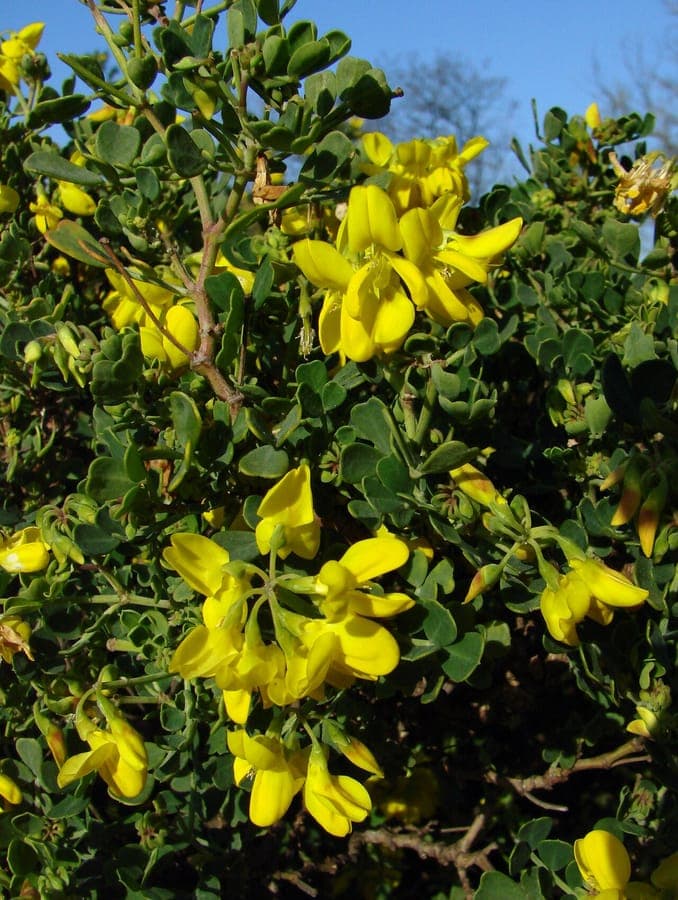
Vassil / Public domain, via Wikimedia Commons
Coronilla of Valencia: complete guide
Coronilla valentina
Want to see Coronilla of Valencia: complete guide in your garden?
1 minute, no credit card
Coronilla valentina, known as Mediterranean crownvetch or shrubby scorpion-vetch, is a treasured Mediterranean shrub from the Fabaceae (pea) family. Native to the sunny, dry habitats of the Mediterranean basin-from Spain through Italy, Greece, and into Turkey-this shrub is invaluable for full-sun, dry garden conditions. With golden-yellow fragrant flower clusters and fine, compound foliage, Coronilla valentina is a reliable performer.
What makes this shrub particularly special is its winter-blooming habit. While many gardens fall silent in December and January, Coronilla valentina steps into the spotlight with sweetly-scented flowers. This makes it essential for four-season garden design.
Appearance & Bloom
Coronilla valentina grows 1.5-2 metres tall and equally wide, forming a broad, rounded shape. Leaves are small, finely pinnate-compound leaflets that give the plant an airy, refined appearance. Flowers appear in golden-yellow clusters of 1-1.5 cm diameter, blooming primarily from October through April with peak flowering in winter. The sweet, fresh fragrance attracts beneficial insects, especially valuable when other food sources are scarce.
In mild Mediterranean climates, some flowers appear year-round, though winter is the main show.
Ideal Location
Coronilla valentina thrives in full sun, requiring at least 6 hours of direct sunlight daily. In very hot climates, afternoon dappled shade is tolerated, though full sun is usually preferred. It is unsuitable for shaded locations.
Soil
This shrub prefers dry to moderately moist, well-drained soil. It is not fussy and grows on lean, poor soils. A neutral to slightly alkaline pH (6.5-8.0) is ideal. It tolerates dry, saline, and rocky conditions beautifully, making it perfect for xeriscape gardens.
Free design
Want to see Coronilla of Valencia: complete guide in your garden? Make a free design now.
Watering
Once established, Coronilla valentina is remarkably drought-tolerant. Water regularly during the first growing season to establish strong roots. Once growing, water only during prolonged dry periods. In normal rainfall climates, supplemental watering is rarely needed.
Pruning
Prune after flowering (March-April) to encourage fuller growth. Remove dead or damaged wood. This shrub responds well to moderate to heavy pruning and can be cut back hard to rejuvenate aging specimens.
Maintenance Calendar
May-September: Growing season; minimal maintenance. October-April: Blooming period; enjoy flowers and fragrance. March-April: Post-bloom pruning. June: Check for water needs during hot spells.
Winter Hardiness
Coronilla valentina is hardy to USDA zones 8-10, depending on variety. In colder zones, it may suffer frost damage but often survives. In zones 6-7, winter damage is possible but survival is likely. In much colder regions, grow in containers and bring indoors in winter.
Companion Planting
Coronilla valentina pairs beautifully with other Mediterranean plants: rosemary, lavender, santolina, and cistus. Plant against heat-reflecting white walls for maximum benefit. Use silver and grey-foliage plants as backdrops. In winter borders, combine with red-berried shrubs and hellebores for colour contrast.
In Conclusion
Coronilla valentina is an underrated winter-blooming shrub that delivers value far beyond the traditional growing season. Its drought tolerance and ease of care make it perfect for busy gardeners. Find plants or seeds at garden centres. Visit gardenworld.app for comprehensive inspiration on winter garden design.
Want to see Coronilla of Valencia: complete guide in your garden? Make a free design now.
Upload a photo, pick a style, and get a photorealistic design with plant list in under a minute.
No credit card required


Similar plants
Tall Silky Lupine: complete guide
Lupinus elatus
Tall silky lupine is a fast-growing Californian perennial with silvery foliage and blue-purple flower spikes, ideal for a prairie-style garden.
Garfield Lupine: complete guide
Lupinus garfieldensis
The Garfield lupine is a rare, fast-growing American perennial for alkaline, dry grassland gardens, with striking blue flower spikes.
Lupinus elegans: complete guide
Lupinus elegans
Lupinus elegans, the elegant lupine, is a spectacular blooming plant from Mexico with blue flower spikes. Care, cultivation and garden use.