
Sulfur at en.wikipedia / CC BY-SA 3.0, via Wikimedia Commons
Red-osier dogwood: complete guide
Cornus sericea
Want to see Red-osier dogwood: complete guide in your garden?
1 minute, no credit card
Overview
Cornus sericea, commonly known as red-osier dogwood, is a tough, fast-growing deciduous shrub that thrives in damp garden spots where other plants struggle. Native to much of North America-from Alaska down to Arizona and east to Connecticut-this member of the Cornaceae family adapts well to USDA zones 2 through 8. It typically reaches 1.5 to 2.5 meters in height and spreads slowly by underground stolons, forming dense thickets over time. Its standout feature? The brilliant red stems that light up winter gardens, especially after snowfall. It's not just about looks; this shrub supports wildlife and stabilizes soil, making it a practical choice for naturalistic planting schemes.
On gardenworld.app, you can create a garden design that highlights the bold winter stems of red-osier dogwood, pairing it with complementary textures and forms.
Appearance & bloom cycle
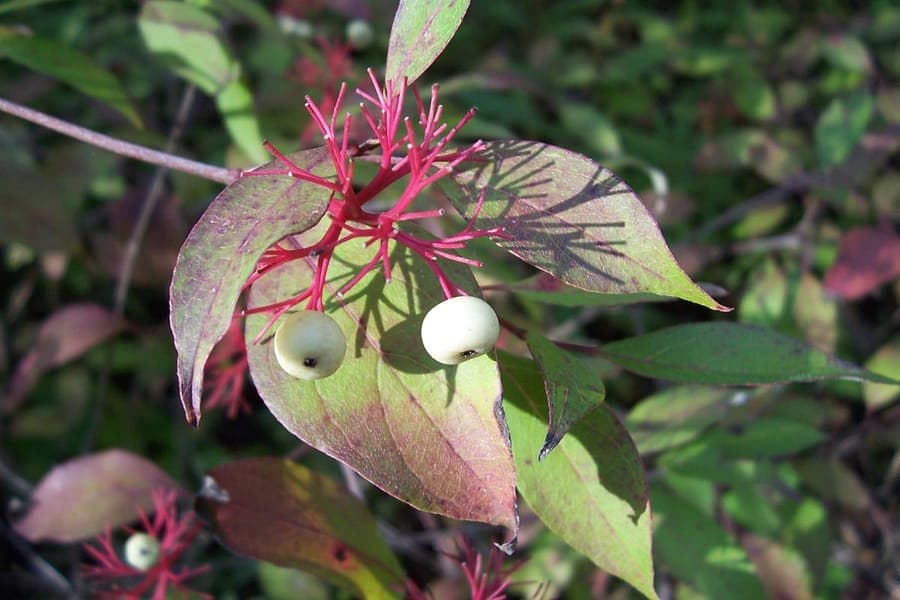
In late spring, flat-topped clusters of creamy-white flowers appear, measuring 3–5 cm across. These blooms attract bees, hoverflies, and butterflies, adding early-season pollinator value. By mid-summer, flower heads develop into clusters of bluish-white, waxy berries-edible for birds but mildly toxic to humans. The leaves are opposite, oval, and 5–10 cm long, with a pale underside. They turn yellow to reddish-purple in autumn, though fall color varies and isn't always reliable.
But the real show starts in winter. When the leaves drop, the young stems shine in a striking red to purplish-red, most vivid on new growth. Older stems turn gray and lose their intensity, so regular pruning keeps the color vibrant.
Ideal location
Full sun brings out the best stem color-plant in at least 6 hours of direct light daily. In partial shade, stems turn greenish and the plant grows leggy. Red-osier dogwood loves moisture, so it's perfect for pond margins, bog gardens, or low-lying areas that collect water. Avoid dry, sandy spots. Because it spreads via rhizomes, give it space or install a root barrier if you want to contain it. It's not ideal for small city gardens unless managed closely.
Soil requirements
This shrub isn't fussy about soil type but demands consistent moisture. It thrives in heavy clay, loam, or silty soils with a pH from 5.5 to 7.5. It tolerates occasional flooding and even short periods of standing water. Poor drainage isn't a problem-but drought is. In dry soils, growth slows, leaves scorch, and the plant becomes prone to powdery mildew and stem canker.
Free design
Want to see Red-osier dogwood: complete guide in your garden? Make a free design now.
Watering
Water deeply once a week during the first two growing seasons, especially in summer. Established plants are more resilient but still perform best with regular moisture. Drip irrigation or soaker hoses help maintain even soil hydration. Avoid overhead watering to reduce fungal issues. Use rainwater when possible-dogwoods dislike hard, alkaline tap water.
Pruning
To maintain vivid red stems, prune annually in late winter or early spring. Cut back one-third of the oldest, grayish stems to ground level. This encourages new red shoots to emerge. For a denser hedge, cut the entire plant back to 15–30 cm every 2–3 years. This hard pruning won't harm it-red-osier dogwood bounces back vigorously. Avoid pruning after mid-spring, as you'll remove the season's flowers.
Maintenance calendar
- January: inspect stems for winter damage or rodent chewing
- February: begin pruning old wood
- March: finish pruning; check soil moisture
- April: watch for aphids; apply compost mulch
- May: flowers emerge; monitor pollinator activity
- June–August: remove unwanted suckers; keep soil moist
- September: leave berries for birds
- October–November: let fallen leaves decompose as natural mulch
- December: enjoy winter color; check for bird visits
Winter hardiness
Extremely cold-tolerant, red-osier dogwood survives down to -35°C (USDA zone 2). It's fully hardy throughout the UK, northern Europe, and most of North America. Snow can bend branches, but they usually spring back. The red stems remain visible and vibrant all winter, making it a reliable choice for bleak months.
Companion plants
Pair with moisture-loving perennials like Joe-Pye weed (Eutrochium maculatum), blue flag iris (Iris versicolor), or tussock sedge (Carex vulpinoidea). For winter contrast, plant near yellow-stemmed willows like Salix alba 'Britzensis'. In mixed shrub borders, combine with buttonbush (Cephalanthus occidentalis) or native viburnums. It also works well in rain gardens or erosion-prone slopes.
On gardenworld.app, you can simulate planting combinations with red-osier dogwood and generate a seasonal care schedule tailored to your climate.
Closing
Red-osier dogwood isn't flashy in the traditional sense, but it earns its place with year-round function and seasonal drama. From pollinator support in spring to bird food in fall and unmatched winter color, it's a workhorse shrub for tough spots. Pruning keeps it looking sharp, and its adaptability makes it a favorite among landscapers and home gardeners alike. Pick up a healthy plant in spring or fall from local garden centres, and give it a moist, sunny corner. With little effort, you'll have a resilient, wildlife-friendly shrub that lights up the coldest months.
Want to see Red-osier dogwood: complete guide in your garden? Make a free design now.
Upload a photo, pick a style, and get a photorealistic design with plant list in under a minute.
No credit card required


Similar plants
Toughleaf Dogwood: complete guide
Cornus asperifolia
Toughleaf dogwood is a suckering, thicket-forming shrub native to the southeastern US, ideal for wildlife hedges on damp, low-lying ground.
Silky dogwood (Cornus obliqua): complete guide
Cornus obliqua
Silky dogwood: cultivation, care tips, and garden uses. White flowers, colorful berries, and stunning fall foliage.
Roughleaf dogwood: complete guide
Cornus drummondii
Everything you need to know about Cornus drummondii: siting, soil, pruning, winter hardiness and companion plants for a naturalistic garden.