
B.navez / CC BY-SA 3.0, via Wikimedia Commons
Cornelian-cherry: complete guide
Cornus mas
Want to see Cornelian-cherry: complete guide in your garden?
1 minute, no credit card
Overview
Cornus mas, commonly known as Cornelian-cherry, is a tough and rewarding plant for any garden. It grows as a large shrub or small tree, typically reaching 4–6 metres in height with a spread of 3–4 metres. Native to southeastern Europe, it thrives in temperate climates and is hardy down to USDA zone 5 (-23°C). In the UK and across much of the US, it performs exceptionally well with minimal fuss. Its slow to moderate growth rate makes it easy to manage, whether you're planting it as a specimen tree, a hedge, or part of a mixed border. One of its greatest assets is its early flowering season, bringing life to the garden when little else is in bloom.
Appearance & bloom cycle
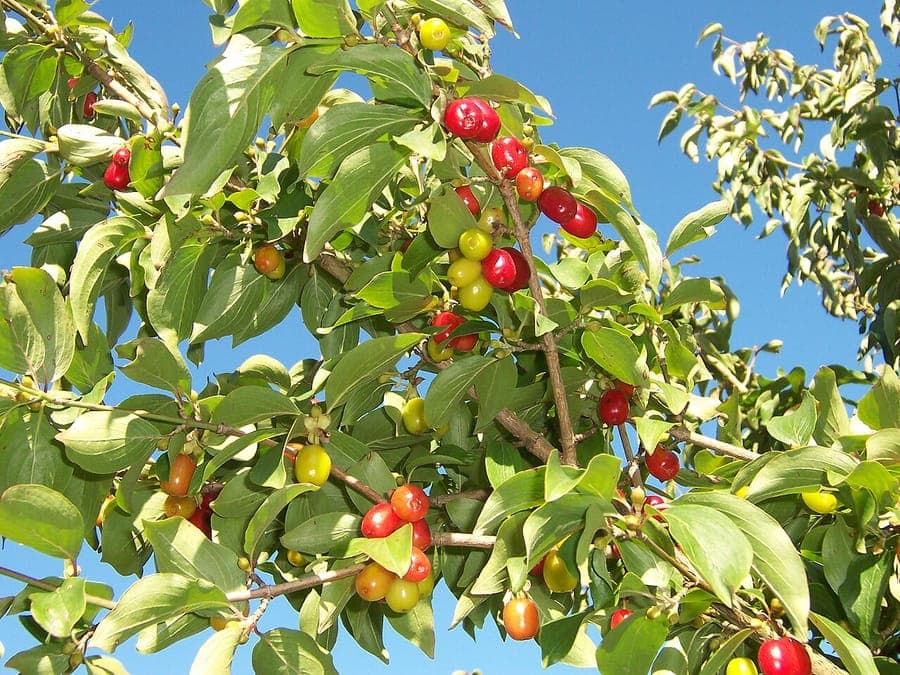
The Cornelian-cherry puts on a dazzling display in March with clusters of small, bright yellow flowers appearing along the bare branches. These star-like blooms can last up to four weeks, depending on spring temperatures. After flowering, glossy green, oval leaves emerge, providing a dense canopy through summer. By late summer, the plant bears oval, cherry-like fruits that ripen from green to deep red by August. These tart but edible berries are excellent for jams, syrups, or even home-made liqueurs. In autumn, the foliage turns a pleasant yellow to bronze, adding seasonal interest. The bark becomes attractively fissured with age, adding winter texture.
Ideal location
For best flowering, plant Cornus mas in full sun to light shade – around an 8 on the light scale. This means at least 6 hours of direct sunlight daily. It performs well in the middle or back of a border, or as a standalone feature near a path or patio. In smaller gardens, it can be trained as a single-stemmed tree. Consider using gardenworld.app to visualise how this tree fits into your garden layout, especially when combining it with early spring bulbs like snowdrops or blue scilla. Wind protection isn't essential, but a sheltered spot can extend bloom time.
Soil requirements
Cornelian-cherry is adaptable to various soil types as long as they are well-drained. It tolerates pH from 5.0 to 7.5, so acidic, neutral, and mildly alkaline soils are all suitable. While it grows in sandy or clay soils, avoid waterlogged conditions – poor drainage leads to root rot. When planting, mix in compost or well-rotted manure to improve soil structure. For container growing, use a mix of loam-based compost, perlite, and garden soil to ensure good aeration and drainage.
Free design
Want to see Cornelian-cherry: complete guide in your garden? Make a free design now.
Watering
Young plants need consistent moisture during the first two growing seasons. Water deeply once or twice a week during dry spells, allowing the soil to dry slightly between waterings. Once established, Cornus mas is drought-tolerant and rarely needs supplemental watering except in prolonged dry periods. Using rainwater is preferable, as tap water with high lime content can gradually affect soil pH over time.
Pruning
Pruning is minimal. Remove dead, damaged, or crossing branches in late spring, just after flowering. Avoid heavy pruning in winter, as you'll cut off the flower buds for the next season. To maintain a tree form, remove lower branches gradually over a few years to create a clear trunk. For a shrub form, allow multiple stems and thin out older wood every few years to encourage new growth. With gardenworld.app, you can track pruning schedules and set reminders for seasonal care.
Maintenance calendar
- Jan: Inspect for winter damage; check for bird damage on bark.
- Feb: No pruning; buds swelling.
- Mar: Peak bloom; watch for aphids on new growth.
- Apr: Apply mulch; water young plants if dry.
- May: Foliage fully out; no major care needed.
- Jun: Berries begin forming; protect from birds with netting.
- Jul: Monitor ripening; harvest when soft and deep red.
- Aug: Finish harvest; light shaping if needed.
- Sep: No action required.
- Oct: Leaf colour change; add leaf mould around base.
- Nov: Check for pests; protect young trunks from rodents.
- Dec: Dormant period; avoid pruning.
Winter hardiness
Hardy to USDA zone 5, Cornus mas withstands cold winters with ease. In the UK, it's fully hardy across zones 6–9. Mulching the base in late autumn helps protect shallow roots during freeze-thaw cycles. Older specimens are highly resilient, tolerating wind, urban pollution, and coastal conditions.
Companion plants
Pair Cornelian-cherry with early bulbs like crocus, snowdrops, or grape hyacinth for a vibrant spring display. Underplant with hellebores or heuchera for year-round interest. In mixed borders, it works well with serviceberry, redbud, or flowering currant. For structure, combine with boxwood or holly. Use gardenworld.app to plan layered planting schemes that maximise colour and texture throughout the seasons.
Closing
Cornus mas is a must-have for gardeners who value both beauty and utility. It offers early flowers, edible fruit, and seasonal drama with little effort. Whether you're designing a cottage garden, a modern courtyard, or a wildlife-friendly space, this plant delivers. Find healthy specimens at garden centres across the UK and US, including online retailers and local nurseries. Use gardenworld.app to design a planting plan that highlights its strengths year-round.
Want to see Cornelian-cherry: complete guide in your garden? Make a free design now.
Upload a photo, pick a style, and get a photorealistic design with plant list in under a minute.
No credit card required


Similar plants
Toughleaf Dogwood: complete guide
Cornus asperifolia
Toughleaf dogwood is a suckering, thicket-forming shrub native to the southeastern US, ideal for wildlife hedges on damp, low-lying ground.
Silky dogwood (Cornus obliqua): complete guide
Cornus obliqua
Silky dogwood: cultivation, care tips, and garden uses. White flowers, colorful berries, and stunning fall foliage.
Roughleaf dogwood: complete guide
Cornus drummondii
Everything you need to know about Cornus drummondii: siting, soil, pruning, winter hardiness and companion plants for a naturalistic garden.