
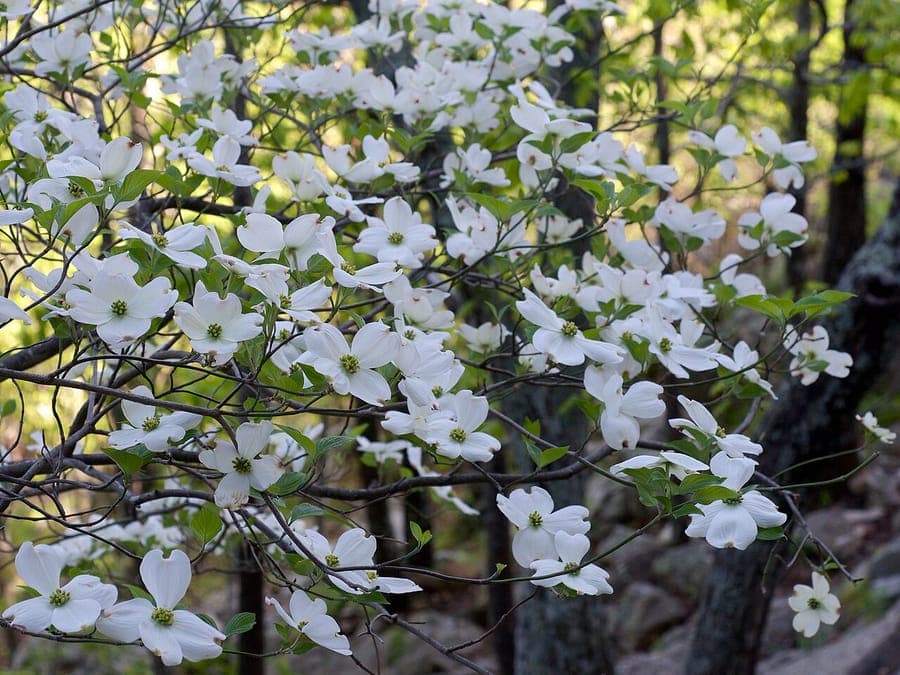
Eric Hunt / CC BY-SA 4.0, via Wikimedia Commons
Flowering dogwood: complete guide
Cornus florida
Want to see Flowering dogwood: complete guide in your garden?
1 minute, no credit card
Overview
Cornus florida, commonly known as flowering dogwood, is a graceful small tree that brings charm and seasonal interest to gardens across temperate zones. Native to the eastern United States, it thrives in the UK and northern Europe when given the right conditions. Mature trees reach 6–9 meters in height and 5–7 meters in spread, making them ideal for medium to small gardens. Their slow growth rate means they require little pruning and fit well into long-term landscape plans.
This tree is especially prized for its spring blossoms and vibrant autumn colour. Whether you're designing a woodland edge or a formal front yard, the flowering dogwood adds elegance without overwhelming the space. On gardenworld.app, you can create a custom garden layout that integrates this tree with complementary plants and structures.
Appearance & bloom cycle
The true flowers of Cornus florida are small and yellowish, clustered tightly in the center, but they're surrounded by four large, petal-like bracts that can reach 10 cm across. These bracts are usually white, though pink cultivars like 'Rubra' exist. Bloom time runs from late April to mid-May, lasting about 10–14 days depending on spring temperatures.
Foliage emerges deep green with a matte finish and turns brilliant shades of red, maroon, or purple in autumn, usually starting in late September. In fall, clusters of small, round red drupes (6–8 mm) appear and persist into early winter, providing food for birds like robins and blue jays.
Ideal location
Plant in partial shade, ideally with morning sun and afternoon shade. Full sun increases leaf scorch risk, especially in hotter summers, while deep shade reduces flowering. A spot on the east or northeast side of a house or under open tree canopies works best. Avoid exposed, windy positions, which can damage young branches.
Young trees benefit from protection during their first few years. On gardenworld.app, use the shade mapping tool to find where dappled light falls in your garden-perfect for dogwood placement.
Soil requirements
Cornus florida prefers moist, well-drained, acidic soil with a pH between 5.5 and 6.5. It thrives in humus-rich loam or sandy clay, but struggles in compacted or alkaline soils. If your soil is heavy clay, amend the planting hole with leaf mold and compost to improve drainage.
Avoid lime-rich soils or areas where concrete runoff may raise pH. Poor drainage leads to root rot, a common cause of failure in newly planted trees.
Free design
Want to see Flowering dogwood: complete guide in your garden? Make a free design now.
Watering
Consistent moisture is key, especially in the first two growing seasons. Water deeply once a week during dry spells, using 10–15 liters per tree. Drip irrigation or soaker hoses work best to keep roots hydrated without surface runoff.
After establishment, the tree tolerates short dry periods, but prolonged drought stresses it and increases susceptibility to pests like dogwood borer. Apply a 5–8 cm layer of organic mulch (shredded bark or leaf litter) to retain moisture and suppress weeds.
Pruning
Pruning is rarely needed. If required, do it right after flowering in May. Remove only dead, crossing, or diseased wood. Use clean, sharp tools and sterilize between cuts if you suspect anthracnose or canker.
Avoid topping or heavy pruning-this tree's natural horizontal branching pattern is one of its most attractive features. Keep lawn equipment away from the trunk; bark damage invites disease.
Maintenance calendar
- Jan–Feb: Inspect for winter injury and canker
- Mar: Check soil moisture; top up mulch if needed
- Apr: Monitor for leaf spots or powdery mildew
- May: Light pruning post-bloom; apply slow-release organic fertilizer
- Jun–Aug: Water weekly during droughts
- Sep: Watch for early leaf drop-may indicate stress
- Oct–Dec: Leave fallen leaves as natural mulch or compost
Winter hardiness
Hardy in USDA zones 5 to 9, Cornus florida generally survives UK and northern European winters (zones 7–8). However, late spring frosts can damage emerging buds, so avoid planting in frost pockets. Young trees may benefit from fleece protection during cold snaps in their first three years.
Mature trees are resilient, but prolonged freezing with dry soil can cause dieback. Ensure the root zone doesn't dry out in winter, especially under evergreen canopy cover.
Companion plants
Pair with shade-tolerant perennials like Hosta (5–60 cm), Heuchera (30–60 cm), or Epimedium (20–40 cm). These add texture without competing for water. Azaleas and rhododendrons work well due to shared soil preferences, but allow at least 1 meter spacing for airflow.
Avoid invasive groundcovers like ivy or periwinkle, which can climb and girdle the trunk. Ferns such as Dryopteris or Polystichum also make excellent companions in woodland settings.
Closing
Cornus florida is a timeless garden favorite, offering year-round beauty with minimal upkeep. With proper planting and early care, it can live for decades, becoming a focal point in any landscape. Its spring bloom and autumn fire make it a standout among small ornamental trees.
You can find healthy flowering dogwood specimens at trusted garden centres across the UK and Europe. In the Netherlands, try Intratuin or Gamma; in France, visit Truffaut or Jardiland; in Germany, check OBI or Hornbach. And when planning your design, remember that gardenworld.app lets you visualise how this tree fits into your garden's future.
Want to see Flowering dogwood: complete guide in your garden? Make a free design now.
Upload a photo, pick a style, and get a photorealistic design with plant list in under a minute.
10,000+ gardens designed already
No credit card required


Similar plants
Toughleaf Dogwood: complete guide
Cornus asperifolia
Toughleaf dogwood is a suckering, thicket-forming shrub native to the southeastern US, ideal for wildlife hedges on damp, low-lying ground.
Silky dogwood (Cornus obliqua): complete guide
Cornus obliqua
Silky dogwood: cultivation, care tips, and garden uses. White flowers, colorful berries, and stunning fall foliage.
Roughleaf dogwood: complete guide
Cornus drummondii
Everything you need to know about Cornus drummondii: siting, soil, pruning, winter hardiness and companion plants for a naturalistic garden.