
Opioła Jerzy (Poland) / CC BY 2.5, via Wikimedia Commons
Siberian Dogwood: complete guide
Cornus alba
Want to see Siberian Dogwood: complete guide in your garden?
1 minute, no credit card
Overview
Cornus alba, commonly known as Siberian Dogwood, is a tough, reliable shrub that brings serious winter drama to temperate gardens. Native to regions like Siberia, northern China, and parts of eastern Europe, it's built to handle cold, wind, and fluctuating moisture. Once established, it grows quickly, reaching 1.5 to 2.5 meters in height and spreading about 1.5 meters wide. Its real strength lies not in flowers or foliage, but in its vibrant red to purplish stems that light up the winter garden when most plants are dormant.
One thing many gardeners overlook is that Cornus alba spreads by underground stolons. This makes it excellent for naturalizing in larger areas, but in a small garden, you might want to plant it in a contained spot or monitor its spread. On gardenworld.app, you can design a planting plan that accounts for this growth habit, ensuring it doesn't crowd out neighboring plants.
Appearance & bloom cycle
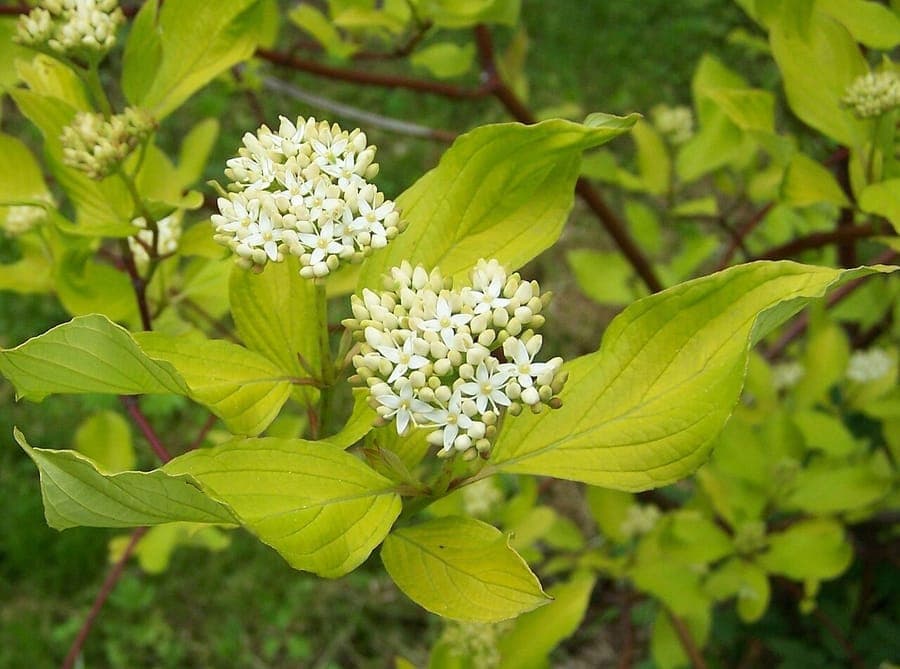
In summer, Siberian Dogwood produces small, creamy-white flower clusters in June and July. They're not particularly showy, but they do attract pollinators like hoverflies and native bees. The foliage is mid to dark green, with variegated forms like 'Elegantissima' or 'Aurea' adding creamy margins that brighten shady spots.
The real show starts in late autumn. As the leaves drop, the young stems reveal their true color-bright red, sometimes almost fluorescent in full sun. This color peaks from December through February, especially after a dusting of snow. Older stems turn gray and lose their intensity, which is why annual pruning is key.
Ideal location
For the best stem color, plant Siberian Dogwood in full sun-ideally six or more hours of direct light per day. In partial shade, stems become duller, taking on a brownish tinge. It thrives in open borders, along fences, or as part of a mixed winter hedge. Avoid cramped spaces; it needs room to spread and good air circulation.
If you're using it as a specimen or low screen, give it at least 1.5 meters of clearance on all sides. On gardenworld.app, you can map out spacing and sunlight exposure to find the perfect spot before planting.
Soil requirements
This dogwood is not fussy. It tolerates clay, loam, and sandy soils as long as they're well-drained. It prefers slightly moist conditions but can handle short periods of drought or temporary waterlogging. Ideal pH ranges from 5.5 to 7.5. If your soil is heavy clay, mix in compost or grit to improve drainage. Avoid waterlogged sites, as prolonged wet roots lead to root rot.
Free design
Want to see Siberian Dogwood: complete guide in your garden? Make a free design now.
Watering
Water regularly during the first growing season, especially in dry spells. Aim for 10 liters per plant per week during summer droughts. Once established, it's drought-tolerant and rarely needs supplemental watering unless dry conditions persist for weeks. Overwatering is more dangerous than underwatering-always check soil moisture before watering.
Pruning
Pruning is non-negotiable if you want intense stem color. Cut all stems back hard every year in late winter or early spring (March in most UK and US zones). Leave just 10–15 cm of stem above ground. This encourages vigorous new growth, which produces the brightest winter color. If you skip a year, the stems will thicken and turn dull gray.
For variegated forms, remove any solid green shoots immediately-they're more vigorous and can take over. Always use sharp, clean secateurs to prevent disease spread.
Maintenance calendar
- January: inspect stems, remove winter damage
- February: prepare tools for pruning
- March: hard prune all stems to 10–15 cm
- April: new shoots emerge, light feed with balanced fertilizer
- May–August: active growth, water only in prolonged drought
- September: stop fertilizing, let plant harden off
- October: leaves begin to fall
- November–December: enjoy winter color, check for pests
Winter hardiness
Siberian Dogwood is extremely cold-hardy, surviving temperatures down to -30°C. It's suitable for USDA zones 3 to 7. In zone 8, it may struggle with summer heat and reduced winter chill, leading to weaker stem color. No winter protection is needed in its hardiness range-snow cover actually enhances its visual impact.
Companion plants
Pair it with plants that contrast in texture and form. Try silver-foliaged shrubs like Ceanothus or Santolina, or late-blooming perennials such as Sedum 'Autumn Joy'. Combine with evergreens like holly or yew to create a layered winter scene. In summer, plant lavender or nepeta in front to add fragrance and pollinator appeal.
Avoid overcrowding-good airflow prevents powdery mildew and fungal issues. Keep lower stems clear for maximum winter visibility.
Closing
Siberian Dogwood is a workhorse shrub that delivers maximum impact for minimal effort. With one annual prune and a sunny spot, it rewards you with months of winter color. Buy healthy plants from garden centres like those found across the UK, and look for named cultivars like 'Sibirica' for the reddest stems. Avoid bargain bins with leggy or damaged growth.
Whether you're designing a cottage border or a modern low-maintenance garden, Cornus alba fits right in. And with gardenworld.app, you can preview how its winter stems will look alongside your existing plants-no guesswork needed.
Want to see Siberian Dogwood: complete guide in your garden? Make a free design now.
Upload a photo, pick a style, and get a photorealistic design with plant list in under a minute.
No credit card required


Similar plants
Toughleaf Dogwood: complete guide
Cornus asperifolia
Toughleaf dogwood is a suckering, thicket-forming shrub native to the southeastern US, ideal for wildlife hedges on damp, low-lying ground.
Silky dogwood (Cornus obliqua): complete guide
Cornus obliqua
Silky dogwood: cultivation, care tips, and garden uses. White flowers, colorful berries, and stunning fall foliage.
Roughleaf dogwood: complete guide
Cornus drummondii
Everything you need to know about Cornus drummondii: siting, soil, pruning, winter hardiness and companion plants for a naturalistic garden.