
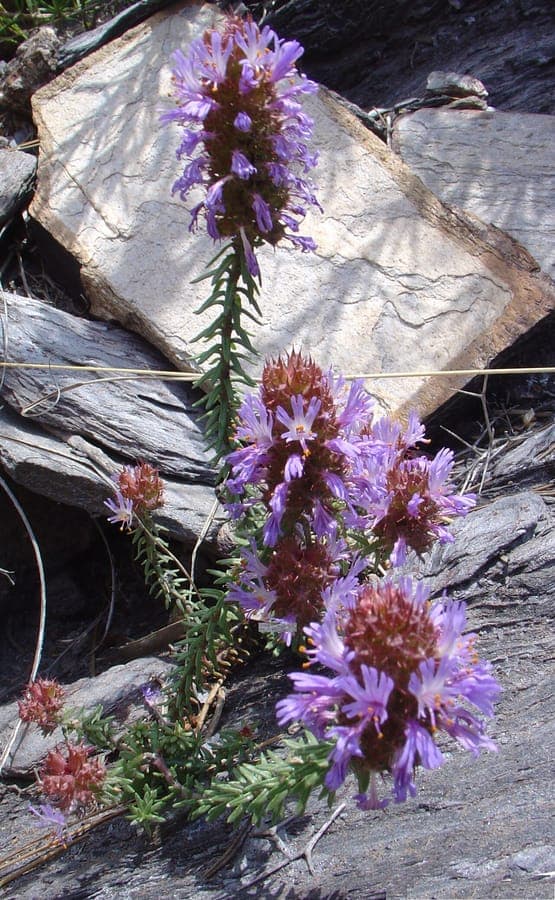
Retama / CC BY-SA 4.0, via Wikimedia Commons
Coris monspeliensis: complete guide
Coris monspeliensis
Want to see Coris monspeliensis: complete guide in your garden?
1 minute, no credit card
Overview
Coris monspeliensis, commonly known as Coris of Montpellier or Brush Thyme, is a delightful Mediterranean plant belonging to the Primulaceae family. This compact, sub-shrubby plant hails from the western and central Mediterranean region, including France, Spain, Italy, and North Africa. It is prized for its delicate purple flowers and exceptional drought tolerance.
Found in rocky hillsides, scrubland, and other dry Mediterranean habitats, Coris monspeliensis thrives where many other plants struggle. It is an excellent choice for gardeners seeking authentic Mediterranean flavor in their landscape.
Appearance and Bloom
Coris monspeliensis is a compact, bushy plant typically reaching 20-40 centimeters in height. The stems are erect, clothed with small, lance-shaped leaves that lie closely against the stem. The foliage is fine and somewhat evergreen, providing year-round interest.
The flowers appear from April through July in compact clusters. Each tiny flower measures only 5-6 millimeters across and displays a distinctive purple color. The blooms are five-petaled and surrounded by an ornamental purple calyx, creating a charming visual effect. The flowers attract pollinators and provide excellent food for bees.
Ideal Location
Coris monspeliensis demands full sun and well-drained soil. Position it in a location receiving at least 6 hours of direct sunlight daily. The plant will not thrive in shade and may fail in partial shade.
Its compact form makes it ideal for rock gardens, Mediterranean borders, dry gardens, and container cultivation. The plant adds authentic Mediterranean character to any sunny, well-drained setting. It is equally at home in a formal garden or naturalistic planting.
Soil
Coris monspeliensis thrives in poor to moderate soils with excellent drainage. Sandy, rocky soils are ideal. The plant tolerates saline soils well, making it suitable for coastal garden settings.
Waterlogging must be strictly avoided. Heavy clay soils should be amended with sand or sharp gravel to improve drainage. The plant accepts acidic to alkaline soil reactions equally well.
Watering
Once established, Coris monspeliensis is exceptionally drought-tolerant. During the growing season (spring and summer), water moderately when the soil feels dry. After establishment, supplemental watering is rarely necessary except during severe droughts.
For container-grown specimens, water more frequently but ensure drainage holes are always clear. Never allow the soil to become waterlogged, as this will cause immediate damage.
Free design
Want to see Coris monspeliensis: complete guide in your garden? Make a free design now.
Pruning
After flowering, deadhead spent flower spikes to encourage bushier growth and potential reblooming. In early spring, remove any dead or frost-damaged growth. The plant naturally maintains a compact form and rarely requires heavy pruning.
Lightweight pruning extends blooming. If the plant becomes leggy or overgrown, cut it back by up to one-third in early spring to rejuvenate it.
Maintenance Calendar
March: Remove frost-damaged growth. Avoid fertilizing unless soil is very poor.
April-May: Flowering period begins. Enjoy the purple blooms. Water moderately.
June-July: Flowering continues. Deadhead spent flowers. Water only during dry spells.
August-September: Flowering ends. Plant growth slows. Minimal water required.
October-November: Winter preparation. Pruning may be undertaken in November if needed.
December-February: Dormant period. Protect against severe frost with mulch in cold regions.
Winter Hardiness
Coris monspeliensis is moderately hardy, suitable for USDA zones 8-10, tolerating temperatures down to approximately -10°C. In northern Europe and the British Isles, it requires protection during harsh winters.
In cold climates, grow Coris monspeliensis in containers that can be moved indoors during winter. Alternatively, grow it as an annual in colder regions. In Mediterranean climates, it is fully reliable.
Companion Plants
Coris monspeliensis pairs beautifully with other Mediterranean plants. Try it with Lavender, Salvia, and Catananche. The compact form makes it perfect for rock gardens with Bergenia and Sedum.
In dry borders, combine it with colorful performers like Santolina, Rosemary, and Cistus. The purple flowers create stunning contrast with silver-foliaged plants like Artemisia and Senecio.
Closing Thoughts
Coris monspeliensis is an excellent choice for gardeners seeking authentic Mediterranean beauty. Once established, the plant demands minimal care while offering reliable, delicate purple flowers season after season. Purchase quality plants from specialist nurseries for best results. Explore Mediterranean garden designs on gardenworld.app.
Whether grown in a Mediterranean border, rock garden, or container, Coris monspeliensis brings warmth, color, and authentic Southern charm to any sunny, well-drained location.
Want to see Coris monspeliensis: complete guide in your garden? Make a free design now.
Upload a photo, pick a style, and get a photorealistic design with plant list in under a minute.
No credit card required


Similar plants
Primula incana: complete guide to silvery alpine primrose
Primula incana
Silvery primrose (Primula incana), a delicate alpine flower with white blooms and powdered grey-green leaves. Growing, care, and cultivation guide.
Mealy cowslip: complete guide
Primula pulverulenta
Grow the Mealy cowslip (Primula pulverulenta): striking candelabra flowers in red and purple tones, moisture-loving and ideal for shady, damp garden corners.
Cliff dwarf-primrose: complete guide
Androsace laevigata
Full guide to growing Androsace laevigata, a rare Pacific Northwest alpine cushion plant. Planting, care, and garden design tips explained.