
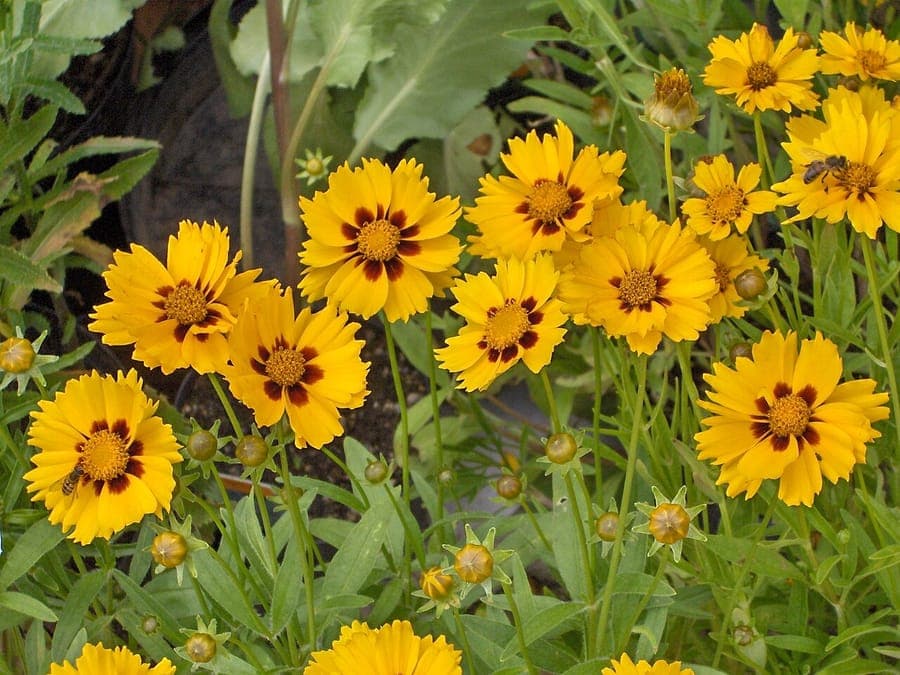
User:Qwertzy2 / CC BY-SA 3.0, via Wikimedia Commons
Garden coreopsis: complete guide
Coreopsis lanceolata
Want to see Garden coreopsis: complete guide in your garden?
1 minute, no credit card
Overview
Garden coreopsis (Coreopsis lanceolata) is a cheerful, long-blooming perennial that brings vibrant color to gardens from early summer well into autumn. Native to the southeastern United States, this hardy plant thrives in open fields, prairies, and roadside ditches, adapting easily to garden conditions across temperate zones. With its minimal care needs and high wildlife value, it's a go-to choice for gardeners who want beauty without constant maintenance. On gardenworld.app, you can design a border layout that integrates garden coreopsis perfectly with complementary textures and bloom times.
Appearance & bloom cycle
Garden coreopsis features narrow, lance-shaped leaves that grow in dense clusters along upright stems. The plant typically reaches 45–60 cm in height, with a spread of about 30 cm. Its bright yellow daisy-like flowers have a dark yellow or maroon center and measure 3–5 cm across. Each flower head consists of 10–12 ray florets that open wide in full sun.
Blooming begins in June and continues through September, with peak display in July and August. Deadheading encourages rebloom and extends the flowering season. The plant is self-seeding, so you may find new seedlings popping up in spring-great for naturalizing, but keep an eye on spread if you prefer a more structured look.
Ideal location
Full sun is essential for garden coreopsis to thrive. Aim for at least 6–8 hours of direct sunlight daily. In partial shade, the plant becomes leggy, flops over, and produces fewer flowers.
This species excels in sunny borders, gravel gardens, rockeries, and even along driveways or dry slopes. It works well in cottage-style gardens or prairie plantings. Its upright yet airy form makes it ideal for the mid-layer of a border. Use gardenworld.app to visualize how coreopsis fits into a sunny, mixed perennial scheme with staggered heights and bloom periods.
Soil requirements
Garden coreopsis prefers well-drained, lean to moderately fertile soils. It tolerates sandy or gravelly soils exceptionally well but struggles in heavy clay unless amended with grit or coarse sand. Soil pH should be between 5.5 and 7.5.
Avoid rich, compost-heavy soils-excessive nutrients lead to floppy growth and reduced flowering. Over-fertilizing can also increase winter dieback. Stick to lean conditions; this plant thrives on neglect.
Watering
Once established, garden coreopsis is highly drought tolerant. During the first growing season, water weekly to help roots establish, especially in dry spells. After that, supplemental watering is rarely needed unless you're facing prolonged drought (over three weeks without rain).
When watering, soak the base rather than wetting the foliage to prevent fungal issues. Use rainwater if possible, as coreopsis can be sensitive to high levels of calcium in tap water.
Free design
Want to see Garden coreopsis: complete guide in your garden? Make a free design now.
Pruning
Deadheading spent flowers keeps the plant tidy and encourages a second flush of blooms. In late July or early August, cut the plant back by half to rejuvenate growth and promote late-summer flowering.
In autumn, you can leave the stems standing to provide winter shelter for beneficial insects. Cut back to 10 cm in early spring before new growth emerges. Avoid cutting too early in winter, as the dried stems offer habitat and structure.
Maintenance calendar
- January–February: Leave standing; no action needed.
- March: Cut back old stems to 10 cm; improve drainage if needed.
- April–May: Monitor for self-sown seedlings; water if dry.
- June–July: Begin blooming; deadhead regularly.
- August: Shear back by half for rebloom.
- September–October: Allow some seed heads to remain for birds.
- November–December: Leave stems for winter interest and insect habitat.
Winter hardiness
Coreopsis lanceolata is hardy in USDA zones 3–9 (-40°C to -1°C). It survives freezing temperatures well, but winter wetness is its main enemy. Ensure the planting site has excellent drainage to prevent crown rot.
In colder zones, a light mulch of gravel around the base helps shed moisture. Avoid organic mulches like bark, which retain too much water. No additional winter protection is required in most gardens.
Companion plants
Pair garden coreopsis with purple or deep blue perennials like Salvia nemorosa, Echinacea, or Agastache. Its bright yellow flowers contrast beautifully with silvery foliage plants such as Artemisia or Stachys byzantina.
Low-growing companions include Sedum 'Autumn Joy' or creeping thyme. Avoid overly aggressive spreaders like mint or goldenrod, which can overwhelm coreopsis. For design inspiration, check gardenworld.app to create a balanced planting scheme that maximizes color and texture.
Closing
Garden coreopsis is a reliable, low-effort perennial that delivers long-lasting color and ecological benefits. It's drought tolerant, pollinator friendly, and easy to grow in sunny, well-drained spots. With a simple pruning routine and minimal feeding, it rewards you with months of cheerful blooms.
Available at garden centres across the UK and US in spring, often in 1-litre pots. Look for healthy green foliage and no signs of mildew. Plant after the last frost and space 30–40 cm apart. Use gardenworld.app to plan your layout and ensure your coreopsis has room to shine alongside compatible plants.
Want to see Garden coreopsis: complete guide in your garden? Make a free design now.
Upload a photo, pick a style, and get a photorealistic design with plant list in under a minute.
No credit card required


Similar plants
Calendula stellata: complete guide
Calendula stellata
Complete guide to Calendula stellata, the star-flowered marigold from Sicily: location, soil, watering and companion planting tips.
Korean chrysanthemum: complete guide
Chrysanthemum x rubellum
Chrysanthemum x rubellum is a hardy autumn perennial with single pink to copper flowers from August to November. Care and combinations.
Helianthus divaricatus: complete guide
Helianthus divaricatus
Helianthus divaricatus is a North American woodland sunflower with yellow summer blooms, ideal for naturalistic borders and shady edges.