
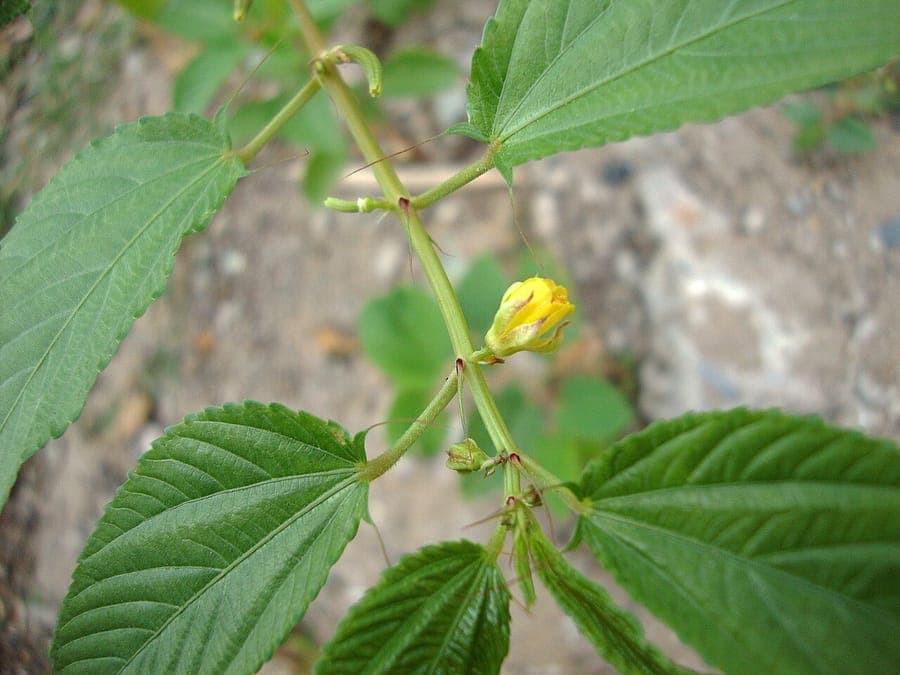
Prenn / CC BY-SA 3.0, via Wikimedia Commons
Corchorus olitorius: complete guide
Corchorus olitorius
Want to see Corchorus olitorius: complete guide in your garden?
1 minute, no credit card
Corchorus olitorius, known as Jew's-mallow, Tossa jute, Nalta jute, or Meloukhia in Arabic, is a fascinating tropical jute plant belonging to the Malvaceae family. This plant naturally occurs throughout tropical and subtropical regions of Africa and Asia, particularly in Ethiopia, Sudan, and West Africa. What makes this plant exceptional is that it functions not only as ornamental but also as extremely valuable food plant for millions of people, especially in Africa and the Middle East, where young leaf material is cooked as nutritious vegetable dishes.
Corchorus olitorius typically reaches heights between 1 and 2.5 meters under optimal growing conditions. The plant develops erect, branching growth with alternately-arranged leaves measuring approximately 3 to 8 centimeters long. Foliage is lanceolate with distinctly toothed (serrated) margins, making it highly distinctive. Leaves display bright green coloration and soft texture. The plant grows rapidly, potentially reaching maximum size within months under warm conditions.
Blooming occurs summer through autumn, typically July to October in northern hemisphere, but persists year-round in tropical areas. Flowers develop singly in leaf axils. Each bloom measures small, approximately 1.5 to 2 centimeters in diameter, with five bright yellow petals. Following pollination, oblong, elongated seed capsules approximately 2 to 3 centimeters long develop, containing numerous small seeds.
Site selection for Corchorus olitorius requires warmth and full sun. The plant requires minimum 6 to 8 hours direct daily sunlight. Plant performs best in warm climates above 20 degrees Celsius, ideally between 25 and 30 degrees Celsius. Temperatures below 15 degrees Celsius essentially halt growth. This is strictly tropical, unsuitable for cold climates. The plant tolerates dry wind poorly, so protect against strong wind exposure.
Regarding soil, Corchorus olitorius remains relatively undemanding. The plant flourishes in diverse soil types provided drainage remains reasonable. Heavy clay soils require amendment with compost. Ideal pH range spans neutral to slightly alkaline (pH 6.5 to 7.5), though the plant grows in more acidic soils. Add thick (10 centimeters) well-rotted compost layer to planting hole. Organic matter proves crucial because it boosts growth speed and leaf production. The plant performs best in fertile soils.
Watering must be consistent, especially during growing season. Keep soil evenly moist, never waterlogged. Warm summers may require daily irrigation. In cooler periods, reduce watering to several times weekly. For seed production (if harvesting your own seed), reduce water somewhat in autumn to stimulate seed ripening. The plant cannot tolerate prolonged waterlogging.
Regular fertilization significantly promotes growth and leaf production. Apply nitrogen-rich fertilizer (NPK 20-10-10 or higher nitrogen) every two weeks during growing season. This encourages dense foliage growth. Slow-release fertilizer in spring also helps. For food production, nitrogen application proves particularly important because you harvest plant leaves. Annual 5 centimeters compost application around plant base helps considerably.
Pruning proves unnecessary but can be employed to encourage leaf production. If harvesting leaves (meloukhia) for food, regularly pick top 20 to 30 centimeters of growing stems. This stimulates additional lateral branching and denser foliage. Seed can be harvested from mature plants in autumn. Remove browned or diseased leaves for appearance.
Pest monitoring proves important. The plant can suffer attack from aphids, spider mites, and certain caterpillar species. Monthly inspection aids early detection. Upon infestation, spray with neem oil or insecticidal soap. The plant remains relatively disease-resistant in dry conditions, though fungal diseases can occur in very humid conditions.
Temperature tolerance proves limited. Corchorus olitorius completely lacks frost hardiness, dying at temperatures below 5 degrees Celsius. The plant ceases growth below 15 degrees Celsius. This means in cold climates, treat as annual or grow in containers moved indoors for winter. In consistently warm climates (above 18 degrees Celsius year-round), permanent outdoor cultivation succeeds.
Corchorus olitorius represents splendid choice for warm climates when seeking both food production and aesthetic value. Plant in vegetable gardens, mixed tropical beds, or containers alone. Group with other vegetable and herb garden plants. Yellow flowers provide color accent against green foliage. In warm regions, cultivate as annual vegetable crop; harvest regularly young leaves for food. With full sun, good feeding, consistent water, and warm temperatures, you will have exceptionally productive and useful plant.
Want to see Corchorus olitorius: complete guide in your garden? Make a free design now.
Upload a photo, pick a style, and get a photorealistic design with plant list in under a minute.
No credit card required


Similar plants
Crimean linden: complete guide
Tilia × euchlora
Crimean linden is an elegant, fast-growing shade tree ideal for large gardens. Discover cultivars, spacing, maintenance tips and winter hardiness.
California flannelbush: complete guide
Fremontodendron californicum
Everything about California flannelbush (Fremontodendron californicum): sunny placement, drainage, pruning and care for this spectacular yellow-flowering shrub.
Hairy rose mallow: complete guide
Hibiscus moscheutos subsp. lasiocarpos
Full growing guide for hairy rose mallow (Hibiscus moscheutos subsp. lasiocarpos): location, soil, watering, winter hardiness and garden design tips.