
Wikimedia Commons / Public domain, via Wikimedia Commons
Pignut: complete guide
Conopodium majus
Want to see Pignut: complete guide in your garden?
1 minute, no credit card
Overview
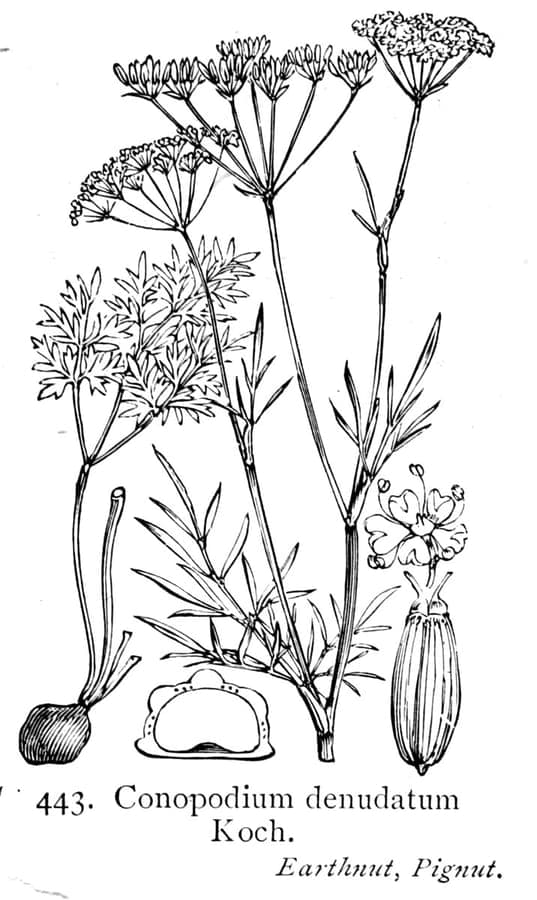
Conopodium majus, commonly known as pignut, is a quiet but valuable perennial that thrives in woodland settings across Western and Central Europe. Native to countries including the UK, France, Spain, and Norway, it grows naturally in grassy clearings and under light tree cover. It's perfect for gardeners who appreciate understated beauty and edible wild plants. Hardy in USDA zones 6–9, pignut forms small tubers with a nutty, chestnut-like flavour that were once foraged by children and pigs - hence the name.
This plant isn't flashy, but it earns its place with resilience and simplicity. It's best suited to naturalistic planting schemes, where it can spread slowly without competition. If you're planning a woodland garden, gardenworld.app can help you visualise where pignut fits best based on light and soil conditions.
Appearance & bloom cycle
Pignut reaches 15–30 cm in height, with delicate, twice-pinnate leaves resembling those of wild carrot or parsley. From June to July, it produces small, white umbel flowers that hover just above the foliage. These attract hoverflies, small bees, and other beneficial insects, making it a quiet but useful pollinator plant.
After flowering, the plant channels energy into forming edible tubers 10–20 cm below the surface. These are typically 1–3 cm across, round or oval, and develop their best flavour in late summer. Harvest them in August or September for a crisp, earthy taste - best eaten raw or lightly steamed.
By late autumn, the foliage dies back completely, and the plant remains dormant until spring. No winter dieback issues in mild to cold temperate zones.
Ideal location
Pignut prefers dappled shade to partial shade (light level 6/10), such as under open-canopy deciduous trees like oak, birch, or hazel. Full sun is tolerable only if the soil stays consistently moist. Deep shade leads to poor flowering and weak growth.
Avoid hot, south-facing borders or paved areas. The plant thrives where it mimics its natural woodland edge habitat. Use gardenworld.app to map light patterns in your garden and identify spots where pignut can thrive without being overwhelmed by more aggressive plants.
Soil requirements
It grows best in well-drained, sandy loam or loamy sand with a pH between 5.0 and 5.5. Avoid heavy clay unless amended with sharp sand and leaf mould. The tubers rot easily in waterlogged soil, especially over winter.
Do not fertilise - pignut evolved in low-nutrient soils and responds poorly to rich compost or manure. If your soil is too alkaline, mix in pine compost or leaf litter to gently acidify. A light mulch of bark chips helps retain moisture and suppress weeds without smothering the plant.
Free design
Want to see Pignut: complete guide in your garden? Make a free design now.
Watering
Once established, pignut is surprisingly drought-tolerant. During prolonged dry spells in June and July, give 10 litres per square metre once a week. Use rainwater when possible, as the plant dislikes hard, chalky water.
Water at soil level - avoid wetting the foliage to prevent fungal issues. Deep, infrequent watering encourages deeper tuber development and better drought resistance.
Pruning
No pruning is required. Allow the foliage to die back naturally in autumn. Cutting it too early weakens next year's growth. If you're harvesting tubers, trim only the top growth after digging, leaving some roots intact to regenerate.
This low-maintenance trait makes pignut ideal for out-of-the-way areas or naturalised plantings. You won't find yourself pruning it every spring - just let it do its thing.
Maintenance calendar
- January: Dormant. No action needed.
- February: Check for early growth in mild areas.
- March: Remove old leaf litter gently. No feeding.
- April: Watch for emerging shoots. Protect from slugs.
- May: Keep soil moist during dry periods.
- June: Flowers appear. Monitor for pollinators.
- July: Peak bloom. Tubers begin forming.
- August: Foliage yellows. Begin tuber harvest.
- September: Best month for harvesting tubers.
- October: Foliage dies back. Leave debris as light mulch.
- November: Dormant. Add leaf litter if desired.
- December: Dormant. Protect from wet frost with bark mulch.
Winter hardiness
Pignut is hardy to USDA zone 6 (-23°C). In zone 5, protect tubers with a 5 cm layer of leaf mould or pine needles to prevent freeze-thaw damage. Good drainage is more important than insulation.
In the UK and Ireland, no winter protection is usually needed. In colder regions like Scandinavia, a light mulch helps, but avoid thick layers that retain moisture.
Companion plants
Pair pignut with other shade-tolerant perennials like wood anemone (Anemone nemorosa), wild ginger (Asarum), or bluebells (Hyacinthoides non-scripta). It combines well with early spring bulbs that die back by summer, leaving space for pignut to grow.
Avoid invasive ground covers like ground elder or mint. Give each plant 20 cm of space to develop. It spreads slowly by seed and rhizome, so it won't take over - just gently expand over years.
Closing
Pignut is a hidden gem for the thoughtful gardener. It's edible, resilient, and blends seamlessly into woodland gardens. With no need for fertiliser or pruning, it's a true low-effort plant.
You can find Conopodium majus at garden centres across the UK and Europe, though it's not always common. Look for it at specialist nurseries or order online. Pair it with a planting plan from gardenworld.app to create a garden that works with nature, not against it.
Want to see Pignut: complete guide in your garden? Make a free design now.
Upload a photo, pick a style, and get a photorealistic design with plant list in under a minute.
No credit card required


Similar plants
Whorled carrot: complete guide
Daucus involucratus
Daucus involucratus is a Mediterranean umbellifer with white flower heads framed by lacy bracts. Growing this gravel garden gem.
Daucus muricatus: complete guide
Daucus muricatus
Daucus muricatus, the spiny wild carrot, grows wild on Mediterranean coasts. Discover sowing, June-July bloom, and wildflower meadow use.
Daucus pumilus: complete guide
Daucus pumilus
Daucus pumilus is a dwarf wild carrot relative with white lacy umbels, thriving on dunes and coastal rock in poor, fast-draining soil.