
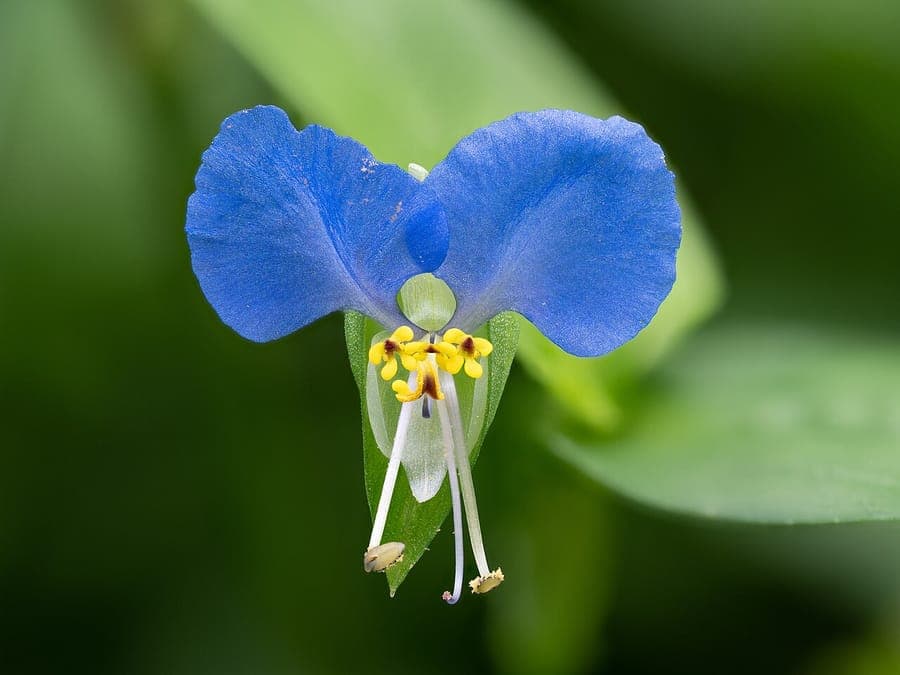
Ermell / CC BY-SA 4.0, via Wikimedia Commons
Asiatic dayflower: complete guide
Commelina communis
Want to see Asiatic dayflower: complete guide in your garden?
1 minute, no credit card
Overview
Commelina communis, better known as Asiatic dayflower, is a quick-spreading annual that thrives in damp, sheltered corners of the garden. Native to regions across Asia - including parts of China, Russia, and Cambodia - it's often found along ditches, woodland edges, and moist borders. Though sometimes dismissed as a weed, its vibrant blue flowers and trailing habit make it a charming addition to cottage gardens, woodland plantings, or low-maintenance areas where little else grows well.
If you're designing a shaded or damp garden area, gardenworld.app can help you map out a layout where Asiatic dayflower fits naturally. The platform suggests companion plants and ideal spacing based on your soil and sun exposure.
Appearance & bloom cycle
Asiatic dayflower has a loose, creeping growth habit, with stems reaching 30–60 cm long. The leaves are lance-shaped, 4–8 cm in length, and slightly hairy along the edges. What really stands out are the flowers: a vivid sky-blue with two larger upper petals and one tiny lower petal. They open in the morning and typically close by midday - hence the name 'dayflower'. Blooming occurs from June through September, with new buds appearing regularly if conditions are favorable.
The plant self-seeds readily, so if you leave a few flowers to mature, you'll likely see seedlings return the next spring. The flowers contrast beautifully against darker foliage or gravel paths. Though short-lived daily, the continuous bloom cycle ensures color for months.
Ideal location
This plant loves moisture and partial shade. It performs best in locations with morning sun and afternoon shade - think under shrubs, along a north-facing wall, or in a damp corner near a downspout. Full sun is possible only if the soil remains consistently moist. In dry, exposed areas, the plant will wilt and stop flowering.
Avoid hot, south-facing beds unless you can provide extra water. Asiatic dayflower thrives in USDA zones 4–9, where summer humidity supports its growth. If you're working with a tricky, wet patch, consider this plant a solution rather than a problem. On gardenworld.app, you can generate a planting plan that highlights such microclimates and suggests compatible species.
Soil requirements
Asiatic dayflower prefers rich, loamy or clay soils that retain moisture without becoming waterlogged. A pH between 6.0 and 7.0 is ideal. It struggles in sandy soils unless amended with compost or well-rotted manure. The addition of organic matter helps hold water and supports healthy growth.
If planting in containers, use a mix of garden soil and compost in a pot with drainage holes. Avoid peat-heavy mixes, as they dry out too quickly. The plant responds well to a light application of balanced fertilizer in early summer.
Watering
Consistent moisture is key. Water every 2–3 days during dry spells, especially if the plant is in a pot or in full sun. Early morning is the best time to water, reducing evaporation and fungal risk. Rainwater is preferred, as the plant can be sensitive to high lime content in tap water.
During wet summers, supplemental watering is rarely needed. However, prolonged drought will cause the leaves to droop and flowering to cease. Mulching around the base helps retain moisture and suppress competing weeds.
Free design
Want to see Asiatic dayflower: complete guide in your garden? Make a free design now.
Pruning
No pruning is required for flowering, but you can trim back leggy stems in late summer to maintain shape or prevent over-spreading. Use clean shears and cut back to a leaf node. If you want to limit self-seeding, remove spent flower heads before seeds form.
Alternatively, let the plant go to seed if you want natural reseeding. It's not aggressive, but it can pop up in nearby cracks or borders. Regular trimming also improves air circulation, reducing the risk of fungal issues in humid conditions.
Maintenance calendar
- January: Dormant. No action needed.
- February: Soil prep - add compost if planting in spring.
- March: Watch for early seedlings in mild areas.
- April: Seedlings emerge. Light feeding starts.
- May: Rapid growth. Keep soil moist.
- June: Blooming begins. Check for wilting.
- July: Peak bloom. Trim if overgrown.
- August: Continue flowering. Remove dead blooms.
- September: Bloom tapers off. Seeds mature.
- October: Plant dies back. Clear debris or leave for wildlife.
- November: Clean up garden beds. Prevent mold.
- December: Fully dormant. No care required.
Winter hardiness
Asiatic dayflower is an annual and does not survive winter in most temperate climates. It dies back completely after frost. However, it reliably self-seeds, so seedlings often return in spring if conditions allow. In milder zones (like USDA 7–9), seedlings may appear as early as March.
No winter protection is needed. To control spread, mulch heavily in fall or remove seed heads before they disperse. The plant doesn't overwinter as a root system - it's entirely seed-dependent.
Companion plants
Pair Asiatic dayflower with other moisture-loving, shade-tolerant plants. Great companions include Hosta (30–80 cm tall), Astilbe (60–100 cm), Ligularia (90–120 cm), and ferns like Dryopteris. These create a layered, textured ground cover with extended seasonal interest.
Avoid planting near aggressive spreaders like mint or bamboo. Also, don't place it where heavy mulch or foot traffic might smother it. It works well in woodland edges, along stream banks, or beneath shrubs with open canopies.
Closing
Asiatic dayflower is an underrated gem for moist, shady spots. It asks for little - just consistent moisture and some protection from harsh sun - and gives back with months of delicate blue blooms. While it self-seeds, it's easy to manage and won't take over like true invasives.
You can find seeds or plants at local garden centres, especially during spring. Retailers like OBI and Hornbach in Germany, Truffaut and Jardiland in France, or general garden centres in the UK often carry related species, and seeds are widely available online. On gardenworld.app, simulate how this plant spreads over time and adjust your design to accommodate its natural rhythm.
Want to see Asiatic dayflower: complete guide in your garden? Make a free design now.
Upload a photo, pick a style, and get a photorealistic design with plant list in under a minute.
No credit card required


Similar plants
Virginia dayflower: complete guide
Commelina virginica
Full guide to Virginia dayflower (Commelina virginica): ideal location, soil, watering, pruning, winter care and companion plants.
Commelina diffusa: complete guide
Commelina diffusa Burm.f.
Commelina diffusa, the climbing dayflower, is an elegant perennial with soft blue flowers that bloom for just a day. This tropical grower thrives in shaded locations and is ideal for hanging baskets, pergolas, and moist garden corners.
Callisia repens: complete guide
Callisia repens
Creeping Inchplant is an elegant trailing plant with delicate foliage, perfect for hanging baskets and groundcover. Learn how to cultivate this popular houseplant successfully.