
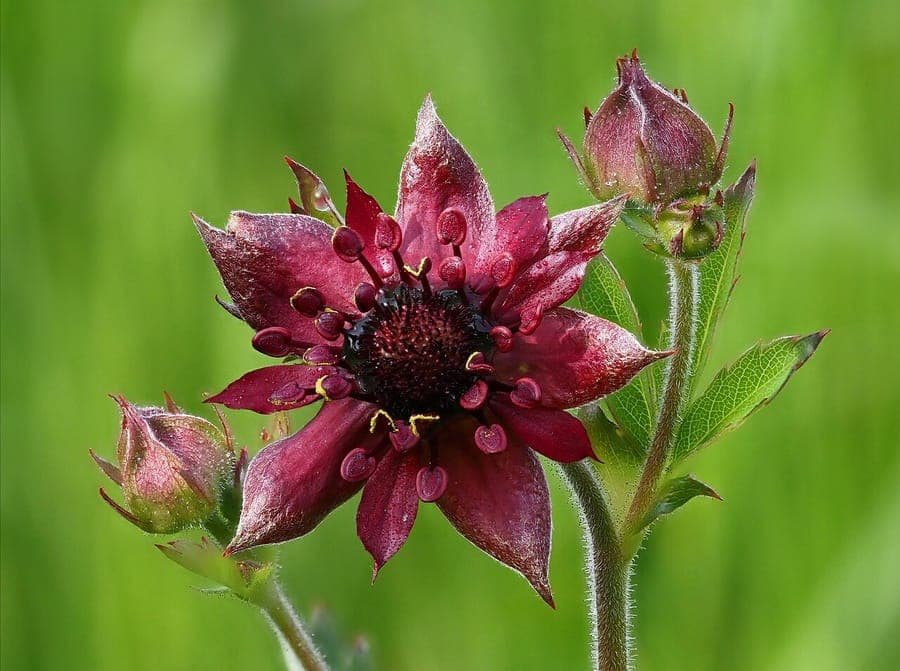
Frank Vassen from Brussels, Belgium / CC BY 2.0, via Wikimedia Commons
Marsh cinquefoil: complete guide
Comarum palustre
Want to see Marsh cinquefoil: complete guide in your garden?
1 minute, no credit card
Overview
Marsh cinquefoil (Comarum palustre) is a resilient, creeping perennial native to wetlands across northern Europe, Asia, and parts of North America, including Alaska and British Columbia. A member of the Rosaceae family, it thrives in soggy soils and shallow water, making it an excellent candidate for pond margins, bog gardens, or any damp corner of the garden where few other plants survive. It forms dense mats via underground stolons and reaches a height of 15–30 cm, spreading up to 60 cm or more over time.
While not as widely known as some ornamental water plants, marsh cinquefoil brings a subtle elegance with its evergreen foliage and long blooming season. Because it spreads aggressively, consider using a root barrier when planting directly in the ground. You can visualise the ideal placement and spread using gardenworld.app's garden planner, which helps you design a layout that balances natural growth with garden structure.
Appearance & bloom cycle
The plant features dark green, pinnate leaves divided into five to seven toothed leaflets, giving it a lush, fern-like appearance. These leaves remain semi-evergreen in milder climates, providing year-round interest. From June to July, dense, double flowers emerge in a striking deep crimson to burgundy shade. Each bloom measures about 2.5 cm across and resembles a small carnation, packed with stamens for a full, textured look.
Unlike many wild relatives in the rose family, Comarum palustre rarely sets seed due to its double-flowered form. The spent flower stalks remain upright, but they can be easily pinched off during light maintenance. The blooming period typically lasts four to six weeks, depending on moisture levels and summer temperatures.
Ideal location
Choose a spot in full sun to partial shade. For maximum flowering, plant in full sun-this also promotes tighter, more compact growth. In partial shade, the plant may stretch and become leggy, though it will still survive. The key requirement is constant moisture. Ideal sites include the shallow edges of ponds (up to 5 cm of water above the crown), bog gardens, or damp borders with poor drainage.
When planting in a pond, use a heavy soil mix in a 25 cm wide aquatic basket and place it in the marginal zone. For in-ground planting in wet soil, ensure the site does not dry out, especially during hot summers. Avoid areas with fast-draining sandy soils unless amended with compost or peat.
Soil requirements
Marsh cinquefoil prefers rich, heavy soils-especially clay or loam-with high organic content. A slightly acidic to neutral pH (5.5–7.0) is ideal. Sandy soils should be improved with generous amounts of compost or well-rotted manure to increase water retention. Avoid soils that dry out quickly, as this plant cannot tolerate drought.
For container planting in water, use a mix of topsoil and clay with a small amount of compost. Do not use lightweight potting mixes, as they can float or wash away. A heavy, non-porous pot helps keep the root system stable and submerged.
Free design
Want to see Marsh cinquefoil: complete guide in your garden? Make a free design now.
Watering
This plant is dependent on constant moisture. In a pond setting, it's naturally hydrated. In bog gardens or damp borders, check soil moisture frequently, especially in June and July. During dry spells, water deeply every two to three days, or daily in extreme heat. Use rainwater when possible, as tap water high in lime can damage the plant over time.
If the soil dries out, leaves may yellow and wilt. However, rehydration usually brings quick recovery. Never let the root zone go completely dry for more than a day.
Pruning
Pruning needs are minimal. Remove dead or damaged foliage and spent flower stalks in late summer or early autumn. This keeps the plant tidy and reduces the chance of fungal issues. Use clean, sharp snips or pinch stems off by hand.
If the plant spreads beyond its intended area, trim back runners or divide the clump. Divisions can be replanted elsewhere in the garden or shared with fellow gardeners. Use gardenworld.app to map out your garden divisions and track where new plants are installed for better long-term planning.
Maintenance calendar
- January: No action needed. Plant dormant.
- February: Still dormant. No care required.
- March: Check for new growth. Remove old leaves if necessary.
- April: Ideal time for planting or dividing. Amend soil with compost.
- May: Ensure consistent moisture. Monitor for runner spread.
- June: Bloom begins. Keep soil saturated.
- July: Peak flowering. Deadhead spent blooms.
- August: Trim back excessive growth. Avoid drought stress.
- September: Reduce watering slightly as growth slows.
- October: Clear any damaged foliage.
- November: No maintenance.
- December: Fully dormant. No action needed.
Winter hardiness
Marsh cinquefoil is extremely hardy, surviving temperatures down to -30°C (USDA zone 3). It remains semi-evergreen in milder winters, with foliage persisting through the season. In colder zones, the top growth may die back, but the rhizomes survive underwater or in moist soil and re-sprout in spring.
No winter protection is needed, even in shallow ponds. Just ensure the roots don't completely dry out or freeze solid, which is unlikely in a properly designed wetland setup.
Companion plants
Pair marsh cinquefoil with other moisture-loving plants such as tussock sedge (Carex elata), bogbean (Menyanthes trifoliata), or cotton grass (Eriophorum angustifolium). In pond settings, combine with water lilies (Nymphaea) or pickerelweed (Pontederia cordata). For colour contrast, try Lysimachia ciliata 'Firecracker' or Iris versicolor.
Avoid drought-tolerant species like lavender or sedum. Stick to a naturalistic planting scheme with a mix of textures and heights to mimic a true wetland habitat.
Closing
Marsh cinquefoil is a low-key powerhouse for wet areas. With minimal care, it delivers months of colour and structure. Whether you're building a bog garden or filling a pond edge, this plant earns its place. Find Comarum palustre at garden centres across the UK and North America, especially those specialising in water plants. Just remember: keep it wet, give it sun, and let it spread-within reason.
Want to see Marsh cinquefoil: complete guide in your garden? Make a free design now.
Upload a photo, pick a style, and get a photorealistic design with plant list in under a minute.
No credit card required


Similar plants
Siberian crab apple: complete guide
Malus x robusta
Complete guide to the Siberian crab apple (Malus x robusta): location, soil, pruning, winter hardiness and the best companion plants for your garden.
Chinese flowering crabapple (Malus x spectabilis): complete guide
Malus x spectabilis
Meet the Chinese flowering crabapple (Malus x spectabilis): a classic spring bloomer with carmine buds and pink blossom.
Potentilla crassinervia: complete guide
Potentilla crassinervia
Potentilla crassinervia, the Corsican cinquefoil, grows wild on Corsica and Sardinia's peaks. Discover how to grow this hardy alpine rock garden gem.