
AnRo0002 / CC0, via Wikimedia Commons
Bladder-senna: complete guide
Colutea arborescens
Want to see Bladder-senna: complete guide in your garden?
1 minute, no credit card
Overview
Colutea arborescens, commonly known as bladder-senna, is a distinctive shrub that brings long-season interest to the garden with its bright yellow flowers and bizarre, bladder-like seed pods. Native to southern Europe, it thrives in dry, sunny sites and is increasingly popular in drought-prone gardens across the UK and Western Europe. A member of the Fabaceae family, it fixes nitrogen in the soil, enriching poor ground and reducing the need for feeding. It grows 1.5 to 2.5 metres tall with a spread of 1.2 to 1.8 metres, making it ideal for a mid-sized structural shrub in a mixed border or informal hedge.
While not native to the British Isles, bladder-senna has proven itself surprisingly resilient in temperate climates. It copes well with urban pollution, chalky soils, and seasonal drought once established. The inflated pods persist well into winter, offering form and texture when many other plants have died back. In milder areas, it remains semi-evergreen, providing year-round cover.
On gardenworld.app you can design a garden layout that highlights Colutea arborescens as a focal point in a Mediterranean-style planting scheme.
Appearance & bloom cycle
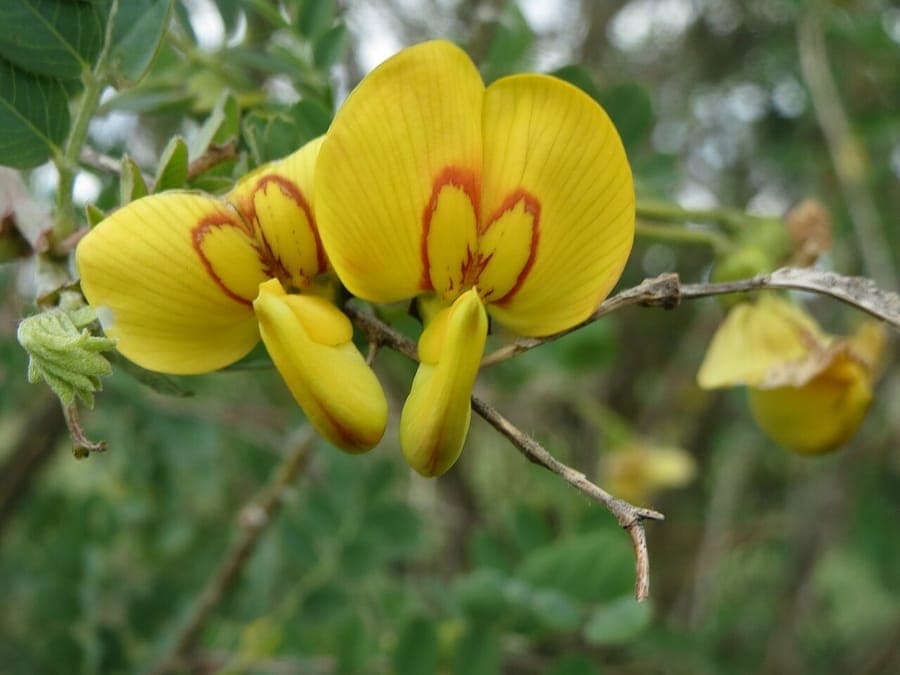
From May to July, bladder-senna produces clusters of vibrant yellow, pea-like flowers at the ends of its branches. Each bloom is about 1.5 cm long, with a slightly notched petal, and appears in dense racemes. After flowering, the plant develops its signature inflated pods – pale green at first, maturing to a papery, translucent tan. These pods can reach up to 5 cm in length and rattle in the wind, adding sound and movement to the garden.
The foliage is pinnate, with 5 to 9 narrow, lance-shaped leaflets per leaf, each 1–3 cm long. The leaves are medium to dark green, slightly hairy underneath, and turn a soft yellow in autumn before dropping in colder zones. Young stems are reddish-brown, adding subtle interest in early spring.
Ideal location
Bladder-senna needs at least 6 hours of direct sunlight per day (light level 6). It performs best in south- or southwest-facing spots, especially when sheltered from cold northerly winds. In the UK, it does well in urban gardens with good exposure, such as in London, Bristol, or Brighton. Avoid dense shade, which leads to leggy growth and poor flowering.
Use it as a standalone feature or in a gravel garden with other drought-tolerant plants. It's not suitable for woodland or boggy conditions. Coastal gardens are ideal, as it tolerates salt spray and sandy soils.
Soil requirements
This shrub is adaptable to a wide pH range (6–8.5) and grows well in chalk, loam, or sandy soils as long as drainage is sharp. It struggles in heavy, waterlogged clay. If your soil is poorly drained, raise the planting site with a mix of garden soil, grit, and compost. A 10–15 cm layer of gravel beneath the root zone can prevent rot.
Avoid overly rich soils, which encourage soft growth vulnerable to frost. Colutea arborescens actually thrives in poorer conditions, where its nitrogen-fixing ability gives it a competitive edge.
Free design
Want to see Bladder-senna: complete guide in your garden? Make a free design now.
Watering
Water young plants regularly during their first growing season – about once a week during dry spells. Water deeply to encourage deep root development. Once established (after 12–18 months), it rarely needs supplemental watering, even in hot, dry summers.
Potted specimens require more attention. Water when the top 3–5 cm of soil feels dry. Use rainwater if possible, especially in hard-water areas, to prevent lime buildup.
Pruning
Pruning is minimal. Bladder-senna flowers on new wood, so avoid cutting it back in autumn or winter. If shaping is needed, prune in early spring (March–April) before new growth emerges. Remove dead, damaged, or crossing branches. You can also cut back older stems by a third to rejuvenate the plant every few years.
Leave the pods intact through winter for visual interest. Cutting them too early removes the plant's main ornamental feature.
Maintenance calendar
- January: Check for storm damage; protect container plants
- February: Inspect for dieback; remove any broken stems
- March: Light pruning; apply mulch if desired
- April: Final shaping; monitor young plants for water needs
- May: Flowers begin; no pruning
- June: Peak bloom; watch for aphids on new growth
- July: Flowers fade; pods start to swell
- August: No care needed
- September: Pods mature; avoid disturbing
- October: Begin clearing fallen leaves; leave pods
- November: Final tidy-up; protect pots in cold areas
- December: Check framework; enjoy winter structure
Winter hardiness
Colutea arborescens is hardy in USDA zones 6–8. In the UK (mostly zone 8), it survives most winters without issue. In colder regions, young stems may die back in severe frosts below -15°C, but the plant usually reshoots from the base in spring. Mulch the base in autumn to protect roots.
Potted plants are more vulnerable – move to a sheltered spot or wrap the container with hessian.
Companion plants
Pair bladder-senna with plants that share its preferences: full sun, sharp drainage, and low fertility. Good companions include Lavandula angustifolia, Echinacea purpurea, Stachys byzantina, and Sedum 'Matrona'. The yellow flowers contrast beautifully with purple and silver foliage. Avoid moisture-loving plants like hostas or astilbes.
On gardenworld.app, you can explore planting combinations that balance texture and drought resilience, placing Colutea arborescens at the heart of a low-water design.
Closing
Bladder-senna is a tough, attractive shrub that delivers long-lasting interest with minimal effort. Its bold pods, cheerful flowers, and adaptability make it a smart choice for modern, sustainable gardens. Plant in sun, avoid wet feet, and let it shine. Available at garden centres across the UK, especially in spring, often in 40–60 cm pots.
Want to see Bladder-senna: complete guide in your garden? Make a free design now.
Upload a photo, pick a style, and get a photorealistic design with plant list in under a minute.
No credit card required


Similar plants
Tall Silky Lupine: complete guide
Lupinus elatus
Tall silky lupine is a fast-growing Californian perennial with silvery foliage and blue-purple flower spikes, ideal for a prairie-style garden.
Garfield Lupine: complete guide
Lupinus garfieldensis
The Garfield lupine is a rare, fast-growing American perennial for alkaline, dry grassland gardens, with striking blue flower spikes.
Lupinus elegans: complete guide
Lupinus elegans
Lupinus elegans, the elegant lupine, is a spectacular blooming plant from Mexico with blue flower spikes. Care, cultivation and garden use.