
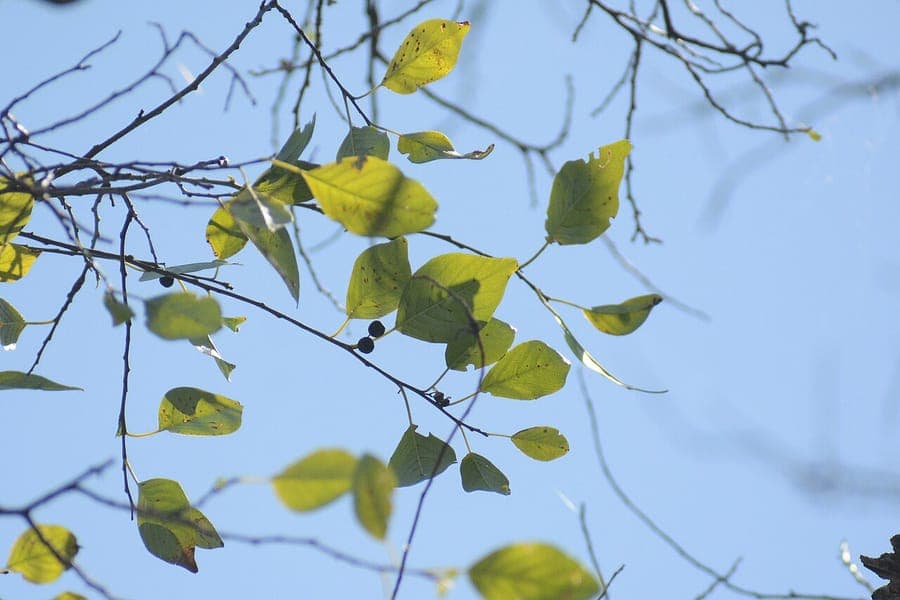
Djringer / CC BY-SA 4.0, via Wikimedia Commons
Soldierwood: complete guide
Colubrina elliptica
Want to see Soldierwood: complete guide in your garden?
1 minute, no credit card
Overview
Colubrina elliptica, commonly known as soldierwood or nakedwood, is a small to medium-sized tropical tree in the family Rhamnaceae. Native to the Caribbean Basin - including Cuba, Hispaniola, Puerto Rico, the Lesser Antilles, and coastal Florida - it also occurs along coasts of Central America and northeastern South America. In the wild it grows in dry to seasonally moist tropical forests, coastal scrub, and rocky limestone slopes, typically in well-draining, nutrient-poor soils that defeat many other tree species.
The genus name Colubrina comes from the Latin 'coluber' (snake), probably referring to the sinuous branching patterns or the slender, smooth bark of young specimens. The species epithet elliptica describes the oval to elliptic leaves that are distinctive to this species. The common name 'soldierwood' refers to the extremely hard, dense timber that was historically prized for tool handles, boat frames, construction timber, and other applications where durability was essential.
In tropical horticulture, particularly across Florida, Caribbean island gardens, and subtropical regions worldwide, Colubrina elliptica has gained recognition as a drought-tolerant, native tree for ecological restoration projects and landscape gardens. The small, yellowish-green flowers are inconspicuous but attract pollinators, while the round black fruits provide food for birds. The bark of mature trees has a striking reddish-brown, sometimes scaly appearance that adds textural interest.
For gardeners outside the tropics and subtropics, soldierwood is more of a botanical curiosity than a mainstream garden plant. In temperate climates such as those of northwestern Europe, it is not cold-hardy outdoors and can only be grown as a container plant in a heated glasshouse or conservatory. In its native range, however, it is a valuable ecosystem tree requiring little maintenance, tolerant of salt spray from the ocean, and contributing to the biodiversity of coastal dry forests.
Appearance & bloom cycle
Colubrina elliptica grows as a small to medium tree reaching 6 to 12 metres in its natural range, though in cultivation it often remains more compact, particularly with regular pruning. The trunk is slender to moderately stout, with smooth reddish-brown bark on young twigs that becomes grey-brown and somewhat scaly with age. Leaves are alternately arranged, ovate to elliptic, 4 to 10 cm long and 2 to 5 cm wide, with a glossy dark green upper surface and a paler underside. Leaf margins are finely toothed.
Flowers are small, only 3 to 5 mm across, yellowish-green in colour, and borne in dense axillary clusters. Depending on the region, they bloom for much of the year but peak in late spring and early summer. The flowers are not showy but produce nectar that attracts bees, small butterflies, and other insects. After pollination, a round to elliptic capsular fruit 6 to 10 mm across develops, ripening from green through reddish-brown to glossy black. The seeds are dispersed by birds, particularly seed-eating species.
The timber is remarkably heavy and dense - one of the hardiest hardwoods in the Caribbean. It sinks in water, which explains the historical name "ironwood" used in some regions. This wood density makes the tree valuable for craft use but also slows its growth rate: Colubrina elliptica grows relatively slowly in the wild, typically less than 50 cm per year.
Ideal location
In its home range across the Caribbean and southern Florida, Colubrina elliptica favours sunny to lightly shaded positions in calcareous, well-draining soils. It tolerates salty sea winds and is therefore ideally suited to coastal positions and wind-exposed sites in tropical and subtropical coastal areas. In cultivation - in botanical gardens or among gardeners in Florida, Hawaii, or coastal Australia - the tree performs best in an open, sunny position receiving at least six hours of direct sunlight daily.
In northwestern Europe, the species can only be cultivated as a container plant in a warm glasshouse or conservatory with minimum temperatures above 10 degrees Celsius in winter. It can be moved outdoors to a warm, sheltered patio from June to September but must be brought back inside before the first autumn frost. A position behind a south-facing glass wall or in a heated glasshouse is the most realistic option for Dutch and Belgian gardeners.
Avoid positions in full shade: the tree needs light to maintain healthy foliage and produce flowers. Permanently wet soil is also unsuitable; even in tropical regions this species prefers well-draining, sometimes rocky substrates.
Soil requirements
Colubrina elliptica thrives in a broad range of soil types, from limestone-derived rocky soils to sandy, nutrient-poor coastal sands. The pH tolerance is wide: from 6.0 to 8.5 the species performs well. Poor drainage is the greatest enemy; the soil must drain freely to prevent root rot. In its natural Florida habitat, the tree grows directly on coral rock or oolitic limestone substrates that contain almost no organic matter.
In container cultivation, a mix of 50 percent quality potting compost and 50 percent perlite or coarse sand is recommended. This ensures the drainage properties the tree requires. Add a small amount of granular, slow-release fertiliser at planting but avoid overfeeding: overly rich soil promotes soft growth more susceptible to disease and damage.
The species tolerates mild soil salinity, making it valuable for coastal areas where occasional salt water incursion occurs. This salt tolerance is a distinguishing characteristic relative to many other tropical tree species.
Free design
Want to see Soldierwood: complete guide in your garden? Make a free design now.
Watering
In its tropical and subtropical home range, Colubrina elliptica is drought-tolerant and well able to withstand seasonal dry periods. Once established, the tree can survive weeks or even months without supplemental water, provided the soil does not remain permanently wet.
In container cultivation, watering should be regular but moderate. During the growing season (spring and summer), water when the top 3 to 5 cm of potting medium feels dry. In winter, when the plant is less active at lower temperatures, reduce watering considerably: once every two to three weeks is usually sufficient to keep the plant alive without causing root problems.
Avoid standing water in saucers beneath pots; this is the quickest route to root rot in this species. Ensure pots or containers always have drainage holes at the base and that excess water can escape freely. During warm summers when the plant is outdoors on a terrace, water demand may be greater; check the soil moisture daily.
Pruning
As a relatively slow grower, Colubrina elliptica requires little pruning for shaping and maintenance. In its tropical native range it is generally not actively pruned unless managed as a hedge, windbreak, or timber tree. In container cultivation, an annual light shaping trim can be useful to keep the plant compact and well-formed.
The best time to prune in container cultivation is early spring, before the new growing season begins. Cut back protruding or crossing branches to a suitable lateral branch junction. Remove dead wood immediately upon noticing it. Always use clean, sharp tools and disinfect them before use to prevent transmission of potential fungal diseases.
In winter, avoid removing excessive foliage or living wood; the plant recovers slowly from major interventions when already under stress from low temperatures and low light. Small, precise corrective pruning is always preferable to drastic cutbacks.
Maintenance calendar
January-February (glasshouse/conservatory): Minimal watering. Maintain temperature above 10 degrees Celsius. Check for scale insects or mealybug, which can proliferate rapidly in enclosed winter quarters.
March: Start of growing season. Carry out light shaping pruning if needed. Begin regular watering as new foliage emerges. Feed lightly with a balanced fertiliser.
April-May: Active growth period. Water weekly as soil demands. Apply a second light feeding. Monitor for pest insects.
June-September: Move outdoors to a sheltered, sunny terrace. Check water needs daily. Feed monthly. Enjoy the small, discreet flowers and fruit development.
October: Return indoors before the first night frost. Gradually reduce watering. Remove damaged foliage.
November-December: Winter rest in glasshouse. Minimal watering. Keep temperature stable above 10 degrees Celsius. Monitor humidity; dry glasshouse air can encourage spider mites.
Winter hardiness
Colubrina elliptica is a tropical tree that overwinters reliably outdoors in USDA hardiness zone 10b and warmer. This limits outdoor cultivation in Europe largely to the southern coasts of Spain, Portugal, the Canary Islands, Madeira, and the Mediterranean basin. In northwestern Europe, including the Netherlands and Belgium, the tree is not cold-hardy for outdoor cultivation.
As a container plant in a heated glasshouse with minimum temperatures of 10 to 12 degrees Celsius, Colubrina elliptica can survive well in temperate climate zones. The key is frost-free overwintering and preventing wet roots during cold months. When overwintering on a cool windowsill (10 to 15 degrees Celsius), it is normal for the plant to drop some leaves; this is not a cause for concern provided roots are kept relatively dry and adequate light is available.
Explore how tropical and subtropical tree species might fit your garden layout using gardenworld.app, where you can upload your own garden photo and visualise planting styles suited to exotic or Mediterranean trees. Visit gardenworld.app for more information on unusual garden trees and exotics.
Companion plants
In its native Caribbean and South Florida habitat, Colubrina elliptica grows alongside other drought-tolerant coastal and forest species. Typical wild companions include Bucida buceras, Coccoloba uvifera (sea grape), Conocarpus erectus (buttonwood), and Bursera simaruba (gumbo limbo). In garden settings appropriate to subtropical and tropical climates, good combinations include:
- Coccoloba uvifera (sea grape): another salt-tolerant coastal tree growing well on the same calcareous, well-draining soils. Together they create a naturally appearing coastal planting.
- Conocarpus erectus (buttonwood): a salt-tolerant coastal shrub-tree used as a hedge or specimen, with the same site requirements.
- Rhoeo spathacea (oyster plant): as low ground cover beneath the tree in partially shaded positions; thrives at similar moisture levels.
- Tillandsia species (air bromeliads): can be attached epiphytically in the tree canopy for tropical accent; require no additional soil.
- Opuntia species (prickly pear): for fully dry calcareous positions around the trunk base; spines also deter grazing animals.
Avoid moisture-demanding tropical species such as Heliconia or Musella; their soil moisture requirements are diametrically opposed to those of Colubrina elliptica.
Closing
Colubrina elliptica is a fascinating tropical tree with a significant ecological role in the dry and seasonally moist forests of the Caribbean and Florida. Its extremely hard timber, salt-tolerant nature, drought resistance, and ecological value for birds and pollinators make it a highly regarded native species for restoration projects and landscape gardens in its home range. For northwestern European gardeners it is a rare tropical curiosity that can only be maintained as a glasshouse container plant, but for lovers of unusual exotics it is certainly worth discovering and growing.
Want to see Soldierwood: complete guide in your garden? Make a free design now.
Upload a photo, pick a style, and get a photorealistic design with plant list in under a minute.
10,000+ gardens designed already
No credit card required


Similar plants
Point Reyes ceanothus: complete guide
Ceanothus gloriosus
The Point Reyes ceanothus is an evergreen Californian groundcover with blue flowers. Location, soil and pruning explained in detail.
Santa Barbara ceanothus: complete guide
Ceanothus impressus
Ceanothus impressus rewards a sunny wall with deep blue flowers in March-May. Location, soil, pruning and winter protection explained.
Redstem ceanothus: complete guide
Ceanothus sanguineus
Ceanothus sanguineus is a hardy, deciduous shrub with reddish stems and creamy white flower clusters in June. Care and companions.