
Liam Quinn / CC BY-SA 2.0, via Wikimedia Commons
Antarctic pearlwort: complete guide
Colobanthus quitensis
Want to see Antarctic pearlwort: complete guide in your garden?
1 minute, no credit card
Colobanthus quitensis, commonly known as Antarctic pearlwort or Sagine antarctique, is a remarkable alpine species in the Caryophyllaceae family. Native from Mexico through the high Andes to Antarctica, this plant demonstrates extraordinary adaptation to extreme alpine and polar environments.
Overview
The Antarctic pearlwort is a diminutive cushion-forming plant specialized for survival in harsh mountain climates. Its compact growth habit and dense leaf rosettes create near-perfect water conservation and wind protection. This species has evolved over millennia to thrive where most plants cannot survive.
Appearance & Bloom
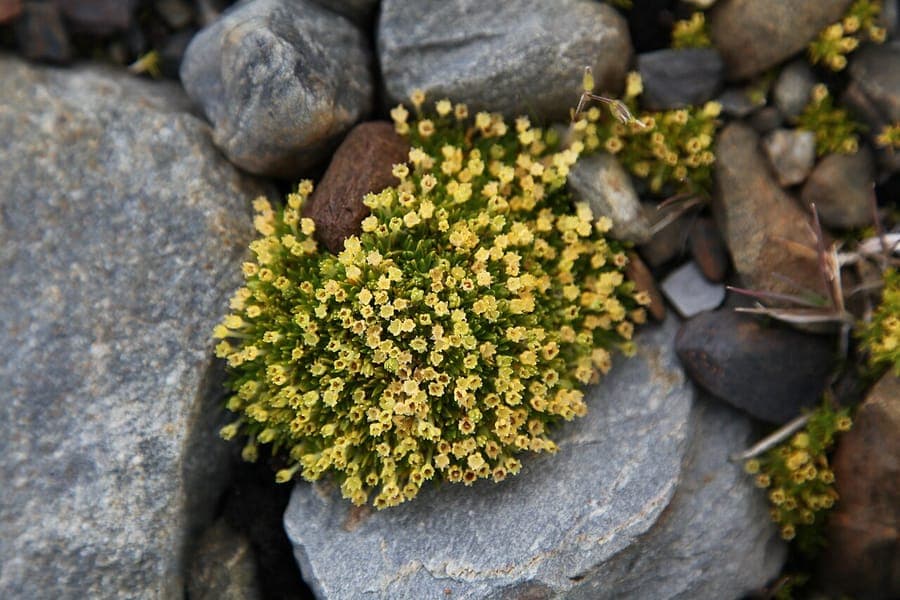
This plant develops tight, grey-green cushions just a few centimeters tall. Fine needle-like leaves form dense rosettes that produce tiny white or pale yellow flowers from July to September. Although small, these flowers are elegant and attract pollinators in the alpine meadows where this species grows. Peak ornamental value appears during summer months when mountain regions show full bloom.
Ideal Location
Place this species in full sun to partial shade. Antarctic pearlwort thrives best on rocky slopes, scree, and in rock crevices with excellent water drainage. This is not a plant for low-lying, moisture-prone sites. Ensure excellent drainage and sites where cold air circulates freely. In warmer climates, north-facing positions suit this plant better.
Soil
Soil must be well-draining - use sandy, gritty mixtures with minimal organic content. In gardens, use rock gardens or troughs with alpine grit mixes (70 percent grit, 30 percent compost). Optimal pH ranges between 6.0 and 7.0. This plant tolerates nutrient-poor soils well, requiring no fertilization. Slightly acidic soil promotes optimal growth.
Watering
Watering is minimal. During growth periods (May to October), water only when soil feels completely dry. Prevent water from pooling around leaf rosettes as this causes rot. Keep nearly dry during winter. Drip irrigation or soaker systems work better than overhead watering for this alpine species.
Free design
Want to see Antarctic pearlwort: complete guide in your garden? Make a free design now.
Pruning
Pruning is rarely necessary. Remove only dead or damaged leaves with fine scissors or a nail. This plant does not undergo natural grooming, so maintenance is primarily aesthetic. After flowering, seed heads may be removed if you wish to prevent excessive self-seeding.
Maintenance Calendar
May through September: active growth period. Check drainage and moisture regularly. June through August: flowering period with minimal feeding needs (dilute alpine fertilizer only). October: prepare for winter, inspect for damage. November through April: dormancy period with minimal maintenance and no watering unless extremely dry.
Winter Hardiness
Extremely cold hardy to USDA zone 2a (minus 40 degrees Celsius). This is one of Earth's hardiest plants. In northern Europe, no winter protection is needed. Concerns arise more from wet winters than extreme cold. In warm, wet conditions, rot may occur, making good drainage critical.
Companion Plants
Cluster this plant with other alpine species: Dianthus alpinus, Saxifraga species, Phlox subulata, and other rock garden plants. This creates authentic alpine flora. Avoid large plants casting shade. In containers, combine with small conifers and other alpine grasses for visual interest.
Closing Thoughts
The Antarctic pearlwort is an exceptional plant for rock gardens, troughs, and alpine collections. Though small and understated, this plant offers fascinating insights into plant adaptation to extreme environments. With proper drainage and minimal care, this alpine jewel can flourish for decades in your garden. Start with a few plants in well-drained rock gardens - you will be amazed at its perseverance.
Your local garden centre regularly stocks alpine plant material. Check their websites for seasonal availability. Gardenworld.app helps you design your complete alpine garden layout.
Want to see Antarctic pearlwort: complete guide in your garden? Make a free design now.
Upload a photo, pick a style, and get a photorealistic design with plant list in under a minute.
No credit card required


Similar plants
Dianthus karami: complete guide
Dianthus karami
Dianthus karami is a rare Lebanese mountain pink with fringed pink blooms on limestone cliffs, ideal for rock gardens and troughs.
Sicilian pink: complete guide
Dianthus siculus
Discover Dianthus siculus, an elegant purple bloomer from Sicily. Cultivation, June-September flowering and garden combinations.
Alpine mouse-ear chickweed: complete guide
Cerastium pedunculatum
Full growing guide for Cerastium pedunculatum: ideal location, soil, watering, winter hardiness, and companion plants for rock gardens.