
Krish Dulal / CC BY-SA 3.0, via Wikimedia Commons
Colebrookea oppositifolia: complete guide
Colebrookea oppositifolia
Want to see Colebrookea oppositifolia: complete guide in your garden?
1 minute, no credit card
Overview
Colebrookea oppositifolia, better known as Indian Squirrel Tail or Opposite-leaf Drysophylia, is a unique, herbaceous plant from the Himalayan region. The plant grows primarily in Pakistan, India, and China. The common name 'squirrel tail' refers to the unique shape of the inflorescence. This is a beautiful plant for alpine plant enthusiasts and for greenhouses.
Appearance and bloom
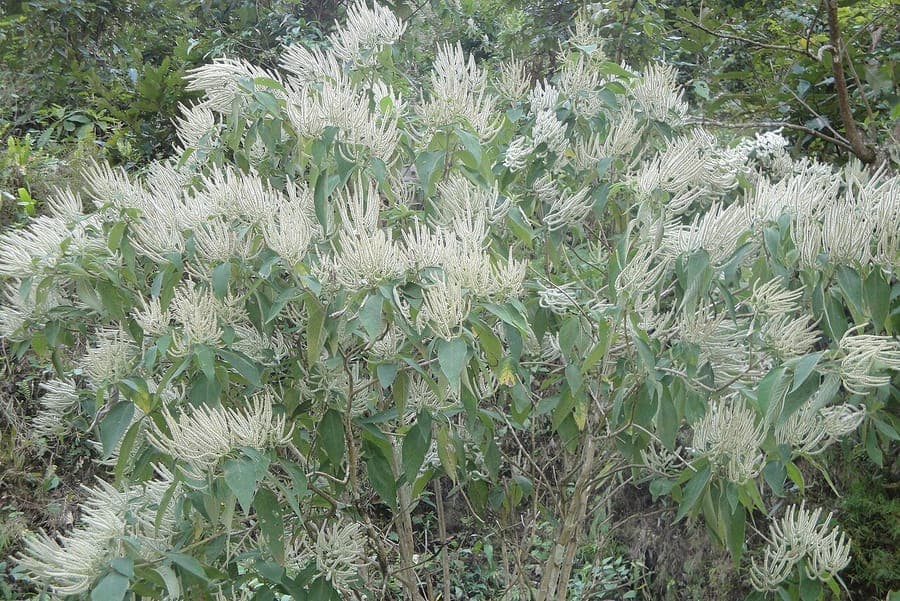
Colebrookea oppositifolia grows into a compact shrub reaching 30 to 60 centimeters tall. The leaves are small, opposite, and dark green. The most striking feature is the flower spikes that resemble a squirrel's tail - narrow, pink to purple flowers packed tightly in slender spikes. The bloom lasts from summer to fall, giving the plant a long flowering period.
Ideal location
This plant loves full sun to partial shade. In warm areas, some shade may be preferred. Plant in a well-draining location where water does not accumulate. The plant tolerates moderate cold and can grow outdoors in sheltered locations in temperate climates. In very cold regions, greenhouse overwintering is advisable.
Soil
Use well-draining, light soil, preferably mixed with sand or gravel. The plant thrives better in poor soil than in rich, fertilized garden soil. Limestone is accepted. A mixture of garden soil, sand, and perlite works excellently.
Free design
Want to see Colebrookea oppositifolia: complete guide in your garden? Make a free design now.
Watering
Water moderately. The plant tolerates drought better than excessive watering. In pot culture, water when the top 2 centimeters feel dry. In winter, water very carefully - minimal moisture is sufficient. Avoid wet feet, as this leads to root rot.
Pruning
After flowering, you can lightly cut back the plant to maintain a compact form. Remove dead flowers and weak branches. Excessive pruning should be avoided as it damages flowering.
Maintenance calendar
March to April: Careful pruning if needed. May to September: Regular watering when dry. October to February: Minimal watering, no fertilization. Throughout the year: Check for aphids and spider mites.
Winter hardiness
Colebrookea oppositifolia tolerates moderate frost (-5 to -10 degrees Celsius) if drainage is good. In very cold regions or where frost persists longer, greenhouse overwintering is advisable. Protect from heavy snow and strong wind.
Companion plants
Perfect for alpine troughs and rock gardens. Plant with other drought-tolerant plants such as sedum or sempervivum. In greenhouses, combines well with other alpines.
Closing
Colebrookea oppositifolia is a magnificent plant for alpine gardeners and greenhouse enthusiasts. With minimal care and good drainage, this plant will flower for years. The unique flower spike makes it an attractive addition to any garden. Search online nurseries for seedlings of this special plant.
Want to see Colebrookea oppositifolia: complete guide in your garden? Make a free design now.
Upload a photo, pick a style, and get a photorealistic design with plant list in under a minute.
No credit card required


Similar plants
Apple mint (Mentha x villosa): complete guide
Mentha x villosa
Meet apple mint (Mentha x villosa): a fruity-scented kitchen herb with woolly leaves, perfect for tea and mojitos.
Salvia peyronii: complete guide
Salvia peyronii
Discover Salvia peyronii, a rare Lebanese mountain sage. Growing tips, hardiness, and companion planting for a Mediterranean gravel garden.
Bigleaf mint (Mentha x rotundifolia): complete guide
Mentha x rotundifolia
Discover bigleaf mint: cultivation, care tips, and garden uses. Learn how to grow this aromatic herb with soft, hairy leaves.