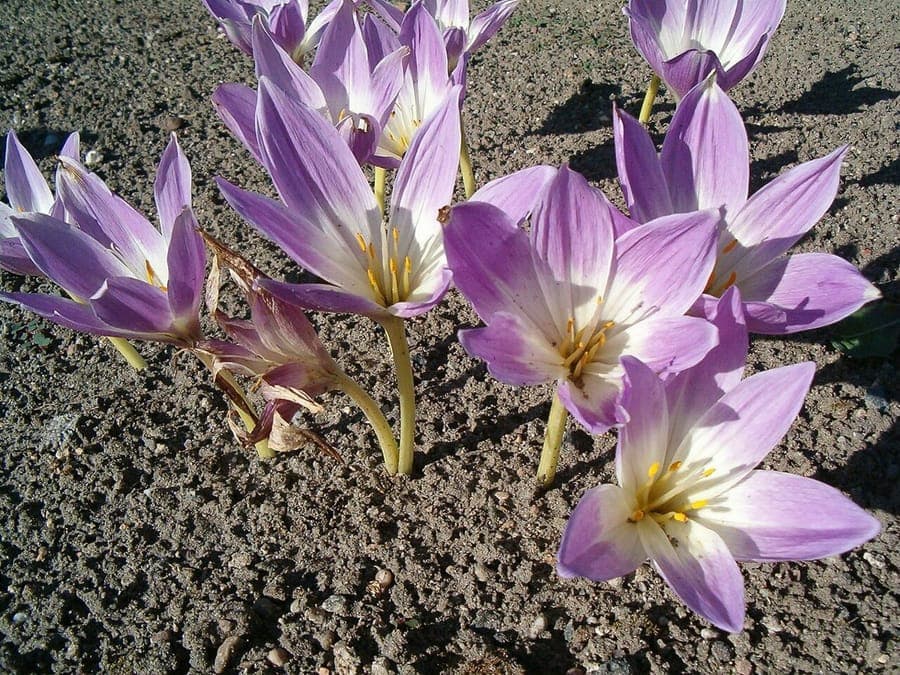
User:BotBln / CC BY-SA 3.0, via Wikimedia Commons
Colchicum speciosum: growing autumn crocus safely
Colchicum speciosum
Want to see Colchicum speciosum: growing autumn crocus safely in your garden?
Full design in HD: €7.99
Look after your Colchicum speciosum with the GardenWorld app
Identify plants with your camera and get a care calendar with reminders for this plant.


Overview
Colchicum speciosum is one of the finest autumn bulbs a garden can hold. In September, just as the borders start to look tired, large pink to lilac goblets push straight out of bare soil. There is no foliage with them, only the flower on a pale, naked tube. That is why the genus is commonly called autumn crocus, and the RHS lists this particular species as giant meadow saffron. Despite the name it is no crocus at all, and the difference matters, as you will read below.
The species belongs to the family Colchicaceae and grows wild in the Caucasus, north-eastern Turkey and northern Iran. There it lives in mountain meadows and open woodland edges with dry summers and cold winters. Among the colchicums usually offered for sale, Colchicum speciosum has the largest and sturdiest flowers. Well-known forms include 'Album', with pure white goblets, and the wild type in warm rosy lilac with a white throat.
If you would like to know where it fits among your perennials and shrubs, gardenworld.app can create a garden design for you that takes flowering times, foliage dieback and the places where children and pets play into account.
Toxicity: never confuse it with wild garlic
This is the most important part of the guide. Every part of Colchicum speciosum is highly poisonous: the corm, the leaves, the flowers and the seed. The plant contains colchicine, a substance that blocks cell division. A small amount can cause serious poisoning in an adult, and the margin for children is far smaller. There is no simple antidote, and neither drying nor cooking makes the plant safe.
The greatest danger comes in spring. That is when the broad, glossy leaves appear, exactly when many people go foraging for wild garlic or ramsons (Allium ursinum). Colchicum foliage looks superficially similar, and every year people across Europe end up in hospital after putting the wrong leaves into pesto or soup. Deaths have been recorded. Learn these differences:
- Smell: wild garlic smells strongly of garlic when you crush a leaf. Colchicum smells of nothing. Be careful, though: after picking wild garlic the smell stays on your fingers, which makes this test less reliable.
- Leaf shape: wild garlic has thin, soft leaves, each rising from the ground on its own stalk. Colchicum forms a firm rosette of thicker, stalkless leaves that wrap around each other at the base.
- Seed capsule: in spring a green, egg-shaped capsule often sits in the middle of the colchicum leaves, left over from the previous autumn's flowers.
If you grow both in the same garden, never grow them in the same bed. The corms are a risk too, as they can be mistaken for shallots or small onions. Keep unplanted corms well out of reach of children and never store them in the kitchen or larder.
Symptoms usually start a few hours after eating, with nausea, vomiting, stomach cramps and severe diarrhoea. The heart, kidneys, liver and bone marrow may then be affected. If you have the slightest suspicion, seek medical help at once: in the UK call NHS 111 or 999 in an emergency. Take a piece of the plant with you.
The plant is equally poisonous to dogs, cats, rabbits, horses and livestock. Dogs that dig up and chew corms are most at risk. The leaves remain toxic when dried in hay, so never plant colchicums beside a paddock. Wear gloves when planting and wash your hands afterwards.
Appearance and bloom cycle
Flowers appear from early September to mid-October. Each corm produces three to six goblets 15 to 20 cm tall. They resemble a large crocus, but you can tell a colchicum by its six stamens; a crocus has three. The petals are broad and fleshy, rosy lilac with a paler, almost white throat and golden anthers.
After about ten days the flowers flop and fade. The ovary sits deep underground and rests there all winter. Only in March do the leaves emerge, together with the seed capsule. The foliage is substantial: 20 to 30 cm long and several centimetres wide, glossy green and fairly upright. Around June it yellows and collapses.
Free preview
Want to see Colchicum speciosum: growing autumn crocus safely in your garden? Make a free preview of your design.
Ideal location
Colchicums like sun to light shade. In full sun the stems stay shorter and sturdier; in dappled shade under deciduous shrubs they stretch a little more. The front of a border, a planting among low ground cover, or grass that you do not cut before July all suit them well.
Think ahead about the spring foliage. A group of ten corms takes up a fair amount of room in April and you must not cut those leaves off. So avoid the very front of a formal border and place them between perennials that come up later in the season and hide the dying leaves. For the reasons above, choose a spot where children do not play and where you never harvest herbs or vegetables.
Soil requirements
The plant grows in almost any ordinary garden soil that does not stay waterlogged. A humus-rich, open soil that drains well in summer gives the best results. On heavy clay, work some grit and compost into the top layer so that the corms do not rot in winter.
Plant the corms in July or August, as soon as possible after buying them. Set them 10 to 15 cm deep with the tip pointing up, spaced 15 to 20 cm apart.
Watering
After planting, give one thorough soaking so the soil settles around the corm. In a normal late summer the rain will do the rest. If September stays dry for weeks, give a watering can per square metre every ten days so the flowers open properly.
In spring the foliage grows on winter moisture. Once the leaves turn yellow in June, the corm prefers to stay dry. Stop watering then and avoid sprinklers that keep the same patch wet all summer.
Pruning and foliage care
Colchicums need no pruning. The one rule that matters: leave the leaves until they are completely yellow or brown. During those months the plant builds up reserves for the next flowering. Cut them too early or tie them in knots and you will get fewer or smaller flowers the following year.
After three to five years clumps sometimes become congested. Lift them in July, separate the corms and replant them straight away.
Maintenance calendar
January to February: dormant. Nothing to do.
March to April: leaves emerge with the green seed capsule. Take extra care if wild garlic grows nearby.
May: foliage at its largest. A light dressing of compost around the clump helps the corms.
June: leaves turn yellow. Leave them until they come away on their own.
July to August: plant new corms and divide crowded groups.
September to October: flowering. Water occasionally in dry spells.
November to December: tidy faded remains with gloves if you wish.
To keep track of these moments, the planting calendar on gardenworld.app shows month by month what to do for colchicums and the other plants in your garden.
Winter hardiness
Colchicum speciosum is fully hardy throughout the UK and the rest of north-western Europe. Because the corms sit deep in the soil, they tolerate frost down to around -20 °C without protection. The real risk is not cold but wet soil combined with frost, which makes corms rot. On free-draining ground this is no issue. Move potted corms against a sheltered wall or into an unheated garage for the winter.
Companion plants
Colchicums look best among low plants that are still green in September. Cyclamen hederifolium flowers at the same time in a softer pink and fills the space beneath shrubs. Crocus speciosus, a true autumn crocus in blue-violet, makes a lovely contrast and helps visitors learn the difference between the two genera. Geranium macrorrhizum is an excellent ground cover that hides the dying spring foliage.
Hylotelephium spectabile, the ice plant, flowers at the same moment in dusky pink and suits a sunny border. For an early start to the year, plant snowdrops (Galanthus nivalis) in the same area: they flower before the colchicum leaves appear.
Final thoughts
Colchicum speciosum brings a burst of spring-like colour into autumn, with little work and a long life. Plant the corms in summer, let the spring foliage die back in peace and enjoy the large pink goblets year after year. Never forget, though, that this is one of the most poisonous plants in the garden. Keep children and pets away from corms and leaves, and never forage for wild garlic anywhere near colchicums. Respect that, and you have a beautiful and reliable autumn bloomer.
Frequently asked questions about Colchicum speciosum
Is Colchicum speciosum winter hardy?
Colchicum speciosum is fully hardy throughout the UK and the rest of north-western Europe. Because the corms sit deep in the soil, they tolerate frost down to around -20 °C without protection.
When and how do you prune Colchicum speciosum?
Colchicums need no pruning. The one rule that matters: leave the leaves until they are completely yellow or brown.
How much water does Colchicum speciosum need?
After planting, give one thorough soaking so the soil settles around the corm. In a normal late summer the rain will do the rest.
Where does Colchicum speciosum grow best?
Colchicums like sun to light shade. In full sun the stems stay shorter and sturdier; in dappled shade under deciduous shrubs they stretch a little more.
What soil does Colchicum speciosum need?
The plant grows in almost any ordinary garden soil that does not stay waterlogged. A humus-rich, open soil that drains well in summer gives the best results.

See it in your garden
See Colchicum speciosum in your garden
One photo of your garden and a few questions. You see the result in about a minute.
Try it with a photoIdentify this plant in your own garden. Identify a plant
Similar plants
Cyclamen: complete guide
Cyclamen hederifolium
Growing hardy cyclamen: guide to this autumn-flowering gem with beautiful patterned leaves and pink flowers.
Bieberstein's crocus: complete guide
Crocus speciosus
Discover Bieberstein's crocus, a stunning autumn bloomer with deep purple flowers. Learn everything about cultivation, planting, and care for this elegant bulb.
Showy stonecrop: complete guide
Hylotelephium spectabile
Everything about Showy stonecrop (Hylotelephium spectabile): flowering, cultivation and care. Tips for successful frost resistance, drought tolerance and maintenance in borders and containers.
