
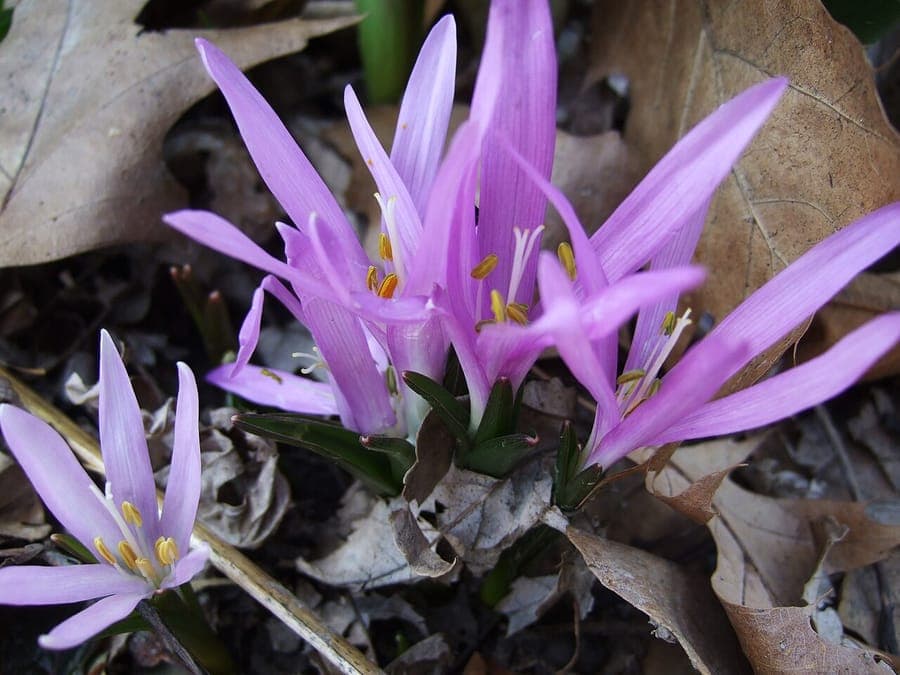
James Steakley / CC BY-SA 4.0, via Wikimedia Commons
Colchicum bulbocodium: complete guide
Colchicum bulbocodium
Want to see Colchicum bulbocodium: complete guide in your garden?
1 minute, no credit card
Overview
Colchicum bulbocodium, also known as spring meadow saffron or spring light-lily, is a small dwarf bulb from the Alps and mountain regions of Europe. This little jewel blooms early in spring, offering beautiful purple flowers when most other plants are still dormant.
Unlike the toxic Colchicum autumnale (autumn crocus), bulbocodium is a spring bloomer. This makes it more suitable for spring gardens and rock gardens.
At GardenWorld, we recommend this plant to gardeners seeking early bloom and interest in alpine flora.
Appearance and bloom
Colchicum bulbocodium is very small - only 5-20 cm tall, usually around 10-15 cm. The bulbs are broad-elliptical, approximately 1 cm in diameter.
The leaves are narrow, linear, much smaller and less prominent than larger colchicum species. They appear around the same time as the flowers.
The flowers are the main attraction. They are purple to pink, with six tepals (petal-like parts) that open and lie flat. Each flower is approximately 2-3 cm in diameter. Flowering occurs from March to April, sometimes as early as February in warm years.
After flowering, leaves disappear quickly, making the plant summer-dormant. This is characteristic of many Colchicum species.
Ideal location
Colchicum bulbocodium blooms best in sunny to semi-shaded locations. At least 3-4 hours of direct sunlight helps ensure good flowering. In full shade, blooming may be reduced.
This plant grows well in rock gardens, alpine gardens, or between stones in garden borders. Its small size makes it perfect for confined spaces.
Protection from excessive winter moisture is useful - a dry cover or sheltered location helps.
Soil
Colchicum bulbocodium grows in preference in well-drained, not overly nutrient-rich soils. In nature it grows on alpine meadows with humus-rich but sandy, freely draining earth.
Add grit, sand, and small stones to heavy clay. Excellent drainage is essential - waterlogging kills the bulbs.
The plant accepts pH from approximately 6.0-8.0 (neutral to slightly alkaline). No special feeding is needed - in fact, excess nutrients can be harmful.
Free design
Want to see Colchicum bulbocodium: complete guide in your garden? Make a free design now.
Watering
Once planted, Colchicum bulbocodium needs almost no extra water. The growing season (spring) is usually moist enough from natural rainfall in temperate climates.
In very dry springs, occasional watering can help, but is usually unnecessary.
In summer and autumn, when dormant, it needs no water. In fact, dryness helps support dormancy.
In container cultivation (less recommended): use very well-drained potting mix. Water sparingly.
Pruning
Pruning does not apply to this small bulb. Remove only dead flowers and foliage when they brown.
Note: Do NOT remove green leaves - the plant needs these to store energy in the bulb for next season.
Maintenance calendar
February-April: Bloom. Enjoy the beautiful purple flowers. May: Foliage disappears gradually. This is normal. June-September: Rest. No maintenance needed. Ensure dry conditions. October-January: Dormancy. Bulbs are at rest.
Winter hardiness
Colchicum bulbocodium is fully winter hardy to USDA zone 5 (-20C to -30C). In the UK, northern Europe, and Germany no protection is needed.
The plant tolerates heavy snow and frost without problems. Thick snow cover can even help by providing insulation.
Companion plants
Colchicum bulbocodium combines well with other alpine and spring-flowering plants:
- Other alpine bulbs: Crocus, Chionodoxa, Eranthis (winter aconites)
- Low rock plants: Saxifraga, Sedum, Sempervivum
- Heaths: Erica carnea, Calluna
- Low groundcovers: Thymus, Phlox subulata
These combinations create a natural, alpine garden.
Closing
Colchicum bulbocodium is a beautiful, overlooked little jewel that adds much early color to spring gardens. It requires minimal maintenance once planted in proper conditions.
Bulbs are available through specialized bulb suppliers, especially in autumn (September-October) when they should be planted.
General garden centers sometimes stock these bulbs, but less commonly than popular species like Crocus or Tulipa.
Consider this small but beautiful jewel for your spring garden!
Want to see Colchicum bulbocodium: complete guide in your garden? Make a free design now.
Upload a photo, pick a style, and get a photorealistic design with plant list in under a minute.
No credit card required


Similar plants
Mountain autumn crocus: complete guide
Colchicum montanum
Grow Colchicum montanum successfully: planting depth, drainage, companion plants, and autumn blooming tips for this mountain bulb.
Corsican autumn crocus: complete guide
Colchicum corsicum
Everything about Colchicum corsicum: bloom time, ideal site, bulb care, toxicity and winter hardiness for gardeners.
Autumn Crocus Colchicum cupanii: complete guide
Colchicum cupanii
Complete growing guide for Colchicum cupanii: site requirements, soil preparation, watering, hardiness and companion planting ideas.