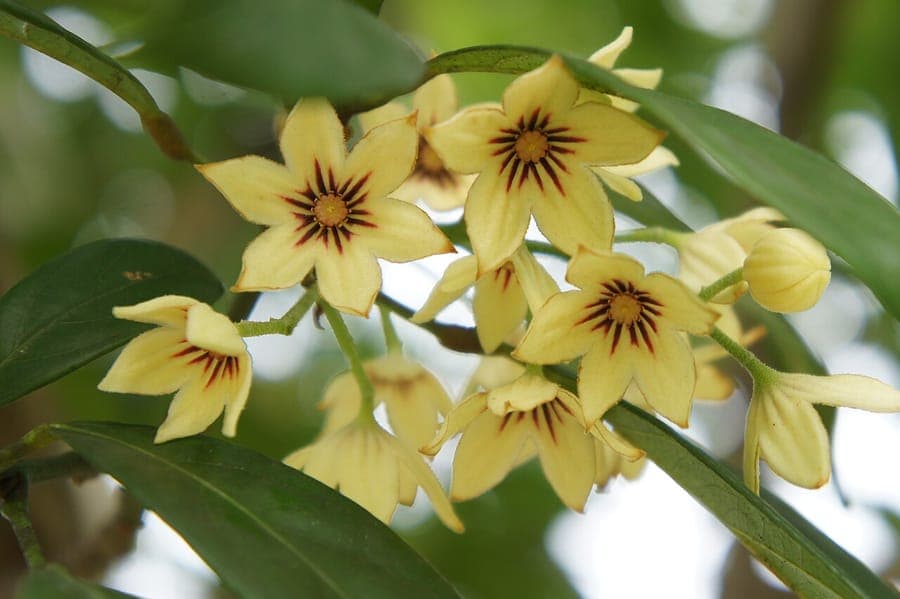
Michael Hermann / CC BY-SA 3.0, via Wikimedia Commons
Cola nitida - Bitter Cola: complete guide
Cola nitida
Want to see Cola nitida - Bitter Cola: complete guide in your garden?
Full design in HD: €7.99
Look after your Cola nitida - Bitter Cola with the GardenWorld app
Identify plants with your camera and get a care calendar with reminders for this plant.


Overview
Cola nitida, also known as Bitter Kola or Kola nut, is an impressive tree native to West Africa. The nuts of this tree contain caffeine and were traditionally used as a stimulant. Today, the plant also grows in temperate climates in greenhouses. The tree is valuable not only for its nuts but also decorative with its large green leaves.
Appearance and bloom
Cola nitida grows into an impressive tree reaching 8 to 12 meters tall in natural habitats, but in greenhouses it remains more compact. The leaves are large, dark green, and glossy. The flowers are small, pink to white, and appear in clusters. The fruits are large, yellow to red pods containing 4-6 nuts. The nuts are white and easily separated from the pods.
Ideal location
Cola nitida demands warmth and plenty of light. Place the tree where it receives at least 5-6 hours of direct sunlight. In warm regions, some shade can be accepted. The tree cannot tolerate cold - temperatures below 10 degrees are fatal. In temperate climates, a warm greenhouse is essential. Ensure well-ventilated growing environment.
Soil
Use nutrient-rich, well-draining potting soil. A mixture of garden soil, compost, and sand works well. Cola nitida prefers slightly acidic soil. Ensure excellent drainage as the tree is susceptible to root rot.
Free preview
Want to see Cola nitida - Bitter Cola: complete guide in your garden? Make a free preview of your design.
Watering
Water regularly during the growing season, especially during hot weather. The soil should remain moist. In winter, slightly wetter soil can be tolerated, but ensure it does not become waterlogged. Regular watering is essential for fruit set.
Pruning
Pruning is not strictly necessary, but young specimens can be lightly pruned to encourage branching. Remove dead branches. The tree has a naturally compact form.
Maintenance calendar
Spring: Begin regular fertilization for bloom. Summer: Intensive watering and nutrient application. Fall: Reduce watering gradually as fruit ripens. Winter: Minimal care, light watering. Throughout the year: Check for spider mites and whiteflies.
Winter hardiness
Cola nitida is absolutely not winter hardy. Temperatures below 10 degrees Celsius seriously harm the plant. In all temperate climates, greenhouse overwintering is necessary. The tree only grows outdoors in tropical and subtropical regions.
Companion plants
In greenhouses, Cola nitida can be combined with other tropical plants with similar heat and light requirements. Avoid underplanting with strong-rooted plants that steal nutrients.
Closing
Cola nitida is a fascinating and unique greenhouse plant for admirers of tropical cultures. With the right warmth, light, and humidity, you can enjoy this tree for years. The kola nuts have a slow growth cycle, so patience is truly needed. For the lover of extraordinary tropical plants, definitely an acquisition. Seek seedlings at specialized online nurseries.
Frequently asked questions about Cola nitida - Bitter Cola
Is Cola nitida - Bitter Cola winter hardy?
Cola nitida is absolutely not winter hardy. Temperatures below 10 degrees Celsius seriously harm the plant.
When and how do you prune Cola nitida - Bitter Cola?
Pruning is not strictly necessary, but young specimens can be lightly pruned to encourage branching. Remove dead branches.
How much water does Cola nitida - Bitter Cola need?
Water regularly during the growing season, especially during hot weather. The soil should remain moist.
Where does Cola nitida - Bitter Cola grow best?
Cola nitida demands warmth and plenty of light. Place the tree where it receives at least 5-6 hours of direct sunlight.
What soil does Cola nitida - Bitter Cola need?
Use nutrient-rich, well-draining potting soil. A mixture of garden soil, compost, and sand works well.

See it in your garden
See Cola nitida - Bitter Cola in your garden
One photo of your garden and a few questions. You see the result in about a minute.
Try it with a photoIdentify this plant in your own garden. Identify a plant
Similar plants
Trailing abutilon (Abutilon megapotamicum): care guide
Abutilon megapotamicum
Grow trailing abutilon (Abutilon megapotamicum) in a basket or against a wall: watering, feeding, pruning and overwintering for red and yellow lantern flowers.
Flowering maple (Abutilon): container shrub guide
Abutilon × hybridum
How to grow flowering maple (Abutilon × hybridum) in a pot: position, watering, feeding, March pruning and overwintering indoors for flowers from May to October.
Checkerbloom (Sidalcea malviflora): complete guide
Sidalcea malviflora
Everything about checkerbloom or prairie mallow (Sidalcea malviflora): satin-pink summer spires, position, soil, cutting back for a second flush and hardiness.
