
Kurt Stüber [1] / CC BY-SA 3.0, via Wikimedia Commons
Bleeding Heart Glorybower: complete guide
Clerodendrum thomsoniae
Want to see Bleeding Heart Glorybower: complete guide in your garden?
1 minute, no credit card
The Bleeding Heart Glorybower, scientifically known as Clerodendrum thomsoniae, is an enchanting climbing plant native to West and Central Africa. This plant is celebrated for its unique heart-shaped flowers in red and white, making it a striking addition to any garden or greenhouse. In temperate climates, it thrives as an indoor plant, conservatory specimen, or summer patio decoration.
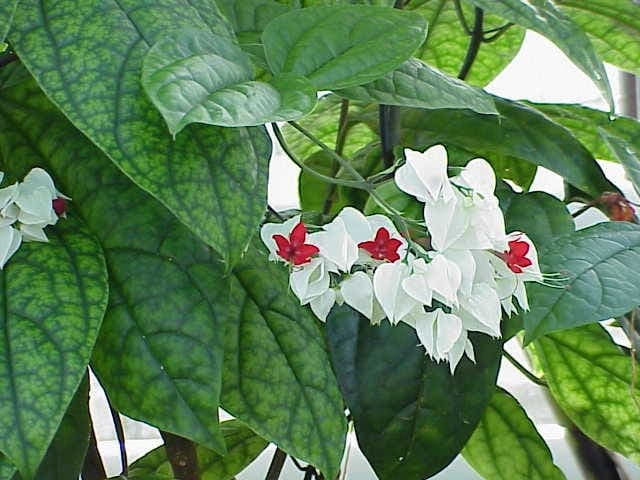
The plant grows as a twining vine reaching heights of 1.5 to 2 meters. Its leaves are dark green, oval-shaped, and approximately 8-10 cm long. Flowers appear throughout the growing season in clusters, featuring characteristic red petals emerging from a white calyx. This distinctive appearance inspired the common name Bleeding Heart Glorybower.
The Bleeding Heart Glorybower strongly prefers warm, humid environments. This plant performs best in temperatures between 18 and 25 degrees Celsius. It is crucial to position the plant where it receives plenty of indirect sunlight. Direct sun exposure can scorch the foliage, while insufficient light results in fewer flowers and weak, spindly growth.
When planting, use rich, well-draining soil with ample organic matter. A mixture of garden soil, compost, and perlite works excellently. Check regularly that the soil remains moist but not waterlogged, as excessive moisture causes root rot. During winter months, reduce watering frequency.
Feeding is essential for healthy growth and abundant flowering. During the growing season (April through October), apply balanced liquid fertilizer every two weeks. This encourages blooming and supports vigorous plant development. During winter months, reduce or cease feeding.
Prune the Bleeding Heart Glorybower in early spring to encourage compact, fuller growth. Remove all dead or damaged stems and shape the plant by carefully cutting back longer branches to promote branching.
From October to March, the plant enters its dormancy period. During this time, reduce watering significantly and maintain temperatures between 12 and 15 degrees Celsius. This resting period prepares the plant for the next growing season.
The Bleeding Heart Glorybower cannot tolerate freezing temperatures and must be brought indoors before temperatures drop below 10 degrees Celsius. In a heated greenhouse or warm indoor location, the plant can grow year-round if provided with adequate light and warmth.
Pests are rarely a major issue, but watch for spider mites and mealybugs, especially in dry air conditions. Mist the plant regularly with water and maintain good humidity levels to prevent infestations. If pests appear, treat with mild insecticide or neem oil.
The Bleeding Heart Glorybower is perfect for decorating greenhouses, conservatories, and bright indoor spaces. You can also grow it as a patio plant during warm months (June through September), ensuring it has a protected location with ample warmth. At garden centers, look for this plant at established nurseries and specialty plant retailers.
If you enjoy ornamental vines and decorative flowering plants, the Bleeding Heart Glorybower makes a wonderful addition to any collection. While the plant requires warmth and attention, its spectacular flowers justify every effort. With proper care and ideal conditions, this plant will bloom beautifully for years to come.
Want to see Bleeding Heart Glorybower: complete guide in your garden? Make a free design now.
Upload a photo, pick a style, and get a photorealistic design with plant list in under a minute.
No credit card required


Similar plants
Apple mint (Mentha x villosa): complete guide
Mentha x villosa
Meet apple mint (Mentha x villosa): a fruity-scented kitchen herb with woolly leaves, perfect for tea and mojitos.
Salvia peyronii: complete guide
Salvia peyronii
Discover Salvia peyronii, a rare Lebanese mountain sage. Growing tips, hardiness, and companion planting for a Mediterranean gravel garden.
Bigleaf mint (Mentha x rotundifolia): complete guide
Mentha x rotundifolia
Discover bigleaf mint: cultivation, care tips, and garden uses. Learn how to grow this aromatic herb with soft, hairy leaves.