
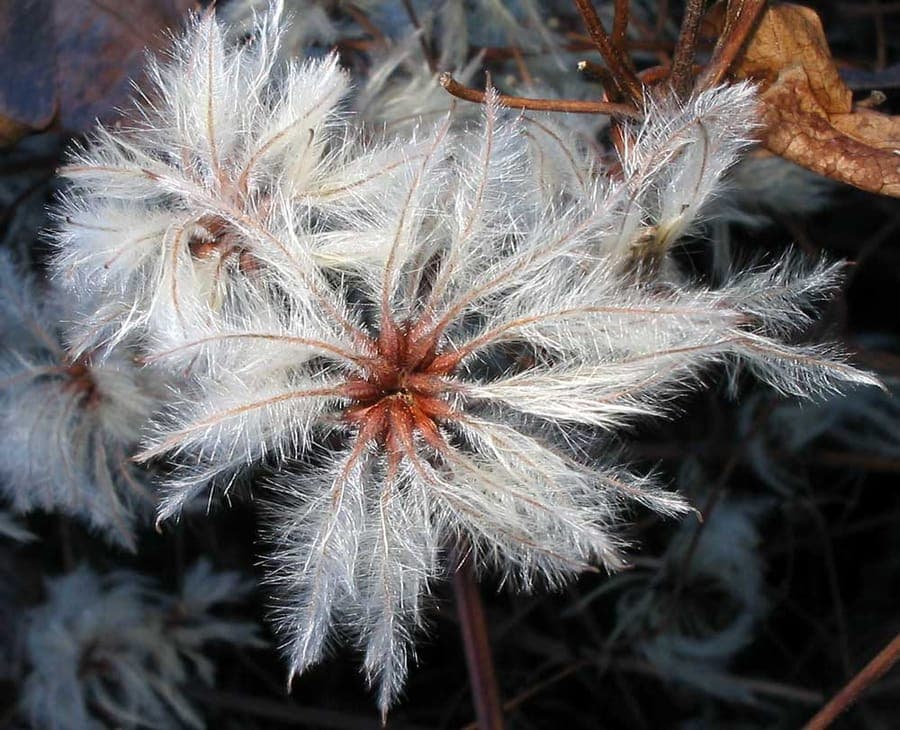
Michael Gasperl (Migas) / CC BY-SA 3.0, via Wikimedia Commons
Old-man's-beard: complete guide
Clematis vitalba
Want to see Old-man's-beard: complete guide in your garden?
1 minute, no credit card
Overview
Clematis vitalba, commonly known as Old-man's-beard, is a vigorous, scrambling vine native to much of Europe, including the UK, France and Germany. Belonging to the buttercup family (Ranunculaceae), it's a familiar sight in hedgerows and woodland margins, where it climbs over shrubs and trees with ease. While admired for its wild beauty and fluffy seed heads, it can quickly become invasive if not managed. On gardenworld.app you can design a planting scheme that balances its growth with structure, making it a strong choice for naturalistic landscapes.
This plant thrives in temperate climates and is fully hardy in USDA zones 7 to 9. It's not often sold in mainstream garden centres, but can be found at specialist nurseries or grown from cuttings. Once established, it grows up to 3 meters in a single season, using its leaf stalks to twist around supports. While not as showy as ornamental clematis, its ecological value is high-providing cover for birds and habitat for insects.
Appearance & bloom cycle
Old-man's-beard is a deciduous vine with a loose, sprawling habit. Stems are green to brown, reaching up to 10 meters when supported. The leaves are opposite and pinnate, made up of 3 to 5 narrow, pointed leaflets with a slightly glossy surface. In mid to late summer-typically from July to August-small, greenish-white flowers appear. Each bloom is only about 1 cm across, with four to six petal-like sepals. They're not particularly showy, but they emit a faint, sweet scent, especially in the evening.
The real spectacle comes in autumn. From September through November, the plant produces feathery seed heads-soft, silvery plumes that can hang in clusters over a meter long. These 'beards' catch the light and move with the wind, giving gardens a dreamy, ethereal quality. The seeds are wind-dispersed, which explains why this plant spreads so easily in the wild.
Ideal location
Clematis vitalba grows best in partial sun to light shade, scoring a 6 on the light scale (1–10). Like other clematis, it follows the principle of 'roots in shade, heads in sun'-so keep the base shaded while the top climbs into light. It thrives when trained over fences, arbors, or through trees and large shrubs. Avoid planting near delicate perennials or slow-growing shrubs, as it will smother them within a season.
This plant is ideal for masking unsightly walls, filling in bare corners, or creating a wild screen. But beware: it can completely engulf small trees or hedges if unchecked. Use it with intention. On gardenworld.app you can visualise how Old-man's-beard will interact with your existing structures and plants, helping you avoid overgrowth.
Soil requirements
Old-man's-beard is not fussy about soil. It grows well in loamy, sandy, or even clay-loam soils, as long as drainage is adequate. The ideal pH is neutral to slightly alkaline (7.0–7.5). While it tolerates poor soils, adding a few shovelfuls of compost at planting time can help young plants establish faster. Avoid rich, heavily fertilised soils-this only fuels aggressive growth.
In the wild, it's often found on disturbed ground, roadsides, and abandoned plots. This tells you everything about its resilience. A light mulch in spring helps retain moisture and keeps roots cool, but isn't essential once the plant matures.
Free design
Want to see Old-man's-beard: complete guide in your garden? Make a free design now.
Watering
During the first growing season, water deeply once a week during dry spells-about 10 litres per plant. Use a watering can with a rose or a slow drip system to get water down to the root zone. After establishment, Clematis vitalba is drought-tolerant and rarely needs supplemental watering, except in prolonged dry periods.
Overwatering, especially in heavy soils, can lead to root rot. Always ensure good drainage. If growing in containers, use a mix of 2 parts loam, 1 part perlite, and 1 part compost, and water only when the top 5 cm of soil feels dry.
Pruning
Pruning is crucial. Without it, Old-man's-beard can take over entire sections of your garden. Prune hard in late winter or early spring (February to March), before new growth starts. Cut back previous year's growth to 1.5–2 meters, removing any dead, weak, or overcrowded stems. Use sharp, clean secateurs for clean cuts and to prevent disease.
If the vine is climbing through trees, consider shortening the top growth to prevent it from shading out the canopy. Annual pruning encourages dense, healthy growth and helps manage size. Remember: this plant grows fast-up to 300 cm per season-so don't expect light trimming to be enough.
Maintenance calendar
- January: Inspect for winter damage. Prepare tools for pruning.
- February: Begin hard pruning.
- March: Finish pruning. Check for new shoots.
- April: Apply light compost around the base if desired.
- May–July: Monitor growth. No extra care needed.
- August: Flowers appear. Watch for pollinators.
- September–November: Seed heads develop. Consider collecting or cutting back to limit spread.
- December: Dormant period. Check support structures.
Winter hardiness
Old-man's-beard is hardy down to -15°C (USDA zone 7). In colder zones (6 and below), the top growth may die back, but the roots usually survive and re-sprout in spring. In harsh winters, a light mulch of straw or leaves around the base can protect young plants.
The seed heads often persist through winter, adding texture and movement to the garden. Birds may use the fluff for nesting material, and the structure provides cover during cold months.
Companion plants
Pair Clematis vitalba with sturdy, upright plants that can tolerate some shade. Good companions include Echinacea, Rudbeckia, and ornamental grasses like Calamagrostis. Shrubs such as Cornus or Salix work well as climbing supports. Avoid pairing with low-growing perennials or slow vines, which will be quickly overwhelmed.
Fragrant plants like lavender or santolina can be planted nearby, but give them space-ideally at least 60 cm away from the base to avoid competition.
Closing
Clematis vitalba is a plant of wild charm and quiet strength. It's not for formal borders or low-maintenance gardens, but it shines in naturalistic designs, woodland edges, and wildlife-friendly spaces. Buy plants from trusted sources like local garden centres or specialist nurseries. Always check if they've been pre-pruned before planting. With proper support and annual pruning, Old-man's-beard becomes a dynamic, seasonal feature. And on gardenworld.app, you can explore layout ideas where this vine plays a central role-without taking over.
Want to see Old-man's-beard: complete guide in your garden? Make a free design now.
Upload a photo, pick a style, and get a photorealistic design with plant list in under a minute.
No credit card required


Similar plants
Drummond's anemone: complete guide
Anemone drummondii
Discover Drummond's anemone (Anemone drummondii): a silvery-grey mountain plant for cool rock gardens and alpine troughs.
Korean clematis: complete guide
Clematis serratifolia
Clematis serratifolia is a hardy climber with fragrant yellow bell flowers in August-September. Pruning group 3, location and care tips.
Aquilegia brevistyla: complete guide
Aquilegia brevistyla
Discover Aquilegia brevistyla, the elegant North American columbine. Growing tips, shade tolerance, and design ideas for woodland and shadowed gardens.