
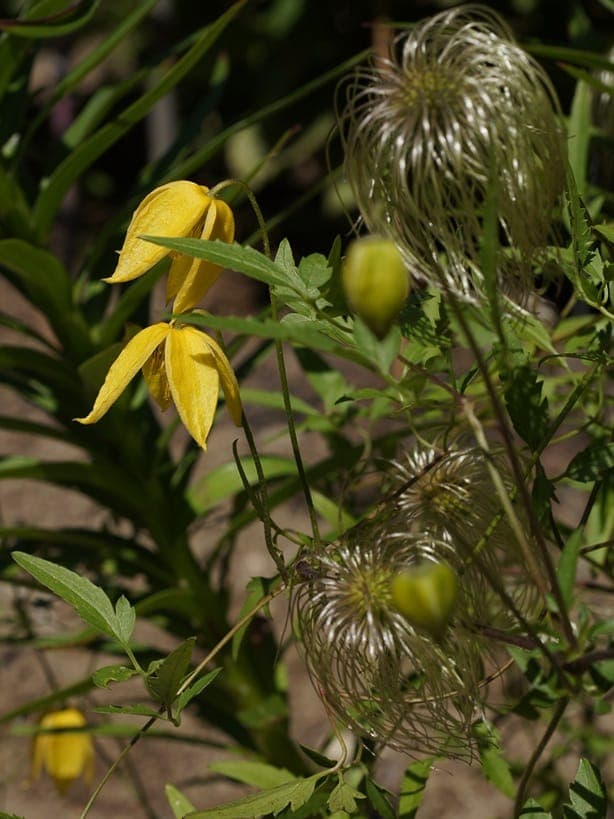
Tatiana Gerus from Brisbane, Australia / CC BY-SA 2.0, via Wikimedia Commons
Orange-peel clematis: complete guide
Clematis tangutica
Want to see Orange-peel clematis: complete guide in your garden?
1 minute, no credit card
Overview
Clematis tangutica, commonly known as Orange-peel clematis, is a standout climbing vine prized for its unusual golden-orange, bell-shaped blooms. Unlike most clematis that flower in spring or early summer, this species blooms from August through October, making it a valuable asset for gardens needing colour and structure in the late season. Native to mountainous regions of Central Asia-including parts of China, Mongolia, and Kyrgyzstan-it thrives in rocky slopes and scrubland, which explains its resilience and tolerance to dry conditions.
As a gardener, if you're looking for a low-maintenance climber that delivers dramatic late-season interest, Clematis tangutica is a top contender. It climbs 3 to 4 metres using its leaf tendrils and pairs well with trellises, pergolas, or sturdy shrubs. On gardenworld.app, you can design a garden layout that integrates this clematis with a wooden obelisk or a flowering shrub like Ceanothus for year-round appeal.
Appearance & bloom cycle
The flowers are the main attraction. They start as closed, lantern-like buds in bright orange or golden yellow-resembling twisted orange peels, hence the name. From August onwards, the backs of the petals curl back, but the flower never fully opens, giving it a mysterious, whimsical look. Each bloom is 4 to 5 cm across and hangs gracefully from the stems. After flowering, fluffy seed heads develop, persisting well into winter and adding soft texture to the dormant garden.
The foliage is dark green, pinnate, and medium-sized, forming a dense backdrop. The plant has a vigorous, twining growth habit and can gain 1 to 2 metres in a single growing season under ideal conditions.
Ideal location
Plant Clematis tangutica in full sun to light shade. The key is keeping the roots cool and shaded while the top growth enjoys at least 6 hours of sun daily. This prevents stress and encourages abundant flowering. A south- or west-facing wall, fence, or trellis works best. Provide a sturdy support-wire mesh, bamboo poles, or a metal obelisk are all effective.
Avoid planting near aggressive groundcovers that compete for moisture. Use low-growing perennials like sedum or thyme at the base to shade the roots. You can visualise spacing and companion planting on gardenworld.app to optimise light and root space.
Soil requirements
This clematis isn't fussy but performs best in well-drained, moderately fertile soil. A mix of loam, sand, and compost works well. The pH should be between 6.0 and 7.5-slightly acidic to neutral. Avoid heavy clay unless amended with grit and organic matter to improve drainage.
Don't plant in waterlogged soil; root rot is a real risk. When planting, dig a hole twice as wide as the root ball and mix in a few handfuls of well-rotted compost. Never use fresh manure-it can burn roots.
Free design
Want to see Orange-peel clematis: complete guide in your garden? Make a free design now.
Watering
Water regularly during the first growing season, especially in dry spells. Deep watering once or twice a week is better than daily sprinkling. Once established, Clematis tangutica is drought-tolerant but will flower better with occasional watering during prolonged dry periods.
Use a soaker hose or water at the base to avoid wetting the foliage, which can encourage fungal issues. Mulch with bark or compost in spring to retain moisture and suppress weeds.
Pruning
Clematis tangutica falls into pruning group 3-meaning it flowers on new growth and can be cut back hard each year. In late winter (February or early March), trim all stems down to 30–50 cm above ground level. This encourages strong, healthy shoots that will bloom in late summer.
Use sharp, clean secateurs to prevent disease. Remove any dead or crossing stems to improve air circulation.
Maintenance calendar
- January: Check for winter damage. Keep the base clear of debris.
- February–March: Hard prune to 30–50 cm. Apply a thin layer of compost around the base.
- April–May: Watch for slugs on new shoots. Mulch lightly to conserve moisture.
- June–July: Monitor for drought stress. Water if needed. Inspect for aphids.
- August–October: Peak bloom time! Enjoy the orange lanterns and later the fluffy seed heads.
- November–December: Leave seed heads for winter interest. Protect young plants with mulch if in exposed areas.
Winter hardiness
Hardy in USDA zones 4 to 8 (-30°C to -12°C). In zone 7 and above, it survives winter with minimal care. Mulch the base in autumn with compost or shredded leaves to protect the roots from freeze-thaw cycles. Young plants benefit from extra protection in their first two winters.
Companion plants
Choose companions that provide root shade and don't compete aggressively. Good options include lavender, Nepeta, ornamental grasses like Pennisetum, and low shrubs such as Cistus. Avoid invasive plants like mint or ground ivy. Climbing through a small rose or buddleja can create a stunning layered effect.
Use gardenworld.app to test plant pairings and ensure your clematis has enough space and light.
Closing
Clematis tangutica is a reliable, eye-catching vine that brings late-season drama with minimal effort. With proper support, well-drained soil, and annual pruning, it delivers year after year. Buy healthy plants from trusted garden centres in the UK, or check online nurseries that ship bare-root specimens in winter. Give it the classic 'feet in the shade, head in the sun' treatment, and you'll enjoy its fiery orange blooms when most other climbers have finished flowering.
Want to see Orange-peel clematis: complete guide in your garden? Make a free design now.
Upload a photo, pick a style, and get a photorealistic design with plant list in under a minute.
No credit card required


Similar plants
Drummond's anemone: complete guide
Anemone drummondii
Discover Drummond's anemone (Anemone drummondii): a silvery-grey mountain plant for cool rock gardens and alpine troughs.
Korean clematis: complete guide
Clematis serratifolia
Clematis serratifolia is a hardy climber with fragrant yellow bell flowers in August-September. Pruning group 3, location and care tips.
Aquilegia brevistyla: complete guide
Aquilegia brevistyla
Discover Aquilegia brevistyla, the elegant North American columbine. Growing tips, shade tolerance, and design ideas for woodland and shadowed gardens.