
Wikimedia Commons / CC BY-SA 2.0, via Wikimedia Commons
Himalayan clematis: complete guide
Clematis montana
Want to see Himalayan clematis: complete guide in your garden?
1 minute, no credit card
Overview
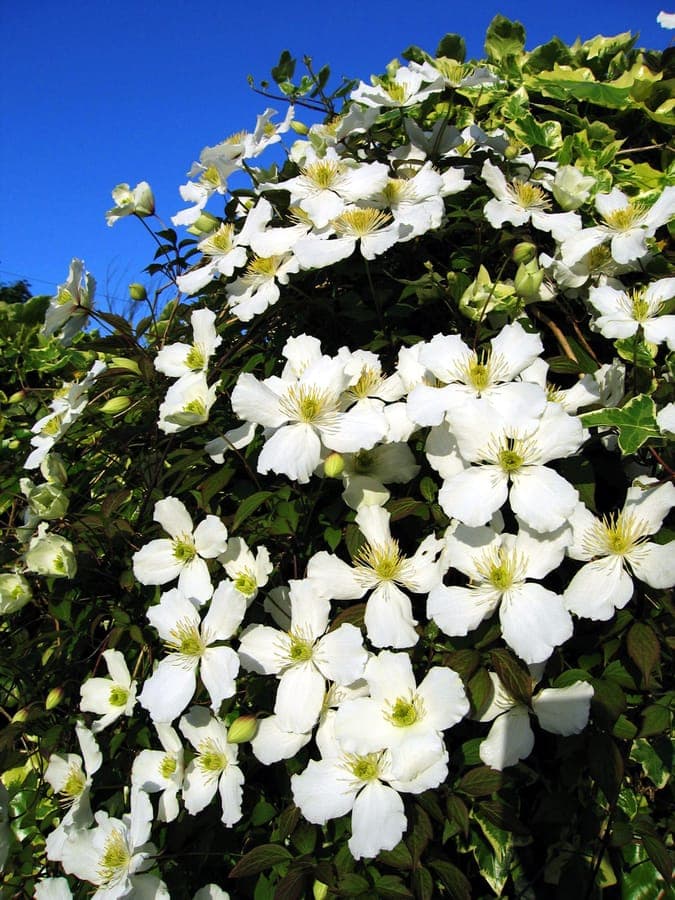
Clematis montana, commonly known as Himalayan clematis, is a vigorous, deciduous climber that bursts into flower every spring with masses of delicate, star-shaped blooms. Native to regions across the Himalayas and China, it's become a staple in UK and North American gardens for its rapid growth and minimal care requirements. Unlike many clematis varieties, it thrives with little pruning and rewards gardeners with one massive flowering display each year. It climbs by twining leaf stalks rather than tendrils, so it needs gentle support like a trellis, wire framework, or nearby shrubs to weave through.
On gardenworld.app you can create a garden layout that highlights where to place Himalayan clematis for maximum visual impact and structural support.
Appearance & bloom cycle
Himalayan clematis features fresh green, ternate leaves that emerge in early spring. By mid-April to early June, depending on climate, the plant becomes smothered in small, fragrant flowers. The most common form has pure white petals with golden stamens, but cultivars like 'Rubens' offer soft pink blooms, while 'Elizabeth' produces creamy white ones. Flowers are typically 3–5 cm across and emit a light sweet scent, especially in warm afternoons.
This clematis can grow 4 to 8 meters in a single season under ideal conditions, making it excellent for covering large surfaces quickly. After flowering, fluffy seed heads develop, adding texture and interest into early summer. The plant dies back in winter, leaving behind a network of woody stems that can be trained or guided for the next season.
Ideal location
For best results, plant Clematis montana where the top of the plant receives full sun to partial shade, while the base stays cool and shaded-often referred to as "heads in the sun, feet in the shade." This means the climbing stems should get at least 4–6 hours of direct sunlight daily, but the soil around the crown should be shaded by low-growing groundcovers, mulch, or companion plants. Suitable supports include wooden fences, pergolas, rock piles, or even thin trees like birch or apple. Avoid dense shade, as this drastically reduces flowering.
Soil requirements
This clematis is adaptable to most soil types as long as drainage is good. It grows well in loam, clay-loam, or sandy soils enriched with organic matter. Ideal pH ranges from 6.0 to 7.5. Before planting, mix in compost or well-rotted manure to improve soil structure and moisture retention. Avoid chalky soils if possible, as they can lead to chlorosis in some cultivars. A thick layer of organic mulch applied annually helps maintain root moisture and suppress weeds.
Free design
Want to see Himalayan clematis: complete guide in your garden? Make a free design now.
Watering
Young plants need consistent moisture during their first growing season. Water deeply once a week, especially during dry springs. Established plants are fairly drought-tolerant but perform best with occasional deep watering during prolonged dry spells. Always water at the base to avoid wetting foliage, which can encourage fungal diseases like powdery mildew.
Pruning
One of the biggest advantages of Clematis montana is that it requires little to no pruning. Flowers form on wood from the previous season, so cutting it back hard in winter or early spring will remove the flower buds. If pruning is necessary due to size or congestion, do it immediately after flowering-by late June at the latest. Trim only stray or overcrowded stems back to a healthy bud. Never cut into old, bare wood unless it's dead.
Maintenance calendar
- Jan: Inspect stems, remove any dead or damaged growth
- Feb: Check support structures; plant new clematis if ground isn't frozen
- Mar: Apply compost around the base
- Apr: Monitor for aphids; water if dry
- May: Enjoy full bloom; watch for moisture stress
- Jun: Light pruning after flowering if needed
- Jul: Watch for powdery mildew in humid conditions
- Aug: Reduce watering unless drought persists
- Sep: No action required
- Oct: Leave seed heads for winter interest
- Nov: Mulch with compost to protect roots
- Dec: Final check for winter damage
Winter hardiness
Clematis montana is hardy in USDA zones 4–9, tolerating winter lows down to -30°C. It reliably survives cold UK and northern US winters. While the top growth may suffer in harsh conditions, it usually regrows from the base. Young plants benefit from a thick mulch layer in their first winter, especially in sandy soils that dry out quickly.
Companion plants
Good companions include shade-tolerant perennials like hellebores, epimedium, or pulmonaria that keep the root zone cool. At the base, plant spring bulbs like daffodils or alliums to fill space before the clematis leafs out. Avoid invasive groundcovers like ivy that might compete for water. Pair with shrubs like forsythia or weigela for a layered spring display. Use gardenworld.app to experiment with plant pairings that complement bloom time and texture.
Closing
Himalayan clematis is a bold, low-effort climber that delivers dramatic spring color with minimal input. It's perfect for covering unsightly walls, fences, or old trees. With proper placement and a bit of early care, it will thrive for decades. Available at most garden centres, it's an affordable way to add vertical interest. Just remember: don't over-prune, keep the roots shaded, and enjoy the show.
Want to see Himalayan clematis: complete guide in your garden? Make a free design now.
Upload a photo, pick a style, and get a photorealistic design with plant list in under a minute.
No credit card required


Similar plants
Drummond's anemone: complete guide
Anemone drummondii
Discover Drummond's anemone (Anemone drummondii): a silvery-grey mountain plant for cool rock gardens and alpine troughs.
Korean clematis: complete guide
Clematis serratifolia
Clematis serratifolia is a hardy climber with fragrant yellow bell flowers in August-September. Pruning group 3, location and care tips.
Aquilegia brevistyla: complete guide
Aquilegia brevistyla
Discover Aquilegia brevistyla, the elegant North American columbine. Growing tips, shade tolerance, and design ideas for woodland and shadowed gardens.