
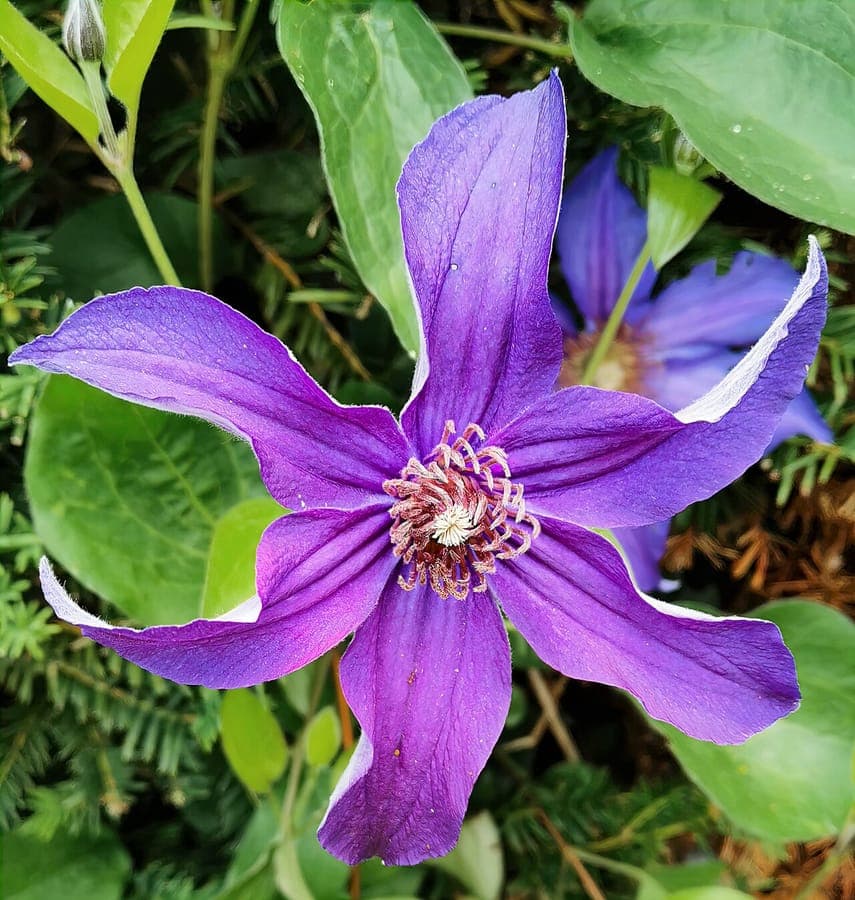
Didier Descouens / CC BY-SA 4.0, via Wikimedia Commons
Solitary clematis: complete guide
Clematis integrifolia
Want to see Solitary clematis: complete guide in your garden?
1 minute, no credit card
Overview
Clematis integrifolia, commonly known as solitary clematis, stands out among its climbing relatives for its upright, non-vining growth habit. Native to regions across Central and Eastern Europe - including Austria, Hungary, Bulgaria, and Crimea - this herbaceous perennial reaches a modest height of 60 to 90 cm, making it ideal for front-of-border planting, rock gardens, or mixed perennial beds. Unlike many clematis species that require trellises or support, this one grows in neat clumps and blooms freely without any structural help.
One of the best things about this plant is its reliability. It's not fussy, handles cold winters well, and offers a long bloom window. On gardenworld.app, you can design a planting scheme that highlights its compact form and pairs it with complementary textures and colours.
Appearance & bloom cycle
The flowers of Clematis integrifolia are its main attraction: nodding, bell-shaped blooms in soft shades of blue-purple, though white and pale pink varieties also exist. Each flower measures around 4–5 cm in diameter, with narrow, reflexed sepals that give them a star-like appearance. They dangle from the ends of slender stems from June through August, creating a graceful, dancing effect in the breeze.
The foliage is equally appealing. Leaves are lance-shaped, deep green, and arranged in opposite pairs along the stems. They're not large, but their clean, glossy surface adds a refined texture to the garden. Since this species doesn't produce feathery seed heads like other clematis, it stays tidy after blooming - a real plus for low-maintenance gardens.
Ideal location
Full sun is best - aim for at least 6 hours of direct sunlight daily. However, like many clematis, it benefits from having its roots shaded and cool. Plant it near low-growing perennials or use a light mulch to keep the base shaded. Avoid hot, reflective surfaces or south-facing walls unless the soil stays consistently moist.
It thrives in cottage gardens, gravel beds, or as part of a prairie-style planting. Try pairing it with upright salvias or ornamental grasses for contrast. On gardenworld.app, you can map out a border layout that maximises sun exposure and ensures proper spacing between plants.
Soil requirements
Well-drained soil is essential. This clematis prefers loamy or sandy loam with a neutral to slightly alkaline pH (6.5–7.5). Heavy clay soils should be amended with compost or grit to improve drainage. Poor drainage, especially in winter, can lead to root rot.
When planting, dig a hole about 40 cm deep and wide. Loosen the root ball gently and set the plant so the crown sits just below soil level. Backfill with a mix of native soil and compost. Avoid burying the crown too deep - that can delay growth or invite rot.
Free design
Want to see Solitary clematis: complete guide in your garden? Make a free design now.
Watering
During the first growing season, water regularly - about once or twice a week during dry spells. Once established, Clematis integrifolia is fairly drought-tolerant, but it performs better with consistent moisture in summer. Water at the base to prevent fungal issues on the foliage.
Apply a 5 cm layer of organic mulch in spring to retain moisture and suppress weeds. Avoid piling mulch directly against the stems. In prolonged dry periods, give a deep soak rather than frequent shallow watering to encourage deep root development.
Pruning
This species falls into Pruning Group 3 - meaning it flowers on new growth. Cut it back hard in early spring, around March, leaving just 10–15 cm of stem above ground. This encourages vigorous new shoots and prevents the plant from becoming leggy.
Do not prune in autumn. Leaving the old stems intact helps protect the crown during winter and provides some wind resistance. The dried structure also adds subtle winter interest to the garden.
Maintenance calendar
- January–February: Check for damaged stems. Keep the area clear of fallen debris.
- March: Hard prune to 10–15 cm. Apply a balanced slow-release fertiliser.
- April–May: New growth emerges. Watch for slugs, especially on young shoots.
- June–August: Peak bloom period. Deadheading isn't necessary but can tidy the look.
- September–October: Let foliage die back naturally. Add compost around the base.
- November–December: Leave stems standing. Protect with mulch in extremely cold zones.
Winter hardiness
Clematis integrifolia is reliably hardy to USDA Zone 4 (-25°C). In most of the UK and northern US, it survives winter without protection. The key is good drainage - wet, frozen soil is more dangerous than cold temperatures alone.
In colder zones, a light mulch after the ground freezes can help prevent heaving. Avoid heavy organic matter that retains too much moisture.
Companion plants
Choose plants with similar sun and moisture needs. Great companions include:
- Salvia nemorosa – purple spikes, same bloom window
- Stachys byzantina – soft foliage contrast
- Allium christophii – dramatic, early-summer blooms
- Festuca glauca – blue grass that contrasts with green foliage
- Eryngium planum – architectural blue flowers
Avoid invasive spreaders or overly competitive neighbours like mint or bamboo.
Closing
Clematis integrifolia brings elegance without the hassle. No need for wires or training - just plant, prune in spring, and enjoy months of nodding blooms. Its compact size and clean habit make it a standout in modern, low-maintenance gardens.
If you're planning a new border, try using gardenworld.app to visualise how this clematis fits with other perennials. It's available at most garden centres in late spring, including well-known retailers across the UK and US.
Want to see Solitary clematis: complete guide in your garden? Make a free design now.
Upload a photo, pick a style, and get a photorealistic design with plant list in under a minute.
No credit card required


Similar plants
Drummond's anemone: complete guide
Anemone drummondii
Discover Drummond's anemone (Anemone drummondii): a silvery-grey mountain plant for cool rock gardens and alpine troughs.
Korean clematis: complete guide
Clematis serratifolia
Clematis serratifolia is a hardy climber with fragrant yellow bell flowers in August-September. Pruning group 3, location and care tips.
Aquilegia brevistyla: complete guide
Aquilegia brevistyla
Discover Aquilegia brevistyla, the elegant North American columbine. Growing tips, shade tolerance, and design ideas for woodland and shadowed gardens.