
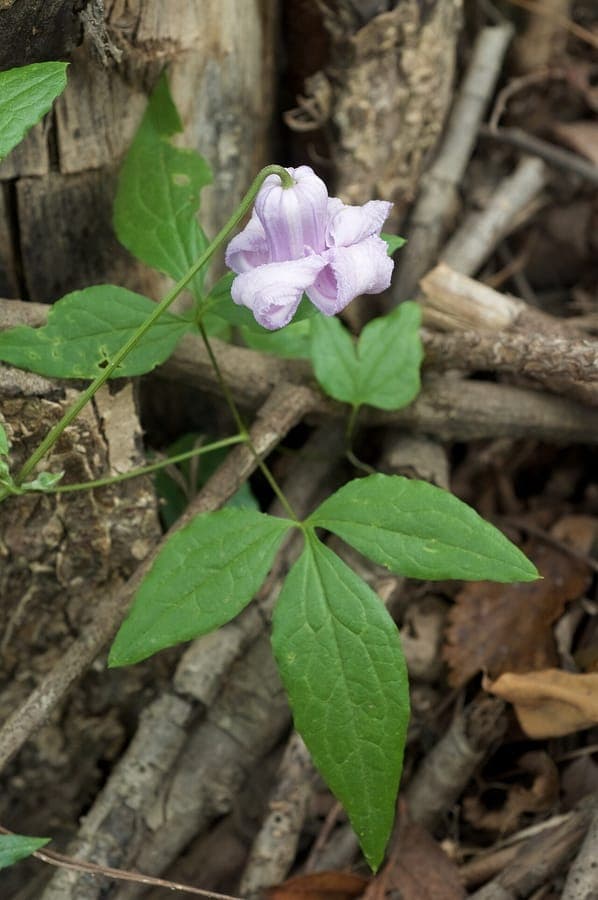
Eric Hunt / CC BY-SA 4.0, via Wikimedia Commons
Curly clematis: complete guide
Clematis crispa
Want to see Curly clematis: complete guide in your garden?
1 minute, no credit card
The curly clematis is a refined climbing plant native to the southeastern United States, now highly popular throughout Europe for its remarkable and elegant flowers. This plant distinguishes itself through unique, ruffled flowers with undulating edges that add elegant fantasy dimension to any garden composition. As one of the less aggressive clematis varieties, it proves excellent for smaller gardens and confined spaces where vigorous types would overwhelm. The plant belongs to the Ranunculaceae family, the same family as wood anemones and delphiniums, indicating its botanical relationship to other appreciated garden flowers.
The plant grows to approximately two to three metres tall in ideal conditions and forms graceful, slender stems that climb beautifully. Flowers appear June through August displaying gorgeous violet-blue coloration that catches attention immediately. Each bloom measures about four to five centimetres across with four distinctively recurved petals that characterise this remarkable species. This flower form makes it unforgettable in any garden setting. Following blooming, the plant produces silken seed heads offering additional ornamental value throughout autumn and winter months. These silvery-white seed heads prove almost as beautiful as the flowers themselves.
Plant the curly clematis where it receives minimum six hours direct sunlight daily, though it tolerates partial shade when necessary. Keep the plant's base in shade consistently because clematis root zone must stay cool and dark, achieved through mulching or companion planting. Ensure the plant grows against sturdy supporting structure such as pergola, trellis or obelisk capable of supporting heavy plant mass. Protect from strong winds that cause stem breakage and damage to delicate branching structure.
The plant thrives in neutral to slightly acid, well-draining soil containing abundant organic matter. Add compost or peat if you have heavy clay or alkaline soil. Provide excellent drainage absolutely because waterlogging leads to bacterial wilt disease called clematis wilt which proves fatal. Many experienced growers add limestone gravel around the planting hole for improved drainage and pH buffering.
Water regularly during the growing season, especially when conditions become dry. Deep watering several times weekly proves far superior to shallow daily spraying. Extended drought periods may necessitate additional irrigation. Mulch around the root zone with five to eight centimetres organic material to retain moisture and keep roots cool and protected from soil acidification.
Pruning proves straightforward for this species: cut back all dead stems after flowering to approximately thirty centimetres from ground. Healthy stems may be left longer for next season. Clematis crispa belongs to Pruning Group Three: cut back to healthy wood in late winter or early spring. Remove dead wood whenever observed during growing season.
Maintenance calendar: March cut back to healthy wood completely. April growth begins vigorously. May-June bud formation and initial flowers. July-August peak flowering reaches maximum. September deadhead for repeat blooming potential. October-February dormancy period with minimal care required.
The curly clematis is frost-hardy in USDA zones four through nine, approximately temperatures to minus thirty degrees Celsius minimum. However, in very cold areas mulch protection may prove beneficial for young plants. Only first-year young plants typically require protection; established plants exhibit remarkable cold hardiness and survive rough winters easily.
Combine with other climbing plants such as honeysuckle, ivy or additional clematis varieties for continuity of blooming throughout season. The delicate flowers of Clematis crispa contrast beautifully with fuller, more substantial blooms of companion climbers nearby. On south-facing walls they thrive alongside garden jasmine and other light-demanding climbers.
The curly clematis delivers elegance and refinement to your garden composition beautifully. With characteristic ruffled blooms and easy cultivation, this proves the perfect choice for those seeking subtle flowering climber. Available at leading garden centres. Discover more garden inspiration at gardenworld.app!
Want to see Curly clematis: complete guide in your garden? Make a free design now.
Upload a photo, pick a style, and get a photorealistic design with plant list in under a minute.
No credit card required


Similar plants
Drummond's anemone: complete guide
Anemone drummondii
Discover Drummond's anemone (Anemone drummondii): a silvery-grey mountain plant for cool rock gardens and alpine troughs.
Korean clematis: complete guide
Clematis serratifolia
Clematis serratifolia is a hardy climber with fragrant yellow bell flowers in August-September. Pruning group 3, location and care tips.
Aquilegia brevistyla: complete guide
Aquilegia brevistyla
Discover Aquilegia brevistyla, the elegant North American columbine. Growing tips, shade tolerance, and design ideas for woodland and shadowed gardens.