
Dericks-Tan / CC BY-SA 3.0, via Wikimedia Commons
Early virgin's-bower: complete guide
Clematis cirrhosa
Want to see Early virgin's-bower: complete guide in your garden?
1 minute, no credit card
Overview
Clematis cirrhosa, commonly known as Early virgin's-bower, is a graceful evergreen to semi-evergreen climber that stands out for blooming when most plants are dormant. Native to Mediterranean regions including Greece, Cyprus, Italy, and parts of North Africa, this vine thrives in rocky, well-drained soils and enjoys mild, dry summers. In the UK and northern Europe, it performs best in a sheltered spot-think south- or west-facing walls or trained through a shrub or rose. Unlike most clematis that bloom in summer, this one starts flowering in December and can continue through to November, peaking in late winter.
One of the plant's greatest assets is its resilience. Once established, it's drought-tolerant, handles coastal conditions well, and requires minimal intervention. On gardenworld.app, you can visualise how to integrate Clematis cirrhosa into mixed borders or vertical spaces, especially when designing for year-round structure. Its flexible stems twine around supports easily, making it ideal for wire trellises, obelisks, or even old tree trunks.
Appearance & bloom cycle
This clematis grows up to 4 metres tall with slender, twining stems and compound leaves made up of three to five leathery, grey-green leaflets. The foliage has a soft, slightly felted texture and remains on the plant through mild winters, adding valuable greenery when little else is growing.
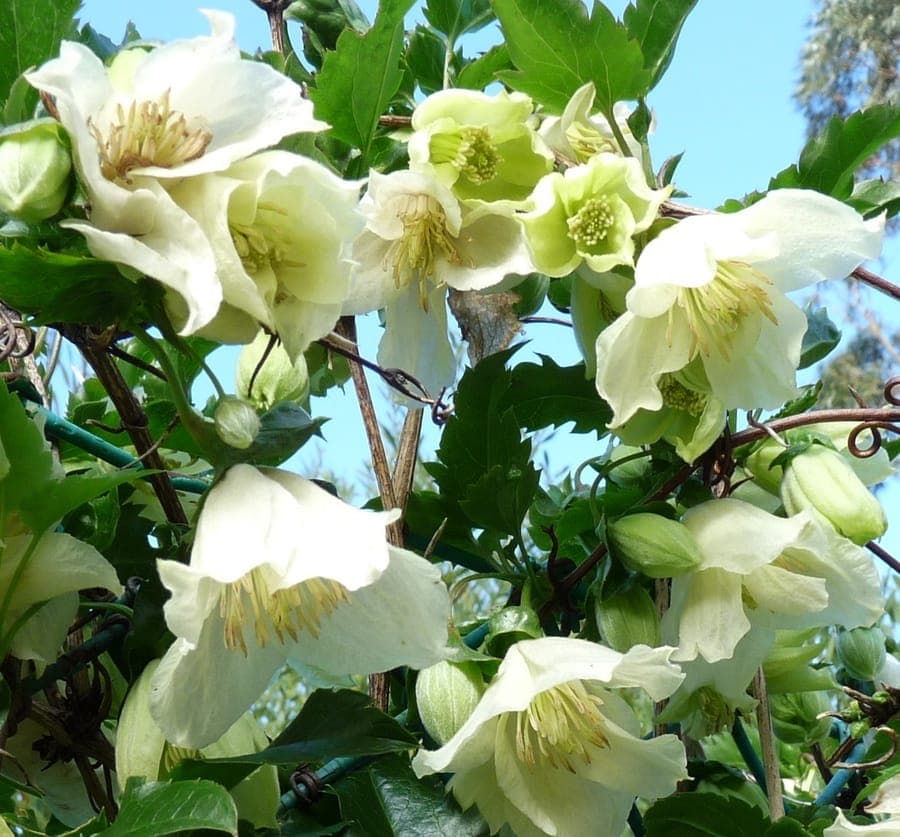
The real show begins in winter: from December onwards, nodding, cup-shaped flowers appear in clusters. Each bloom is 3–4 cm across, pure white with greenish tinges on the reverse of the sepals and a pale yellow centre. They hang delicately from the stems, releasing a faint, sweet fragrance on still winter days. After blooming, the plant develops silky, feathery seed heads that catch the light and add ornamental interest into early spring.
Ideal location
Clematis cirrhosa prefers light levels around 6/10-partial sun to light shade. A spot with morning sun and afternoon shade works best in cooler climates. South- or west-facing walls are ideal because they absorb heat and protect the plant from cold winds. Provide a support structure like a trellis, fence, or nearby shrub for the plant to climb.
Crucially, while the top grows in sun, the roots like to stay cool and shaded. Plant low-growing companions such as Vinca minor or use a ceramic pot laid on its side to shade the base. This 'cool roots, warm face' rule is key to preventing stress. On gardenworld.app, you can experiment with garden layouts that pair sun-loving climbers with shade-providing ground cover.
Free design
Want to see Early virgin's-bower: complete guide in your garden? Make a free design now.
Soil requirements
Aim for well-drained, slightly acidic to neutral soil with a pH between 5.5 and 6.5. Avoid heavy clay or waterlogged spots-this plant hates wet feet. If your soil is dense, amend it with grit, composted pine bark, or leaf mould to improve drainage. A light mulch of bark chips helps retain moisture and suppress weeds, but keep it away from the stem to prevent rot.
Watering
Water regularly in the first year, especially during dry spells in spring and autumn. Once established, Clematis cirrhosa is fairly drought-resilient. Water deeply but infrequently-about once a week during prolonged dry periods. Always let the top few centimetres of soil dry out between waterings to avoid root issues.
Pruning
This plant falls into Pruning Group 1-those that flower on old wood. Prune only after flowering, typically in late winter or early spring. Remove dead, damaged, or congested stems, but avoid hard cutting back. If the vine gets too long, trim it lightly to shape, but never remove more than a third in one go. Over-pruning will sacrifice next season's blooms.
Maintenance calendar
- Jan: Monitor for winter blooms, check for frost damage
- Feb: Peak flowering; inspect support structure
- Mar: Flowers fade; light prune if needed
- Apr: Apply balanced fertiliser if growth is slow
- May–Aug: Minimal care; watch for aphids or slugs
- Sep: Divide or transplant if desired
- Oct: Top up mulch; protect young plants
- Nov: Blooms may reappear; ensure good air circulation
- Dec: First flowers emerge; protect base in cold zones
Winter hardiness
Clematis cirrhosa is generally hardy in USDA zones 8–10 (down to -12°C). In colder areas (zone 7 or below), mulch the base heavily with bark or straw and consider wrapping the lower stems. Young plants are more vulnerable-protect them the first two winters. In milder regions, it stays evergreen, offering structure and interest when the garden is otherwise bare.
Companion plants
Pair with Mahonia, Helleborus, or winter jasmine for layered winter colour. It works well with shrubs like Sarcococca or evergreen ferns. Avoid invasive groundcovers like ivy that might compete for space. Roses make excellent hosts-train the clematis through them for a natural, romantic look.
Closing
Clematis cirrhosa is a quiet achiever-unassuming at first glance, but delivering months of bloom when few plants dare. Its adaptability, fragrance, and evergreen foliage make it a standout choice for gardeners seeking low-effort, high-impact plants. Find it at garden centres across the UK, or check specialist nurseries. With the right care and a sheltered spot, this clematis will climb and charm for years to come.
Want to see Early virgin's-bower: complete guide in your garden? Make a free design now.
Upload a photo, pick a style, and get a photorealistic design with plant list in under a minute.
No credit card required


Similar plants
Drummond's anemone: complete guide
Anemone drummondii
Discover Drummond's anemone (Anemone drummondii): a silvery-grey mountain plant for cool rock gardens and alpine troughs.
Korean clematis: complete guide
Clematis serratifolia
Clematis serratifolia is a hardy climber with fragrant yellow bell flowers in August-September. Pruning group 3, location and care tips.
Aquilegia brevistyla: complete guide
Aquilegia brevistyla
Discover Aquilegia brevistyla, the elegant North American columbine. Growing tips, shade tolerance, and design ideas for woodland and shadowed gardens.