
Leif Stridvall / CC BY-SA 2.5, via Wikimedia Commons
Laurel-leaf cistus: complete guide
Cistus laurifolius
Want to see Laurel-leaf cistus: complete guide in your garden?
1 minute, no credit card
Overview
Cistus laurifolius, commonly known as Laurel-leaf cistus, is a robust evergreen subshrub native to rocky slopes across the Mediterranean basin - from southern France to Turkey. It thrives in hot, dry conditions and is a go-to choice for water-wise gardens, gravel beds, and coastal landscapes. In the UK and northern Europe, it performs best in full sun and well-drained soil, making it ideal for modern, low-maintenance designs. Gardeners appreciate its resilience and architectural form. On gardenworld.app, you can design a drought-resistant planting scheme that features Laurel-leaf cistus as a focal point, perfectly balanced with texture and bloom timing.
Appearance & bloom cycle
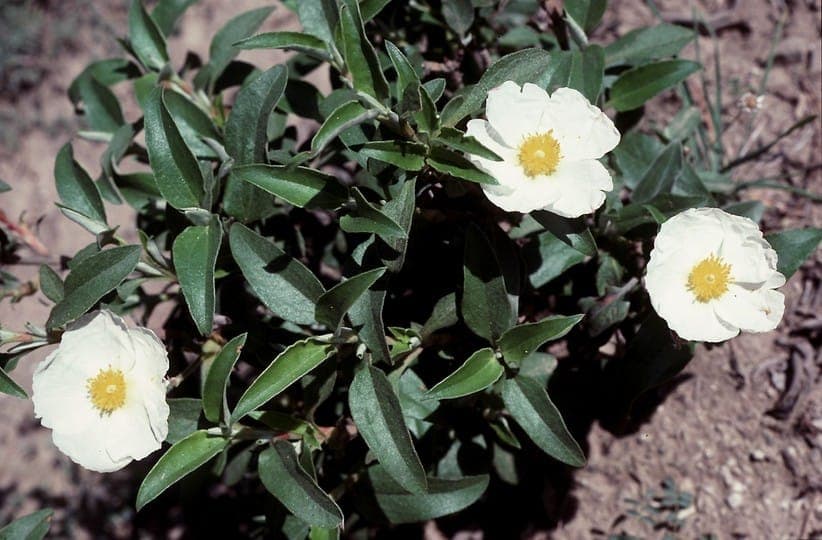
This subshrub typically reaches 80–120 cm in height and spreads up to 100 cm wide. It has leathery, dark green leaves 4–8 cm long, resembling bay laurel foliage - hence the name. In June and July, it produces large, crepe-textured white flowers, each 5–7 cm across, with a distinctive maroon spot at the base of each petal. Though individual flowers last only a single day, the plant continuously sets new buds, extending the bloom period for several weeks. The contrast between the white petals and dark centre creates a striking visual effect in the summer garden.
Ideal location
Choose a south- or southwest-facing spot with full sun - aim for a light level of 8, which means 6–8 hours of direct sunlight daily. Laurel-leaf cistus needs heat to thrive and performs poorly in shade or damp, cold corners. It's best suited to USDA hardiness zones 8b–10. In cooler zones like 8a, provide winter protection. Avoid exposed, windy sites that can dry out the plant too quickly. A sheltered wall or rock garden mimics its natural habitat. Check your microclimate on gardenworld.app to see if your garden suits Mediterranean species like this one.
Soil requirements
This plant demands sharply drained soil - sandy, gravelly, or chalky mixes work best. It prefers acidic to slightly acidic conditions, with a pH between 4.5 and 5.0. Avoid heavy clay or water-retentive soils, as they lead to root rot. Amend planting holes with horticultural grit or perlite to improve drainage. Don't enrich the soil with compost or manure; Cistus laurifolius grows best in poor, lean soils.
Watering
Once established, Laurel-leaf cistus is highly drought tolerant. Water young plants weekly during their first growing season, especially in dry spells. After that, supplemental watering is rarely needed, except during prolonged droughts (over 4 weeks without rain). When you do water, soak deeply but infrequently to encourage deep root development. Use rainwater if possible, as tap water with high lime content can harm the plant over time.
Free design
Want to see Laurel-leaf cistus: complete guide in your garden? Make a free design now.
Pruning
Prune lightly after flowering, in late July or early August. Remove dead wood, spent blooms, and any congested growth. Avoid hard pruning into old wood - this species doesn't regenerate well from bare stems. Never prune in spring, as you'll remove flower buds. Use clean, sharp secateurs to prevent disease transmission.
Maintenance calendar
- January: Inspect for frost damage; keep area free of debris.
- February: No action needed unless heavy snow - gently shake branches.
- March: Remove old leaves; watch for aphids on new shoots.
- April: Monitor young growth; water young plants if dry.
- May: Prepare for bloom; avoid feeding.
- June: Flowers appear; deadhead lightly.
- July: Peak bloom; prune after flowering; check for fungal issues in humid weather.
- August: Water only in extreme drought.
- September: Let plant harden off; no feeding.
- October: Clear fallen leaves; keep base dry.
- November: No pruning; inspect for rotting stems.
- December: Protect young plants with horticultural fleece if temperatures drop below -7°C.
Winter hardiness
Cistus laurifolius is hardy in USDA zones 8b–10. In marginal zones like 8a, winter wetness is more dangerous than cold. Protect young plants with a dry mulch (gravel or pine bark) and avoid moisture around the crown. Use breathable covers, not plastic, to shield from frost.
Companion plants
Pair Laurel-leaf cistus with other Mediterranean drought-tolerant plants: Lavandula angustifolia, Rosmarinus officinalis, Santolina chamaecyparissus, and Eryngium giganteum. These share similar needs - full sun, sharp drainage, and low fertility. Space plants at least 80 cm apart to allow airflow and prevent fungal diseases. Add texture with ornamental grasses like Stipa tenuissima or succulents such as Sedum spectabile.
Closing
Laurel-leaf cistus brings elegance and resilience to sunny gardens. Its white flowers and evergreen foliage provide structure and seasonal interest with minimal upkeep. Buy healthy stock from trusted garden centres - look for firm stems, green leaves, and no signs of waterlogging. In the UK, check garden centres like Wyevale or online nurseries; in Europe, OBI and Hornbach often carry quality specimens. With the right siting and care, this plant rewards you for years. Remember, on gardenworld.app you can visualise and plan a full garden layout where Laurel-leaf cistus plays a central role in a sustainable, beautiful design.
Want to see Laurel-leaf cistus: complete guide in your garden? Make a free design now.
Upload a photo, pick a style, and get a photorealistic design with plant list in under a minute.
No credit card required


Similar plants
Curled-leaf rock rose: complete guide
Cistus crispus
Everything you need to grow Cistus crispus, the curled-leaf rock rose from the western Mediterranean. Siting, soil, pruning, and winter care fully explained.
Marjoram-leaved sun rose: complete guide
Helianthemum marifolium
Everything about Helianthemum marifolium, the marjoram-leaved sun rose: location, dry soil, flowering season and care for this Mediterranean rock plant in your garden.
Beach-heath: complete guide
Hudsonia tomentosa
Complete guide to Hudsonia tomentosa: growing this woolly sand-heath on poor sandy soils, its care needs, companions and garden uses.