
Marco Schmidt / CC BY-SA 2.5, via Wikimedia Commons
Winged treebine: complete guide
Cissus quadrangularis
Want to see Winged treebine: complete guide in your garden?
1 minute, no credit card
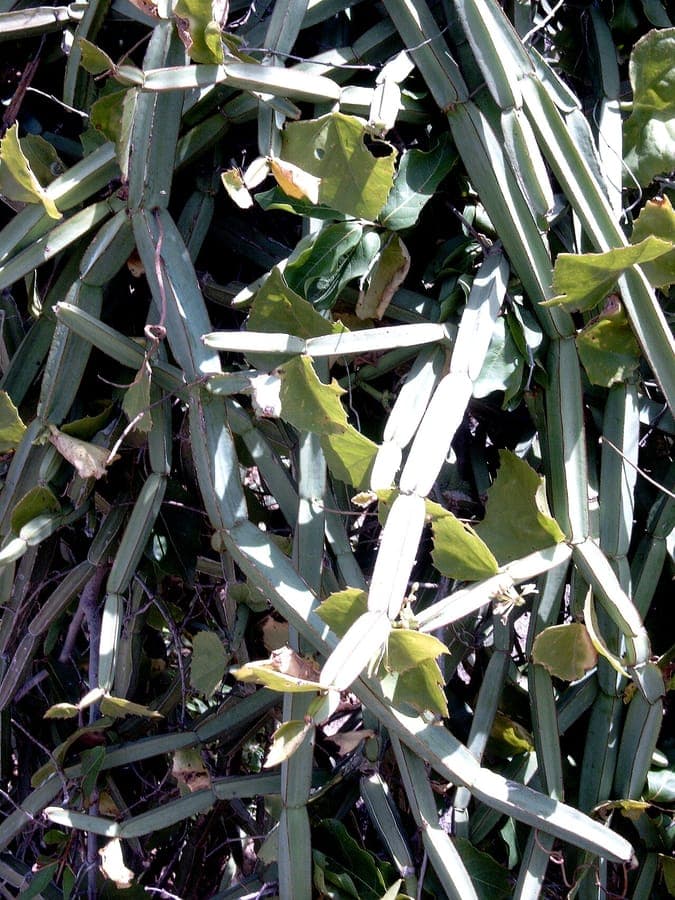
The winged treebine is a remarkable climbing plant distinguished by its unique, four-angled stems with undulating wings, making it immediately recognizable in any garden setting. Originally from tropical and subtropical regions of Africa, Madagascar, and the Arabian Peninsula through to the Indian subcontinent, this versatile plant proves exceptionally suitable for warmer climate zones throughout Europe. With its nutritious and medicinal properties celebrated in traditional wellness practices, the winged treebine holds special significance in many cultures across its native range. The plant belongs to the Vitaceae family, the same family as commercial grapevines, though it offers ornamental rather than culinary value. Common names include veldt-grape, bone setter, and edible-stemmed vine, reflecting its various uses.
The plant grows vigorously in warm conditions and creates dense, verdant screens perfect for vertical gardening projects. The characteristic square stems give the plant an unmistakably distinctive appearance that catches attention immediately. New growth often emerges reddish or purplish before maturing to green over several weeks. The compact leaf arrangement provides a structured, architectural quality to planting schemes that modern gardeners appreciate. In warm climates, specimens can reach up to three meters in length, making them suitable for substantial garden structures like pergolas and tall trellises.
Flowers are inconspicuous, white-yellow clusters that emerge subtly during the growing season. They produce little fragrance but serve their reproductive purpose effectively. Far more interesting are the fruits that follow: glossy red to black berries that attract numerous birds and wildlife to your garden. These berries add significant ornamental value to mixed borders or vertical gardening schemes throughout autumn. The fruits ripen gradually over the season, providing sustained visual interest and wildlife habitat.
For optimal growth, the winged treebine demands abundant sunlight and warm conditions consistently. Plant it against south- or west-facing walls receiving minimum six to eight hours of direct sun daily for best results. In shaded locations, growth slows dramatically and foliage production diminishes considerably. The plant is not frost-hardy and poorly tolerates temperatures below ten degrees Celsius, which causes severe damage. In cooler climates, containerise specimens and move indoors during winter months to protect from frost damage and ensure survival through cold seasons.
The plant thrives in well-draining potting mix enriched with sand or perlite for improved drainage characteristics. Waterlogged conditions cause root rot and plant decline rapidly. Ideal pH range sits between six point zero and seven point zero for optimal nutrient uptake. Growth in nutrient-rich soil promotes maximum foliage development and fruiting capacity throughout the season. Regular feeding during active growth periods supports abundant flowering and berry production.
Water requirements are moderate to high during the active growing season from April through October. Allow the top two to three centimetres of soil to dry between watering sessions. This balance prevents waterlogging while maintaining adequate moisture. During winter dormancy, reduce watering significantly as the plant requires less water. Excessive moisture is more harmful than drought conditions for this species and leads to rapid root decay and plant failure.
Pruning is optional but strongly encourages density and bushiness for more compact growth habits. Trim long runners in spring to direct form and maintain desired shape and size. Remove dead or damaged stems whenever encountered during your gardening activities. The plant responds well to light pruning and regenerates quickly with vigorous new growth following trimming operations.
Maintenance calendar: March establish baseline care routines and inspect for issues. April begin growing season with increased watering and feeding schedules. May-June flower and fruit initiation begins. July-August peak growth period requires consistent care. September-October prepare for dormancy by reducing water gradually. November-February reduced water, no fertiliser application during rest period.
The winged treebine lacks frost hardiness entirely and cannot survive outdoors in cold climates without protection or relocation. Container specimens benefit from relocation to bright, cool positions maintaining ten to fifteen degrees Celsius in September with minimal watering, preparing for spring emergence and potential flowering continuation.
Combine the winged treebine with other heat-loving climbers such as passion flowers, Stephanotis, or Bougainvillea for spectacular mixed displays. Its unique angular stem texture contrasts beautifully with finer, blue-green foliage plants nearby. In container planting, pair successfully with succulents sharing identical moisture requirements and warmth preferences for harmonious combinations.
The winged treebine delivers entirely novel plant character to your garden space creating visual interest year-round. With distinctive stems, ornamental fruiting, and heat-loving disposition, this plant offers genuine focal point potential for those seeking something truly unique and memorable. Discover more garden inspiration and plant guides at gardenworld.app!
Want to see Winged treebine: complete guide in your garden? Make a free design now.
Upload a photo, pick a style, and get a photorealistic design with plant list in under a minute.
No credit card required


Similar plants
Catbird grape: complete guide
Vitis palmata
Discover the Catbird grape (Vitis palmata), a hardy wild grapevine that draws songbirds. Learn about location, pruning, and year-round care.
Monkshoodvine: complete guide
Ampelopsis aconitifolia
Discover Monkshoodvine. Learn how to care for this plant in your garden.
Vitis girdiana: complete guide to this resilient desert wild grape
Vitis girdiana
Discover Vitis girdiana, the Desert Wild Grape: a resilient native vine from California and Mexico. Perfect for dry, warm gardens and pergola screening.