
Ivar Leidus / CC BY-SA 4.0, via Wikimedia Commons
Marsh thistle: complete guide
Cirsium palustre
Want to see Marsh thistle: complete guide in your garden?
1 minute, no credit card
Overview
Cirsium palustre, commonly known as Marsh thistle, is a tall, spiky perennial native to wetlands across much of Europe. As a member of the Asteraceae family, it thrives in marshes, ditches, and damp woodlands. In the garden, it's a bold choice for wet areas where few other plants succeed. It's not for the faint-hearted - the leaves are sharply toothed and can snag clothing - but its architectural form and late-summer bloom make it a standout. This plant is fully winter-hardy, spreads by seed, and supports a wide range of pollinators.
On gardenworld.app you can design a planting scheme that integrates Marsh thistle into a moisture-rich border, making the most of its vertical presence and ecological benefits.
Appearance & bloom cycle
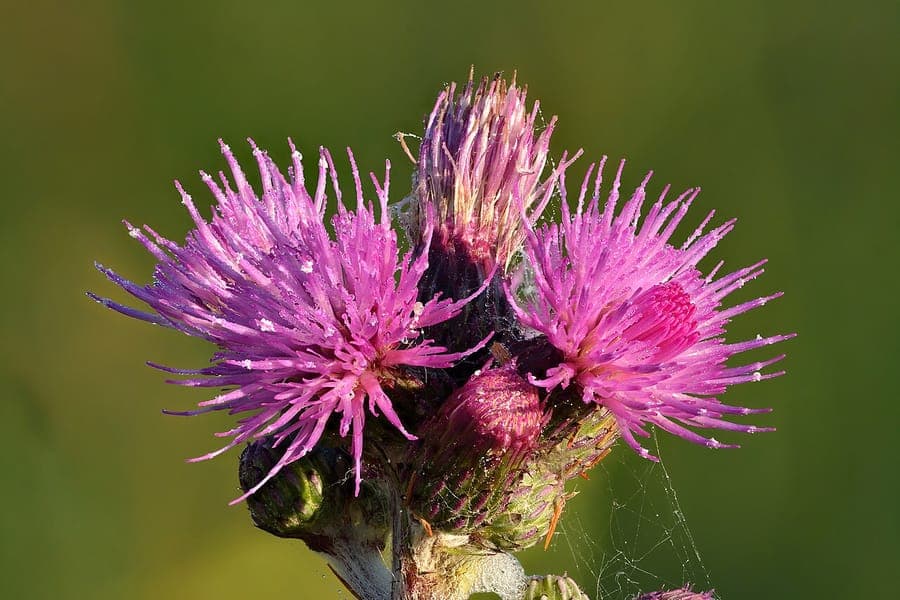
Marsh thistle grows 100–180 cm tall with upright, branched stems covered in fine spines. The leaves are dark green, deeply lobed, and edged with yellow spines. They're hairy underneath, giving them a soft greyish underside. From July to September, deep pink to purplish flower heads, 2–3 cm wide, appear in clusters at the top of the stems. These are rich in nectar and highly attractive to bees, bumblebees, and butterflies, especially the red admiral. After flowering, the seed heads open into fluffy parachutes, releasing seeds in October. The whole plant dies back in winter, leaving behind standing stalks that offer winter structure.
Ideal location
Full sun is best, but light shade is tolerated if the soil stays damp. This plant demands consistent moisture, making it ideal for pond margins, bog gardens, or low-lying areas that collect water. Avoid dry, sandy soils or full shade, which lead to weak growth and poor flowering. It can self-seed vigorously, so plant it where it has room to spread - or where you're happy to manage seedlings. It's not suited for formal beds but fits perfectly in wildflower meadows or naturalistic plantings.
Soil requirements
Prefers moist, loamy or silty soils with good water retention. Ideal pH is between 5.5 and 7.0 (slightly acidic to neutral). On sandy soils, amend with compost or well-rotted manure to improve moisture-holding capacity. Clay soils are acceptable as long as they don't become waterlogged for extended periods. For container growing, use a mix of loam-based compost, perlite, and peat-free coir to retain moisture without compaction.
Free design
Want to see Marsh thistle: complete guide in your garden? Make a free design now.
Watering
Keep soil consistently damp, especially during the first growing season. Established plants are more resilient but still suffer in prolonged drought. Water deeply once a week during dry spells, focusing on the base to avoid wetting the foliage, which can encourage fungal issues. Never let the soil dry out completely - drooping leaves are a clear sign of thirst.
Pruning
No pruning is needed for flowering, but cutting back spent stems to 20 cm in late autumn or early winter helps control self-seeding. If you want to encourage natural spread, leave a few seed heads intact. Always wear thick gloves and long sleeves - the spines are sharp and can cause skin irritation. Use clean, sharp secateurs to prevent disease transfer.
Maintenance calendar
- January: Clear old stems if not done in winter; check for early shoots
- February: No action needed
- March: Monitor for emerging rosettes; thin overcrowded seedlings
- April: Plant young specimens in moist soil
- May: Maintain soil moisture; watch for slugs on young growth
- June: No pruning; look for developing flower buds
- July: Flowers begin to open; support tall stems if needed
- August: Peak bloom; rich insect activity
- September: Flowers fade; consider cutting back
- October: Collect seeds or allow natural dispersal
- November: Cut remaining stems; remove excess seedlings
- December: Dormant; no care required
Winter hardiness
Hardy in USDA zones 4–8. The plant dies back in autumn, but the root system survives freezing temperatures down to -30°C. No winter protection is needed for mature plants, though a light mulch of leaf mould or compost can benefit young or newly planted specimens in exposed sites.
Companion plants
Pair with moisture-loving natives like common reed (Phragmites australis), meadowsweet (Filipendula ulmaria), purple loosestrife (Lythrum salicaria), and tussock sedge (Carex paniculata). These create a lush, textured planting that thrives in wet conditions. Avoid pairing with delicate alpines or drought-tolerant species. Marsh thistle can dominate in damp areas, so give it space.
Using gardenworld.app, you can map out companion planting combinations that balance height, texture, and bloom time for a dynamic wetland garden.
Closing
Marsh thistle isn't a polite garden plant - it's wild, spiky, and spreads freely. But that's exactly why it's valuable. In the right setting, it brings life, structure, and late-season colour to wet corners. With minimal care and the right conditions, it becomes a reliable fixture. Look for seeds or plants at garden centres like those carrying native species, or order online from specialist suppliers.
Want to see Marsh thistle: complete guide in your garden? Make a free design now.
Upload a photo, pick a style, and get a photorealistic design with plant list in under a minute.
No credit card required


Similar plants
Calendula stellata: complete guide
Calendula stellata
Complete guide to Calendula stellata, the star-flowered marigold from Sicily: location, soil, watering and companion planting tips.
Korean chrysanthemum: complete guide
Chrysanthemum x rubellum
Chrysanthemum x rubellum is a hardy autumn perennial with single pink to copper flowers from August to November. Care and combinations.
Helianthus divaricatus: complete guide
Helianthus divaricatus
Helianthus divaricatus is a North American woodland sunflower with yellow summer blooms, ideal for naturalistic borders and shady edges.