
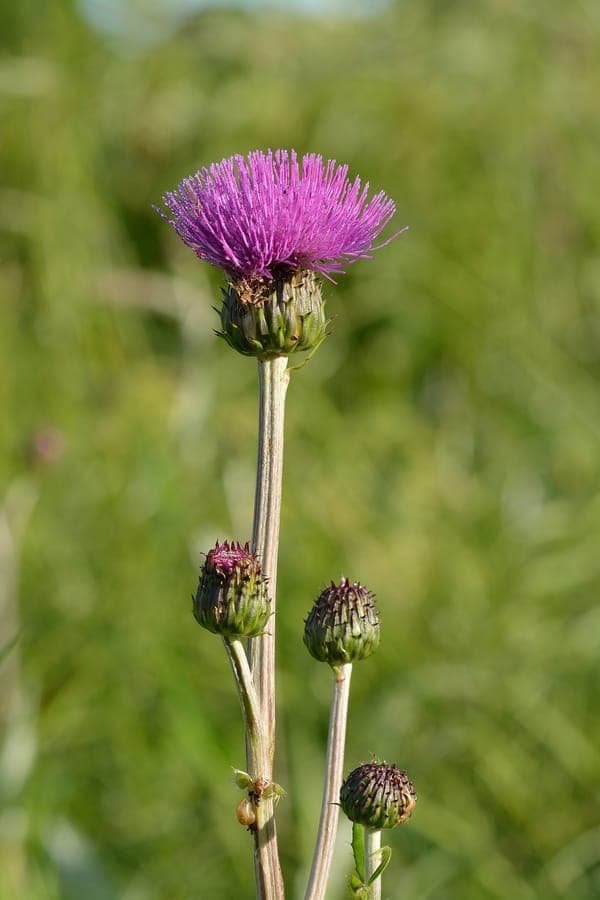
Ivar Leidus / CC BY-SA 3.0, via Wikimedia Commons
Melancholy thistle: complete guide
Cirsium heterophyllum
Want to see Melancholy thistle: complete guide in your garden?
1 minute, no credit card
Overview
Cirsium heterophyllum, commonly known as the melancholy thistle, is a striking herbaceous perennial that brings vertical elegance to naturalistic garden designs. Native to alpine and subalpine meadows across central and eastern Europe, this thistle stands between 80 and 150 cm tall, making it ideal for the back of a border or along a dry slope. Unlike many of its more aggressive relatives, it doesn't spread rampantly, which makes it a manageable choice for mixed perennial beds.
It's a member of the Asteraceae family and thrives in USDA hardiness zones 4 to 8. The plant forms a basal rosette of deeply cut, fern-like leaves in its first year, followed by tall, slender flowering stems in the second. On gardenworld.app, you can explore planting schemes that integrate tall perennials like this one for layered, low-maintenance structure.
This is not a plant for overly rich or wet soils - it leans toward the wild side and performs best where other perennials might struggle.
Appearance & bloom cycle
The melancholy thistle earns its name from the drooping posture of its flower heads, which nod gently on wiry stems. Each flower is 2–3 cm across, a deep wine-purple, and surrounded by narrow, spine-tipped bracts. Blooming occurs from June to August, depending on elevation and local climate. The flowers are rich in nectar and attract a wide range of pollinators, including bumblebees, honeybees, and several species of butterflies, such as the small tortoiseshell and red admiral.
The foliage is finely dissected, almost feathery, and less prickly than most thistles - a rare trait in the Cirsium genus. This makes it more gardener-friendly while still offering wildlife value. After blooming, the seed heads open into fluffy pappus, which catches the wind and carries seeds several meters, though not aggressively.
Ideal location
Choose a spot with at least 6–8 hours of direct sunlight daily. A light value of 7 out of 10 suits it perfectly. While it tolerates partial shade, plants will stretch and may require staking. Avoid overly sheltered areas with stagnant air, as this increases fungal risk.
Space plants 50–60 cm apart to allow for good air circulation. It works well in gravel gardens, meadow plantings, or on rocky slopes. If you're designing a drought-tolerant border, the melancholy thistle adds height and drama without dominating the space.
On gardenworld.app, use the design tool to visualize how this plant fits into a tiered planting scheme with grasses and lower perennials.
Soil requirements
This thistle prefers well-drained, neutral to slightly alkaline soils with a pH between 7.0 and 7.5. Sandy loam or stony soils are ideal. Avoid heavy clay unless amended with grit or coarse sand to improve drainage. Poor to moderately fertile soils are best - rich soils encourage floppy growth and reduce flowering.
It does not tolerate waterlogged conditions, especially in winter, which can lead to crown rot. If your garden has heavy soil, consider raised beds or berms to elevate the planting area.
Free design
Want to see Melancholy thistle: complete guide in your garden? Make a free design now.
Watering
Once established, Cirsium heterophyllum is highly drought-tolerant. During the first growing season, water weekly if rainfall is below 25 mm per week. After that, it rarely needs supplemental watering, even in prolonged dry spells. Overwatering is more dangerous than underwatering for this species.
Always water at soil level to keep foliage dry and reduce the risk of powdery mildew. Drip irrigation or soaker hoses work better than overhead sprinklers.
Pruning
Pruning isn't required for plant health, but cutting back spent flower stems in late summer can help control self-seeding. If you want to support birds, leave a few seed heads intact into winter - goldfinches and siskins feed on the seeds. The basal leaves often remain semi-evergreen, so avoid cutting everything back in autumn. Wait until February to tidy up, preserving winter habitat for beneficial insects.
Maintenance calendar
- January: Leave old stems for insect overwintering.
- February: Cut back dead foliage; plant new specimens.
- March: Check for aphids; gently remove mulch around crowns.
- April: No feeding needed; inspect for emerging growth.
- May: Watch for legginess; stake if necessary.
- June: Bloom begins; monitor for drought stress.
- July: Peak flowering; pollinators active.
- August: Deadhead if limiting spread.
- September: Leave some seed heads for birds.
- October: No action required.
- November: Apply light mulch for young plants.
- December: Dormant period; no intervention.
Winter hardiness
Fully hardy down to -25°C (USDA zone 4), the melancholy thistle withstands harsh winters with minimal protection. In milder zones (7–8), it often retains green basal leaves throughout winter. Crown rot is the main threat in wet, cold winters, so ensure good drainage. Avoid mulching heavily over the crown, as this can trap moisture.
Companion plants
Pair with other drought-tolerant perennials like Echinacea purpurea, Salvia x sylvestris, or Stachys byzantina. Ornamental grasses such as Deschampsia cespitosa or Festuca ovina add movement and contrast. Avoid pairing with aggressive spreaders like goldenrod or mint, which can overwhelm this more restrained plant.
You can find Cirsium heterophyllum at independent garden centres, especially those specializing in native or wildlife-friendly plants. It's rarely stocked in large chains, so check specialty growers or online nurseries. Tradeshows and native plant sales are also good sources.
Closing
The melancholy thistle is a quiet powerhouse in the perennial garden - tall, elegant, and ecologically valuable. It asks for little and gives back in pollinator visits, winter structure, and subtle beauty. With the right conditions, it becomes a reliable anchor in naturalistic designs for years to come.
Want to see Melancholy thistle: complete guide in your garden? Make a free design now.
Upload a photo, pick a style, and get a photorealistic design with plant list in under a minute.
No credit card required


Similar plants
Calendula stellata: complete guide
Calendula stellata
Complete guide to Calendula stellata, the star-flowered marigold from Sicily: location, soil, watering and companion planting tips.
Korean chrysanthemum: complete guide
Chrysanthemum x rubellum
Chrysanthemum x rubellum is a hardy autumn perennial with single pink to copper flowers from August to November. Care and combinations.
Helianthus divaricatus: complete guide
Helianthus divaricatus
Helianthus divaricatus is a North American woodland sunflower with yellow summer blooms, ideal for naturalistic borders and shady edges.