
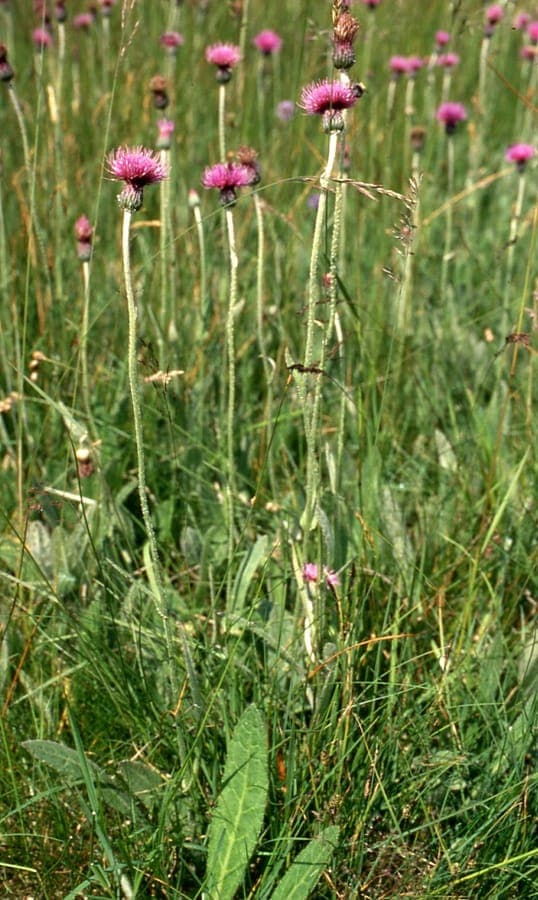
Christian Fischer / CC BY-SA 3.0, via Wikimedia Commons
Meadow thistle: complete guide
Cirsium dissectum
Want to see Meadow thistle: complete guide in your garden?
1 minute, no credit card
Overview
Cirsium dissectum, commonly known as meadow thistle, is a graceful, upright perennial that thrives in damp, acidic grasslands. Native across western and northern Europe, it's increasingly finding its way into garden borders thanks to its elegant form and ecological value. Unlike its brash, thuggish cousins like creeping thistle, meadow thistle behaves itself-no spreading, no smothering, just a tidy clump of greenery topped with soft purple blooms each summer.
On gardenworld.app you can design a planting scheme that highlights meadow thistle's natural elegance, integrating it into a low-maintenance, pollinator-rich garden.
Appearance & bloom cycle
Meadow thistle grows 60–90 cm tall, occasionally taller in ideal conditions. The stems are slender and branched, carrying deeply lobed, dark green leaves that are softly hairy underneath. The edges are finely toothed but not spiny-making it safe to plant near paths or seating areas. From May through July, it produces compact, brush-like flower heads, 3–4 cm wide, in a rich purple. These are a magnet for bees, bumblebees, and butterflies, particularly the thistle butterfly (Vanessa cardui).
Flowering starts lower on the stem and progresses upward, giving you a long display. After blooming, the seed heads open into fluffy white parachutes that drift on the breeze-adding late-summer texture and feeding goldfinches and siskins.
Ideal location
This plant loves full sun-rate it an 8/10 for light. That means at least six hours of direct sunlight daily. It performs best in open, sunny spots at the edge of a damp border, near a pond, or in a moist meadow patch. It also works well in a wildflower corner or native planting scheme.
Avoid dry, sandy soils in full sun without supplemental watering. It won't survive long in a hot, dry front garden border with lavender and sedum.
Soil requirements
The soil must stay moist but not waterlogged. Aim for humus-rich, slightly acidic conditions with a pH between 5.5 and 6.5. Clay-loam soils work well, provided they don't become compacted. Don't over-fertilize-meadow thistle prefers moderate fertility. Rich, heavily manured soils make it grow too tall and weak, leading to flopping.
For sandy soils: amend the planting hole with compost or leaf mould to boost moisture retention. Avoid chalky or alkaline soils-they cause yellowing leaves due to iron deficiency.
Watering
Consistent moisture is key, especially during establishment and dry spells in summer. From June to July, when it's flowering, never let the soil dry out completely. Use rainwater if possible-meadow thistle dislikes hard, chalky tap water. Apply a light mulch of leaf litter or composted bark in spring to conserve moisture and suppress weeds.
During wet summers, no extra watering is needed. This plant is built for damp conditions.
Free design
Want to see Meadow thistle: complete guide in your garden? Make a free design now.
Pruning
After flowering, cut back spent stems to just above the basal rosette. This keeps the plant looking tidy and reduces self-seeding if you prefer a more controlled look. Leave a few seed heads intact if you want to feed birds or encourage natural spread in a wild area.
In winter, the old stems can be left standing-they provide structure and shelter for beneficial insects. Cut them down in late winter, around February or early March, before new growth emerges.
Maintenance calendar
- Jan: inspect old stems, remove any badly damaged material
- Feb: cut back last year's growth
- Mar: check for new shoots, apply light mulch
- Apr: top-dress with compost, control emerging weeds
- May: flowering begins, monitor moisture
- Jun: peak bloom, humming with pollinators
- Jul: flowering tapers off, consider deadheading
- Aug: cut back or leave seed heads
- Sep: watch for seedlings, thin if needed
- Oct: reduce watering, stop feeding
- Nov: leave plant standing for winter interest
- Dec: check for fungal spots, no action required
Winter hardiness
Meadow thistle is hardy to at least -15°C (USDA zones 6–8). In harsh winters with prolonged freezing on wet soil, the crown may rot. Protect the base with a dry mulch of bracken or straw in December if severe frost is forecast. In mild UK and Irish climates, it typically survives without protection.
Companion plants
Pair meadow thistle with other moisture-loving perennials like purple loosestrife (Lythrum salicaria), sneezeweed (Helenium), or meadowsweet (Filipendula ulmaria). Contrast its upright form with soft grasses like Molinia or Deschampsia. Add dark-leaved bugle (Ajuga reptans 'Atropurpurea') at the front for colour contrast. For a naturalistic look, include wildflowers like oxeye daisy or ragged robin.
Using gardenworld.app, you can visualise these combinations in a layered planting plan that balances height, texture, and seasonal interest.
Closing
Meadow thistle is a quiet standout-no flash, no fuss, just substance. It asks for damp soil, sun, and a little attention, and in return, it delivers beauty and biodiversity. Buy plants from reputable garden centres that sell cultivated stock, not wild-dug specimens. In the UK and Ireland, look for it at local garden centres or specialist nurseries. Avoid collecting from the wild-it harms fragile habitats.
With the right spot and care, meadow thistle will return year after year, bringing soft purple blooms and a touch of wild meadow charm to your garden.
Want to see Meadow thistle: complete guide in your garden? Make a free design now.
Upload a photo, pick a style, and get a photorealistic design with plant list in under a minute.
No credit card required


Similar plants
Calendula stellata: complete guide
Calendula stellata
Complete guide to Calendula stellata, the star-flowered marigold from Sicily: location, soil, watering and companion planting tips.
Korean chrysanthemum: complete guide
Chrysanthemum x rubellum
Chrysanthemum x rubellum is a hardy autumn perennial with single pink to copper flowers from August to November. Care and combinations.
Helianthus divaricatus: complete guide
Helianthus divaricatus
Helianthus divaricatus is a North American woodland sunflower with yellow summer blooms, ideal for naturalistic borders and shady edges.