
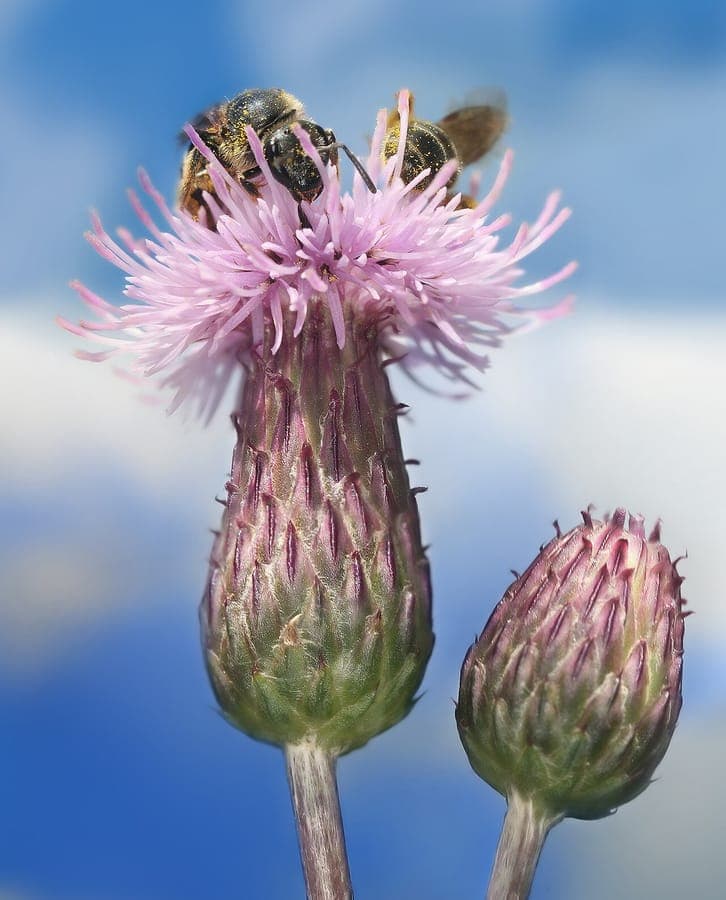
Richard Bartz, Munich aka Makro Freak / CC BY-SA 2.5, via Wikimedia Commons
California thistle: complete guide
Cirsium arvense
Want to see California thistle: complete guide in your garden?
1 minute, no credit card
Overview
California thistle, or Cirsium arvense, isn't your average garden plant. It's a persistent perennial with a reputation for spreading fast and taking over. But before you reach for the weedkiller, consider its role in nature. Native to parts of Europe and Asia, this member of the Asteraceae family thrives in disturbed soils - roadsides, field edges, and neglected corners. On gardenworld.app, you'll find designs that integrate tough native species like this one without sacrificing control.
It spreads through creeping roots and wind-blown seeds, making it a challenge to contain. Yet, it's a magnet for pollinators, especially bees and butterflies. Blooming from June to September, it offers nectar when many other plants are just getting started. The trick is managing it wisely, not eliminating it entirely.
Appearance & bloom cycle
California thistle stands 60–120 cm tall, with slender, branched stems covered in fine spines. The leaves are dark green, deeply lobed, and also edged with small spines. From early summer onward, upright flower stalks carry small, 1.5–2.5 cm wide, purple to pinkish flower heads.
Each head is made up of many tiny florets, perfect for bees that need easy access to nectar. The buds are tightly wrapped in spiny bracts, protecting them until bloom. After flowering, they turn into fluffy seed heads, releasing seeds that can travel 100 meters or more on the wind. That's why early deadheading is crucial.
Ideal location
Plant in full sun - at least 6 hours daily - for best results. It tolerates light shade but becomes leggy and less floriferous. It loves open, airy spots: wild meadows, borders at the back of a bed, or unused corners of your plot.
Avoid planting near vegetable patches or delicate perennials. This thistle spreads aggressively through underground rhizomes, popping up several feet from the parent plant. Think long-term. On gardenworld.app, you can design a garden layout that uses resilient plants like California thistle in zones where they won't overrun your prized specimens.
Soil requirements
It's not picky. California thistle grows in sandy, loamy, or clay soils as long as drainage isn't terrible. Ideal pH ranges from 6.0 to 7.5. It actually prefers poor to moderately fertile soils - rich soil encourages thicker root growth and more seeds.
Don't add compost or fertilizer. If anything, plant it in leaner spots to slow its spread. A soil test can help you decide. If your soil is too rich, consider amending with sand or gravel to reduce fertility.
Free design
Want to see California thistle: complete guide in your garden? Make a free design now.
Watering
Once established, it's drought-tolerant. During the first growing season, water weekly if there's no rain - about 5–8 litres per plant. After that, rain is usually enough.
Overwatering leads to weak roots and possible rot, especially in heavy clay. Let the soil dry between waterings. In dry summers, it may slow down but rarely needs supplemental irrigation unless it's in containers or very sandy soil.
Pruning
Pruning isn't needed for health, but it's essential for control. Cut back flower stems right after blooming, definitely before late August. Use thick gloves and sharp shears - those spines sting.
Cut stems close to ground level to prevent re-sprouting. Never compost the tops - seeds can mature after cutting. Bag them or burn them. Regular cutting weakens the root system over time, helping to reduce spread.
Maintenance calendar
- Jan: Check for early shoots, remove old debris
- Feb: No action needed
- Mar: Monitor for new growth
- Apr: Dig out unwanted seedlings
- May: Apply light mulch if needed
- Jun: Flowers start, begin monitoring
- Jul: Deadhead spent blooms weekly
- Aug: Final deadheading, watch for seed heads
- Sep: Remove any remaining flower stalks
- Oct: Clear plumes, inspect for regrowth
- Nov: Cut back any green growth
- Dec: Winter check, especially in mild areas
Winter hardiness
Hardy to USDA zone 3 (-30°C). The tops die back in autumn, but the roots survive and re-sprout in spring. In milder zones (7–9), you might see green rosettes through winter.
No special protection is needed, but a thin mulch layer in late autumn can help in areas with freeze-thaw cycles. Avoid thick mulch - it can trap moisture and encourage rot.
Companion plants
Pair with strong competitors: Echinacea purpurea, Rudbeckia, or grasses like Calamagrostis. These hold their ground and attract similar pollinators.
Avoid delicate plants like poppies or alpine strawberries. They'll get shaded out. Also skip shallow-rooted herbs - thistle roots run deep and wide.
Closing
California thistle isn't a polite garden guest, but it's not without value. It supports biodiversity and thrives where other plants struggle. With smart placement and consistent management, you can use it as a tough, low-input plant in wilder areas of your garden.
Deadhead early, cut back often, and monitor for runners. You won't find it sold at most garden centres - it's often treated as a weed. But similar thistles, like Cirsium rivulare, are available and more garden-friendly. Check retailers like OBI or Hornbach in DE, Truffaut in FR, or local garden centres in the UK. On gardenworld.app, you can plan a balanced design where bold plants like this coexist without chaos.
Want to see California thistle: complete guide in your garden? Make a free design now.
Upload a photo, pick a style, and get a photorealistic design with plant list in under a minute.
No credit card required


Similar plants
Calendula stellata: complete guide
Calendula stellata
Complete guide to Calendula stellata, the star-flowered marigold from Sicily: location, soil, watering and companion planting tips.
Korean chrysanthemum: complete guide
Chrysanthemum x rubellum
Chrysanthemum x rubellum is a hardy autumn perennial with single pink to copper flowers from August to November. Care and combinations.
Helianthus divaricatus: complete guide
Helianthus divaricatus
Helianthus divaricatus is a North American woodland sunflower with yellow summer blooms, ideal for naturalistic borders and shady edges.