
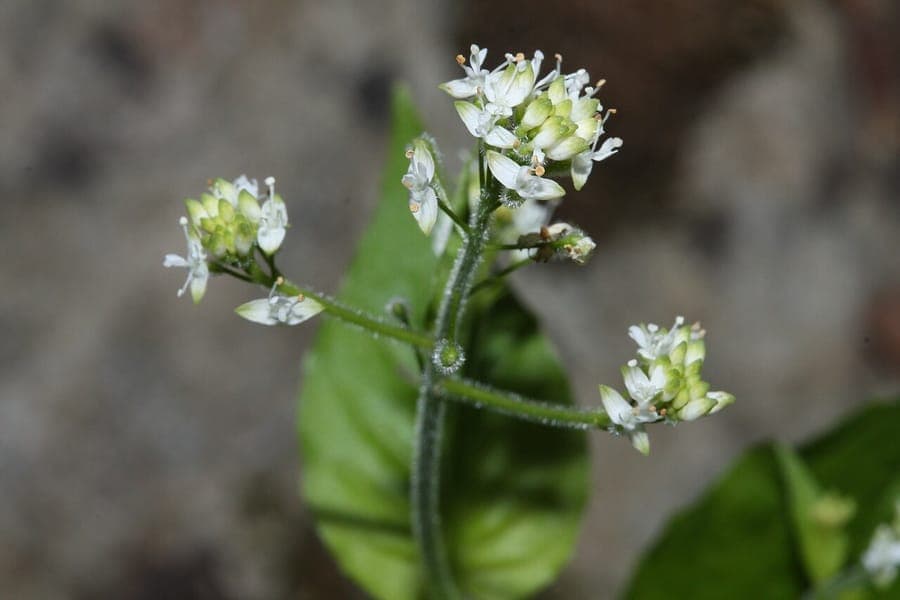
Walter Siegmund (talk) / CC BY-SA 3.0, via Wikimedia Commons
Small enchanter's nightshade: complete guide
Circaea alpina
Want to see Small enchanter's nightshade: complete guide in your garden?
1 minute, no credit card
Overview
Small enchanter's nightshade (Circaea alpina) is a quiet but vital player in woodland gardens. Don't let its modest size fool you-this perennial brings subtle charm to shaded corners where few others thrive. Part of the Onagraceae family, it's unrelated to true nightshades and completely non-toxic. The name 'enchanter's' dates back to folklore, linking it to magical uses, but in your garden, it's all about understated beauty and resilience.
Native across cool temperate zones-from Alaska and Alberta to Austria and Afghanistan-this plant thrives in elevations between 500 and 2,500 meters. It's naturally found in damp, deciduous woodlands with rich leaf litter. While rare in the wild in some regions, it adapts beautifully to garden settings that mimic those conditions.
On gardenworld.app, you can design a shaded border that highlights the quiet elegance of small enchanter's nightshade, pairing it with complementary textures and bloom times.
Appearance & bloom cycle
Circaea alpina grows 10 to 30 cm tall, rarely exceeding 35 cm. It forms loose clumps with slender, softly hairy stems. The leaves are opposite, heart-shaped to ovate, 2–5 cm long, with a slightly wrinkled surface and finely toothed margins. They emerge bright green in spring and hold their color well into summer.
From July to August, delicate white to pale pink flowers appear in short racemes at the stem tips. Each flower is only 5–8 mm wide, with two petals and five to ten per cluster. Pollinated by small bees and hoverflies, they're easy to miss unless you're close, but en masse, they create a soft, shimmering effect.
After flowering, the plant produces small, bristly fruits that stick to fur and clothing-a clever dispersal method. In the garden, spread is slow and manageable via creeping rhizomes and seed. No aggressive takeover here.
Ideal location
Choose partial to full shade. This plant hates hot, direct sun, especially in the afternoon. A spot under deciduous trees or along a north-facing fence works best. Morning sun with dappled shade the rest of the day is ideal.
It thrives in cool, sheltered areas where soil stays consistently moist. Avoid hot, dry borders or exposed southern beds. If your garden gets intense summer heat, tuck it beneath shrubs like Cornus or Viburnum for protection.
Use gardenworld.app to simulate shade patterns in your yard and find the perfect microclimate for Circaea alpina.
Soil requirements
Rich, humus-rich, moist but well-drained soil is key. Avoid heavy clay or fast-draining sand unless amended. The ideal pH is slightly acidic to neutral (5.5–7.0). Mix in compost or leaf mold at planting time to boost organic content.
If your soil is sandy, incorporate well-rotted manure or compost annually to improve moisture retention. For clay-heavy soils, add grit or perlite to prevent waterlogging.
Free design
Want to see Small enchanter's nightshade: complete guide in your garden? Make a free design now.
Watering
Keep the soil consistently moist, especially during the first growing season and dry spells in June and July. Water at the base in the morning to prevent fungal issues.
Rainwater is best-this plant dislikes high lime or chlorine levels in tap water. During prolonged droughts, apply a thin layer (1–2 cm) of organic mulch like leaf litter or composted bark to conserve moisture.
Pruning
Pruning isn't necessary. The plant dies back in autumn and re-emerges in spring. You can remove any damaged or yellowing foliage if it looks untidy, but leave spent stems until early spring to protect the crown.
If it spreads beyond desired limits, gently lift and divide the rhizomes in early spring before new growth starts. Replant or share with a fellow gardener.
Maintenance calendar
- January: Dormant; no action needed
- February: Check for slugs or early pests
- March: Add a thin layer of compost around plants
- April: Clear debris, check soil moisture
- May: Plant or divide (space 15–20 cm apart)
- June: Monitor for drought stress
- July: Peak bloom; observe pollinators
- August: Flowers fade; watch for fruiting
- September: Let stems stand for winter interest
- October: Collect seeds if desired
- November: No maintenance
- December: Dormant
Winter hardiness
Circaea alpina is hardy in USDA zones 4–8 (-34°C to -12°C). The roots survive winter under leaf litter or light mulch. In zone 4, a protective layer helps prevent frost heave.
Avoid waterlogged soil in winter-wet, frozen ground can lead to root rot. Ensure good drainage, especially in heavy soils.
Companion plants
Pair with other woodland species: foamflower (Tiarella), wild ginger (Asarum), maidenhair fern (Adiantum), or bluebells (Campanula rotundifolia). It works well as ground cover beneath shrubs like Fothergilla or Stewartia.
Avoid vigorous spreaders like ivy or mint. Opt for gentle companions like barren strawberry (Waldsteinia) or carex varieties.
Closing
Small enchanter's nightshade isn't a headline act, but it's a steady performer in shaded areas. It fills gaps, blooms when little else does, and asks for almost nothing in return. Perfect for naturalistic designs, cottage gardens, or low-maintenance borders.
Find it at garden centres across the UK and US in spring. Look for healthy, green pots with moist root balls. Plant immediately or keep in a shady spot until ready.
With the right conditions, Circaea alpina will return year after year-unobtrusive, reliable, and quietly beautiful.
Want to see Small enchanter's nightshade: complete guide in your garden? Make a free design now.
Upload a photo, pick a style, and get a photorealistic design with plant list in under a minute.
No credit card required


Similar plants
Shortfruit evening primrose: complete guide
Oenothera brachycarpa
Everything about Oenothera brachycarpa - the shortfruit evening primrose from the American Southwest. Growing tips, placement and care for your garden.
Sundrops (Oenothera tetragona): complete guide
Oenothera tetragona
Everything about Oenothera tetragona - the cheerful daytime-blooming sundrops perennial. Growing tips, placement, pruning and care for a long summer display.
Seabeach evening primrose: complete guide
Oenothera humifusa
Full guide to Oenothera humifusa, the seabeach evening primrose native to the US Atlantic coast. Yellow blooms, silvery foliage, drought-tolerant.