
Wikimedia Commons / Public domain, via Wikimedia Commons
Cinnamon: complete guide
Cinnamomum verum
Want to see Cinnamon: complete guide in your garden?
1 minute, no credit card
Overview
Cinnamon (Cinnamomum verum), also called Ceylon cinnamon or true cinnamon, is a fascinating tropical tree native to Sri Lanka and Java. This tree is renowned for its aromatic bark, which yields the cinnamon spice used in kitchens worldwide. With its glossy evergreen foliage and compact growth, cinnamon makes an intriguing tropical addition to gardens in mild climates.
In its native habitat, cinnamon grows in tropical forests, indicating its preference for warm, moist environments.
Appearance and bloom
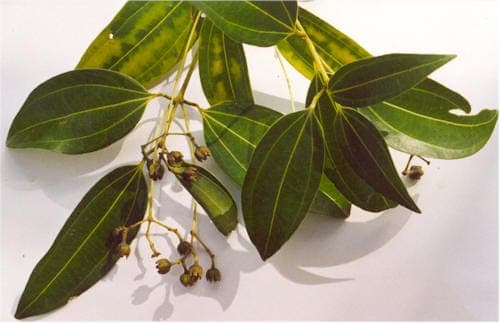
The cinnamon tree grows as a medium tree typically reaching 7-15 metres in cultivation, though potentially larger in wild settings. The tree displays a compact, pyramidal form with dense foliage. The leaves are elliptic, glossy green, and aromatic when crushed.
Small cream-yellow flowers appear in May and June in tightly clustered inflorescences. These blooms carry a pleasant fragrance and are followed by small blue berries. The flowers are not showy, however. The tree's primary attraction lies in its aromatic bark, foliage, and overall exotic presence.
Ideal location
Cinnamon thrives in full sun to light shade locations in warm climates. The tree performs best with shelter from harsh winds. In milder climates, position the tree against a south-facing wall for additional warmth.
The tree is unsuitable for cold climates and will only grow outdoors in zone 10 and warmer. In colder regions, it can be cultivated in containers and brought indoors.
Soil
Cinnamon performs best in nutrient-rich, moist soils. Add substantial organic material at planting. The tree is not drought-tolerant and performs poorly on very dry soils.
The tree accepts neutral to slightly acidic soils. Heavy clay can be improved with sand and organic matter. Good drainage remains essential to prevent root rot.
Watering
Cinnamon requires regular moisture, especially during growth and dry periods. Young trees need consistent watering until well-established. Mature trees tolerate brief dry periods but thrive with regular moisture.
Winter watering is less critical but the tree still prefers moist soils. Avoid waterlogging, which causes root rot. Mulch around the tree helps retain moisture.
Free design
Want to see Cinnamon: complete guide in your garden? Make a free design now.
Pruning
Cinnamon requires minimal pruning once established. Remove dead or damaged branches in late winter or early spring. In young stages, gentle pruning helps establish good structure.
Avoid heavy pruning, as it disrupts the tree's form. Allow the tree to reach its natural shape.
Maintenance calendar
March-April: Early spring preparation; assess the tree and remove dead wood.
May-June: Flowering period; maintain regular watering; enjoy flowers and fragrance.
July-September: Summer growth; ensure regular water during dry periods.
October-November: Autumn transition; reduce moisture as temperatures decline.
December-February: Winter dormancy; minimal watering needed; protect from frost.
Winter hardiness
Cinnamon is not winter-hardy in many regions. The tree is only suitable for zone 10 and warmer outdoors. In milder zone 9 areas, protection may help, but early frosts can still cause damage.
In colder regions, cinnamon will die if exposed to frost. In these areas, container cultivation is recommended, with the tree brought indoors for winter. Even as a houseplant, it requires significant warmth and light.
Companion plants
Cinnamon pairs well with other tropical and subtropical plants. Other Lauraceae family members make good companion plantings. Evergreens and other fragrant plants combine well with cinnamon.
In containers, cinnamon can be combined with other tropical plants for an exotic, aromatic display.
Closing remarks
Cinnamon is a fascinating tropical tree bringing beauty, aroma, and historical significance to gardens. This is a plant for those with mild climates or committed to container cultivation. In milder regions, cinnamon can serve attractively as both decorative and practical specimen. Find cinnamon trees at specialized tropical garden centres. Consult gardenworld.app for more tropical plant recommendations and exotic garden designs.
Want to see Cinnamon: complete guide in your garden? Make a free design now.
Upload a photo, pick a style, and get a photorealistic design with plant list in under a minute.
No credit card required


Similar plants
Ocotea floribunda: complete guide
Ocotea floribunda
All about Ocotea floribunda, a tropical laurel tree from Central and South America: growing in temperate climates, containers, pruning, and care in greenhouses.
Redbay: complete guide
Persea borbonia
A full guide to redbay (Persea borbonia), a fragrant evergreen tree native to the southeastern United States, related to avocado and laurel.
Swamp bay: complete guide
Persea palustris
A full guide to swamp bay (Persea palustris), an evergreen tree native to the wetlands and coastal swamps of the southeastern United States.