
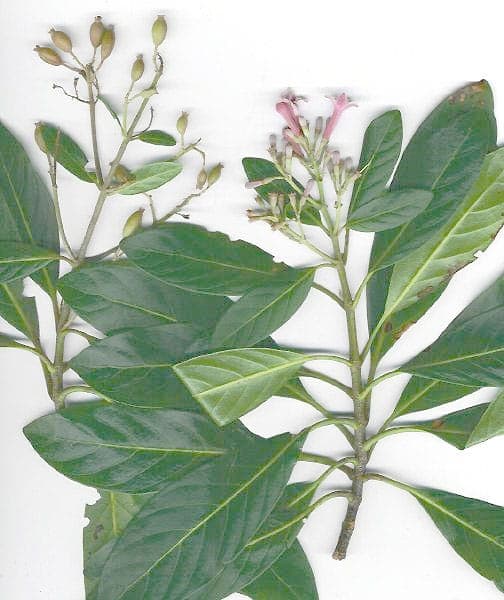
Wikimedia Commons / Public domain, via Wikimedia Commons
Cinchona calisaya: complete guide for growing yellow cinchona
Cinchona calisaya
Want to see Cinchona calisaya: complete guide for growing yellow cinchona in your garden?
1 minute, no credit card
Overview
Cinchona calisaya, commonly known as yellow cinchona or ledgerbark, is a remarkable tropical shrub native to the mountain cloud forests of Peru and Bolivia. This plant holds historical significance due to its medicinal properties, particularly the production of quinine from its bark. Today, plant enthusiasts value it for its exotic appearance and unique textural qualities.
Belonging to the Rubiaceae family alongside coffee, Cinchona calisaya presents a moderate to advanced growing challenge. For experienced tropical plant collectors, it represents an intriguing and rewarding addition to any collection.
Appearance and Bloom
Cinchona calisaya develops as a medium to large shrub, reaching 3-5 meters tall under optimal conditions. Its leaves are elongated, deep green, and possess a smooth texture, arranged alternately along stems to form an attractive, dense canopy.
Small white to pale pink flowers appear at branch terminals, though the plant's primary ornamental value derives from its interesting foliage structure and overall growth form. Capsular fruits may develop following pollination, though flowering indoors remains rare and requires optimal conditions.
The bark itself holds botanical interest, containing the alkaloid compounds historically prized for pharmaceutical applications. Its distinctive external appearance adds character to mature specimens.
Ideal Location
Cinchona calisaya requires bright, indirect light. Position near large north or east-facing windows to provide adequate illumination without harsh direct sun exposure. The plant tolerates partial shade but performs better with consistent bright indirect light.
Indoors, warmth is essential. Maintain temperatures between 18-25 degrees Celsius, preferably toward the warmer end. Temperatures below 15 degrees prove harmful long-term. Avoid drafts and sudden temperature fluctuations.
Aim for elevated humidity levels, ideally 60-75%. Achieve this through regular misting or humidity pebble trays. Visit gardenworld.app for personalized care recommendations tailored to your specific growing environment.
Soil
Utilize high-quality peat or coco-based potting mix with excellent drainage. Incorporate perlite or coarse sand to enhance air circulation within containers. Target a pH range of 5.5-7.0 for optimal growth.
Annually replenish soil with compost in spring to refresh nutrients without complete repotting. Maintain consistently moist, but never waterlogged, growing medium throughout the year.
Free design
Want to see Cinchona calisaya: complete guide for growing yellow cinchona in your garden? Make a free design now.
Watering
Watering requires careful attention. During active growth (spring and summer), keep soil consistently moist but not soggy. Winter months allow for slightly drier conditions as growth slows considerably.
Prefer distilled or rainwater, particularly if your tap water is hard, as alkaline water can cause complications. Monitor soil moisture regularly before watering again.
Container-grown specimens require more frequent watering than ground-grown plants. Ensure adequate drainage holes to prevent water accumulation. Root rot develops quickly with excessive moisture, so err toward slightly drier conditions.
Pruning
Regular pruning promotes fuller, more compact growth. Prune during spring before active growth begins. Remove dead or damaged branches whenever observed.
This species tolerates fairly vigorous pruning without damage. Cut just above outward-facing leaf nodes to encourage branching and bushier development. Keep all pruning tools clean and sharp for clean cuts.
Maintenance Calendar
Spring: Begin feeding as plant emergence occurs. Repot into larger containers if needed. Increase humidity levels gradually.
Summer: Consistent watering and frequent misting. Provide afternoon shade from intense direct sunlight. Monitor for pests regularly.
Autumn: Gradually reduce feeding as light diminishes. Maintain watering but allow soil to dry slightly between waterings.
Winter: Minimal feeding. Reduce watering frequency. Ensure good air circulation and protect from cold drafts.
Winter Hardiness
This is absolutely not frost-hardy. It cannot tolerate outdoor exposure in freezing climates. Maintain temperatures above 15 degrees Celsius, ideally minimum 18 degrees.
Protect against cold window panes during winter months. Insulate containers from cold surfaces. Indoor overwintering proves essential in temperate climates where freezing occurs.
Companion Plants
Cinchona calisaya thrives alongside other tropical foliage plants requiring similar warmth and humidity conditions. Excellent companions include:
- Anthurium andraeanum
- Monstera deliciosa
- Philodendron species
- Rhaphidophora tetrasperma
- Ficus elastica
These plant combinations create tropical microclimates beneficial to all species involved. Explore such combinations on gardenworld.app for design inspiration.
Closing
Cinchona calisaya rewards those willing to meet its specific requirements. Though challenging for beginners, careful attention to its particular needs produces strong growth and striking tropical aesthetics. Its fascinating history and distinctive appearance justify inclusion in serious tropical plant collections.
Remember that patience proves essential with this species. Maintaining warm temperatures, stable humidity, and well-drained substrate will provide tremendous satisfaction when successfully cultivating this South American treasure.
Want to see Cinchona calisaya: complete guide for growing yellow cinchona in your garden? Make a free design now.
Upload a photo, pick a style, and get a photorealistic design with plant list in under a minute.
No credit card required


Similar plants
Oregon bedstraw: complete guide
Galium oreganum
Everything about Oregon bedstraw (Galium oreganum): shade planting, soil requirements, care and use as a low groundcover in woodland and shade gardens.
Awned woodruff: complete guide
Asperula aristata
Full guide to growing Asperula aristata, the awned woodruff: sunny location, alkaline soil, minimal watering, and companion plants for dry or rock gardens.
Purple woodruff: complete guide
Asperula purpurea
Full guide to Asperula purpurea, purple woodruff: sunny sites, chalky soil, watering, pruning, winter hardiness and companion plants for rock and dry gardens.