
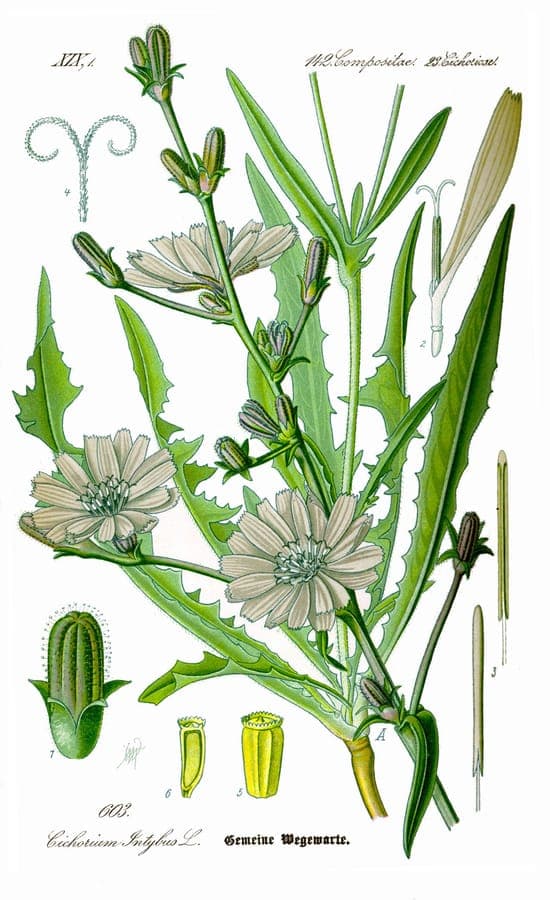
Original book source: Prof. Dr. Otto Wilhelm Thomé Flora von Deutschland, Österreich und der Schweiz 1885, Gera, Germany / Public domain, via Wikimedia Commons
Belgium endive: complete guide
Cichorium intybus
Want to see Belgium endive: complete guide in your garden?
1 minute, no credit card
Overview
Belgium endive (Cichorium intybus) isn't just a salad ingredient - it's a resilient, ornamental herbaceous perennial that thrives in open, sunny gardens. Native to parts of Europe and Asia, it's commonly found along roadsides and in disturbed soils, but its striking blue blooms and low-maintenance nature make it a standout in cultivated landscapes. Reaching heights of 30 to 120 cm, it brings vertical interest and late-summer color to borders, meadows, and wildlife plots.
On gardenworld.app, you can design a garden layout that integrates Belgium endive into a drought-tolerant planting scheme or a pollinator-focused border.
Appearance & bloom cycle
Belgium endive produces upright, branching stems with lance-shaped, toothed basal leaves that form a rosette. The foliage is a medium green, slightly hairy, and can be mildly bitter - edible when young, great in mixed salads. The real show begins in July, when clusters of daisy-like flowers open in the early morning, typically closing by midday or on overcast days.
Flowers are most commonly soft blue, but can also appear in pale purple or white, each about 3–4 cm in diameter. Individual blooms last just one day, but the plant produces new ones continuously from July through September, ensuring a long display. The seed heads that follow are light and fluffy, perfect for natural dispersal by wind.
Ideal location
This plant thrives in full sun - aim for a light exposure rating of 8 out of 10, meaning at least 6 to 8 hours of direct sunlight daily. It performs best in open areas with good air circulation, such as the middle or back of a perennial border, wildflower meadow, or along a gravel path. Avoid shaded or damp corners, which encourage fungal issues and weak growth.
It's ideal for USDA hardiness zones 3 to 9, adapting well to both hot summers and cold winters. In hotter zones, some afternoon shade can help prevent scorching, but full exposure is preferred.
Soil requirements
Belgium endive is not fussy about soil richness. It grows well in average to poor, well-drained soils with a pH between 6.0 and 7.5. Sandy or loamy soils are ideal. Heavy clay should be amended with grit or compost to improve drainage - waterlogged roots lead to rot.
Avoid high-nitrogen fertilizers. These promote leafy growth at the expense of flowering. A light top-dressing of compost in early spring is sufficient to support healthy development without overstimulating the plant.
Free design
Want to see Belgium endive: complete guide in your garden? Make a free design now.
Watering
Once established, Belgium endive is drought-tolerant thanks to its deep taproot. Water deeply but infrequently during prolonged dry spells - one thorough soaking per week (5–10 liters per plant) is enough. Always water at the base to prevent leaf wetness and fungal diseases like powdery mildew.
Seedlings and young plants need more consistent moisture until the root system develops, but avoid soggy soil. Overwatering is a bigger risk than under-watering.
Pruning
Deadheading isn't required, but it can extend blooming and reduce self-seeding if that's not desired. Cut back spent flower stems to 10–15 cm above ground level in late summer or early autumn. If you want the plant to reseed naturally, leave some heads intact - birds and wind will spread the seed.
Cut back the remaining foliage in late autumn or early winter, or leave it as a protective cover for overwintering insects.
Maintenance calendar
- January: Inspect for winter damage; remove severely damaged stems.
- February: Prepare new planting areas; improve drainage in heavy soils.
- March: Sow seeds indoors or directly outdoors when soil reaches 10°C.
- April: Transplant seedlings; space 30–40 cm apart.
- May: Weed around young plants; apply a thin compost layer.
- June: Watch for slugs and snails on new growth.
- July: Bloom season starts; check moisture during dry spells.
- August: Deadhead to encourage new blooms.
- September: Allow some seed heads to mature for collection.
- October: Cut back after flowering; collect seeds if desired.
- November: Leave stems for insect habitat; mulch lightly in cold zones.
- December: Minimal care; no feeding.
Winter hardiness
Belgium endive is winter-hardy in USDA zones 3–9. The taproot survives freezing temperatures and resprouts in spring. In areas with wet winters, ensure excellent drainage to prevent root rot. A light mulch of straw or leaf litter helps in zones 3–5 to moderate soil temperature swings.
Companion plants
Pair Belgium endive with other sun-loving, drought-tolerant perennials like Echinacea, Rudbeckia, Achillea, and Nepeta. These combinations attract bees, butterflies, and hoverflies. Avoid overly aggressive spreaders like mint or bindweed that can overwhelm it.
Using gardenworld.app, you can preview how Belgium endive blends with companion plants in a virtual garden planner, helping you avoid overcrowding and ensure visual harmony.
Closing
Belgium endive is a quiet achiever in the garden - tough, beautiful, and beneficial to wildlife. It's perfect for low-maintenance designs, cottage gardens, or naturalistic planting schemes. Its edible young leaves add a peppery note to salads, and the long bloom season keeps pollinators busy. Sow seeds or buy young plants from garden centres, and let this unassuming herb earn its place in your plot.
Want to see Belgium endive: complete guide in your garden? Make a free design now.
Upload a photo, pick a style, and get a photorealistic design with plant list in under a minute.
10,000+ gardens designed already
No credit card required


Similar plants
Calendula stellata: complete guide
Calendula stellata
Complete guide to Calendula stellata, the star-flowered marigold from Sicily: location, soil, watering and companion planting tips.
Korean chrysanthemum: complete guide
Chrysanthemum x rubellum
Chrysanthemum x rubellum is a hardy autumn perennial with single pink to copper flowers from August to November. Care and combinations.
Helianthus divaricatus: complete guide
Helianthus divaricatus
Helianthus divaricatus is a North American woodland sunflower with yellow summer blooms, ideal for naturalistic borders and shady edges.